Aarhus University discovers bacteria can produce DNA after death
Researchers found that certain bacteria continue to produce DNA even after cell death, opening new avenues in biotechnology and bioenergy.
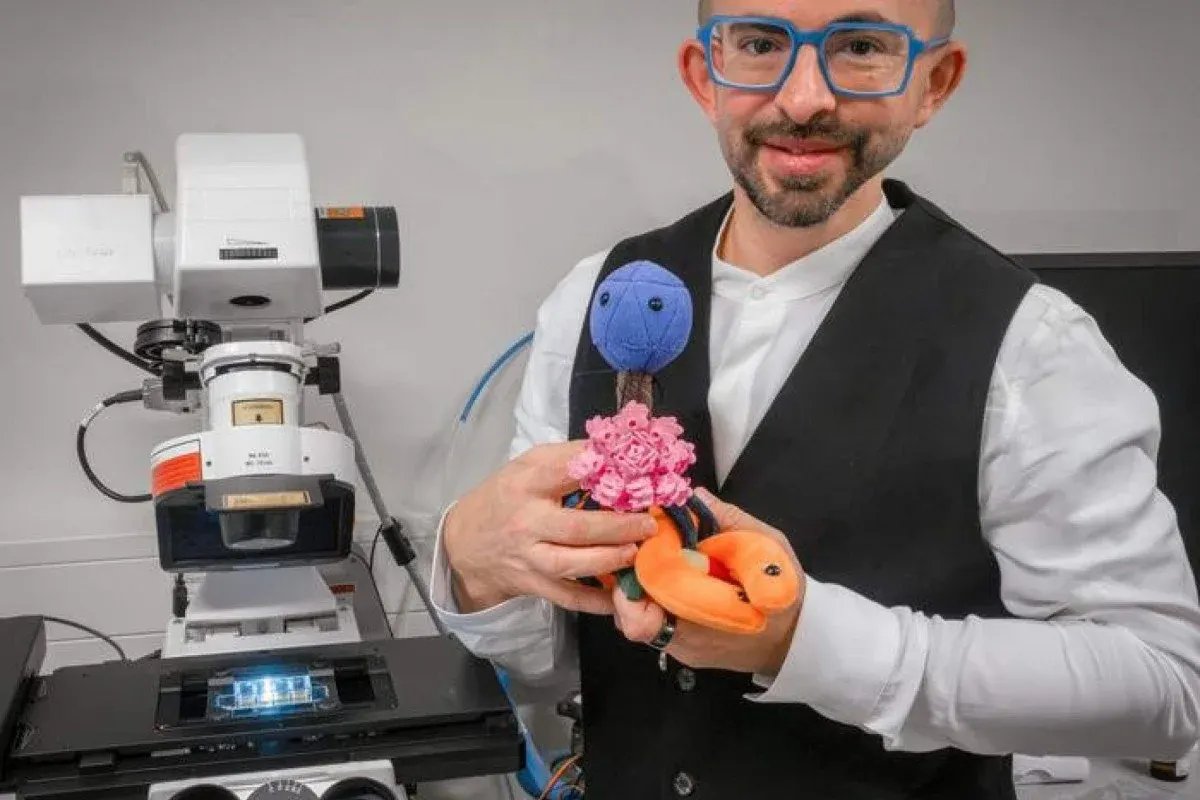
Aarhus University in Denmark has discovered that some bacteria can continue to produce DNA even after they are dead. The research, led by Gabriel Minero, indicates that in the future, scientists may be able to alter the molecular formation produced by these microorganisms to aid in the decomposition of pollutants. This finding is significant as it highlights the potential applications of DNA beyond its role in life, particularly in environmental biotechnology and bioenergy production.
The study demonstrated that DNA possesses chemical properties that can be useful for various purposes. Minero believes that it may be possible to program bacteria to produce different materials, allowing for the creation of biological materials wherever needed. However, the research is still in its early stages. The experiments were conducted in a laboratory setting using two bacterial species, with DNA models provided by the researchers themselves.
Bacterial Biofilms and DNA Production
The researchers were able to control which DNA was produced, granting it specific chemical properties. More research is needed to prove that this technology can purify contaminated water or enhance practical bioenergy production. The discovery was made using bacterial biofilms, which are communities of microorganisms enveloped in a sticky substance containing DNA and other materials.
The two bacterial species used in the study were Shewanella oneidensis and Bacillus subtilis. The researchers deprived these bacteria of nutrients, triggering certain viruses that multiplied and ruptured the bacterial cells. Upon cell rupture, both the basic components of DNA and specialized enzymes were released, continuing to function and produce new DNA even outside the cell. "In a way, life continues after the bacteria die," says Minero.
To confirm that they were observing newly produced DNA rather than remnants of ruptured cells, the researchers added a small ring of artificially produced DNA to the samples. This ring served as a model for the enzymes to replicate. The new DNA was detectable due to its different structure. Under the microscope, the DNA produced by the free enzymes formed flower-like structures in one bacterial species and long filaments in another. No specific DNA was produced when using the genetic variant of the bacteria that did not undergo viral rupture.
Minero refers to the viruses as "nanoarchitects". While they kill some bacteria, they also provide part of the molecular machinery that enables the continuation of biofilm formation. This research has led to the discovery of a method to alter the enzyme and determine which type of DNA will be produced. The researchers managed to have the studied bacteria produce G-quadruplexes, a DNA structure that unfolds into specific shapes, allowing it to bind to other molecules and act as enzymes, accelerating certain chemical reactions.