OceanEnergy's 826-ton OE35 wave energy converter cleared by the EU for sea trials off Scotland
The floating OE35 device, with a potential rated output of 1.25 MW, has EU approval to prepare for a two-year demonstration at EMEC in Orkney, Scotland.
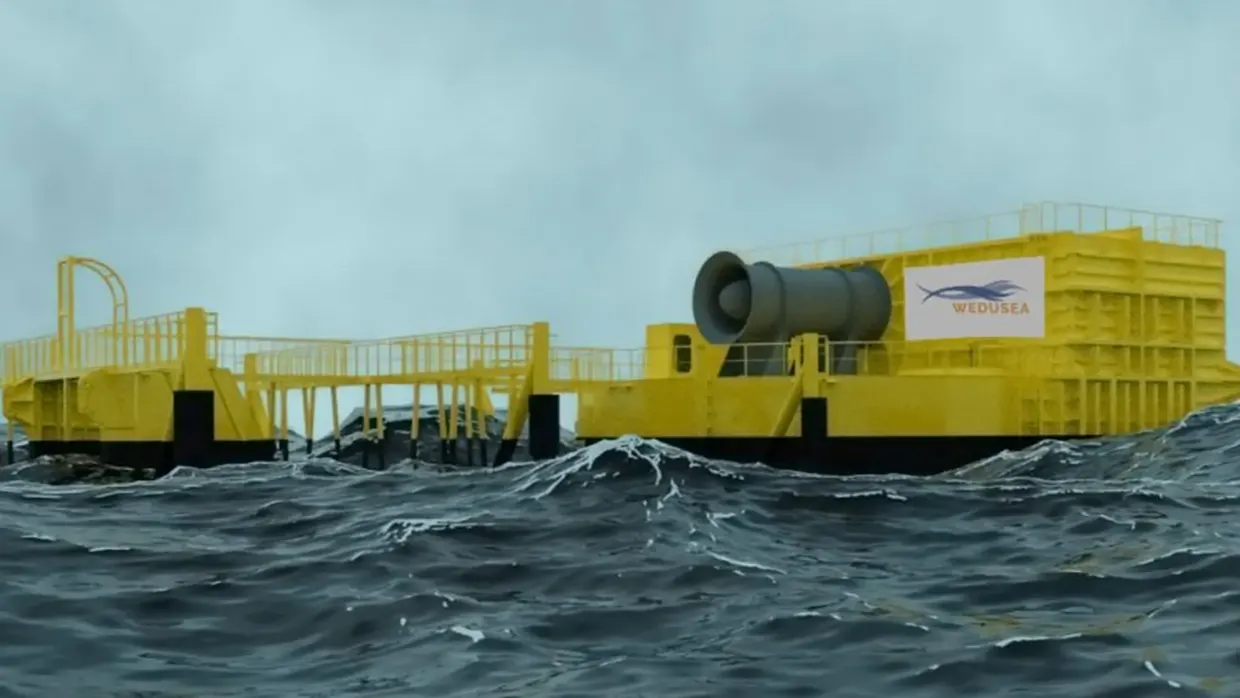
The EU has approved the next phase of the OE35 floating wave energy converter, allowing preparations for sea trials off the coast of Scotland to proceed, Interesting Engineering reports. The 826-ton device was designed by the Irish company OceanEnergy and has a potential rated output of 1.25 MW interestingengineering.com
Interesting Engineeringinterestingengineering.comOpen source ↗. It measures 125 feet long and 59 feet wide, with a draft of over 30 feet.
The device will be tested at the European Marine Energy Center (EMEC) in Orkney as part of the EU-backed WEDUSEA project. The project brings together 14 partners from the UK, Ireland, France, Germany and Spain, and is supported by the Horizon Europe program and Innovate UK. Approval to move forward came after independent experts reviewed the technical designs, budgets and plans.
How the OE35 generates power
The converter floats on the sea surface, and its lower section is open to the water below. Passing waves make the water inside the structure rise and fall. This movement compresses and decompresses the trapped air and forces it through a turbine that drives electricity generation. The process relies on the movement of seawater and does not involve burning fossil fuels.
Demonstration plan and phases
WEDUSEA has three phases. The first covers designing and building a converter able to operate in the conditions at EMEC's Billia Croo test site. The second is a two-year test in the Atlantic Ocean, during which the team will assess technical performance and environmental impact interestingengineering.com
Interesting Engineeringinterestingengineering.comOpen source ↗. The third will focus on bringing the technology to market and using the test results to develop larger wave energy projects.
During the demonstration, the electricity will be exported to the UK grid through EMEC's existing subsea cables. The project also aims to assess whether the system can support future commercial wave energy installations.
OceanEnergy CTO Tony Lewis said wave energy has around 30 TWh of potential annual production that has yet to be fully realized. Lars Johanning of the University of Plymouth said the partnership had worked to ensure the designs and plans were robust. Matthijs Soede of the European Commission called WEDUSEA a potential catalyst for the wave energy industry.