Cambridge simulations: comet delivery of HCN to early Earth would have been extremely rare
Researchers led by the University of Cambridge modeled comet impacts and found that organic molecules would almost always be destroyed. Mars may have been slightly more favorable.
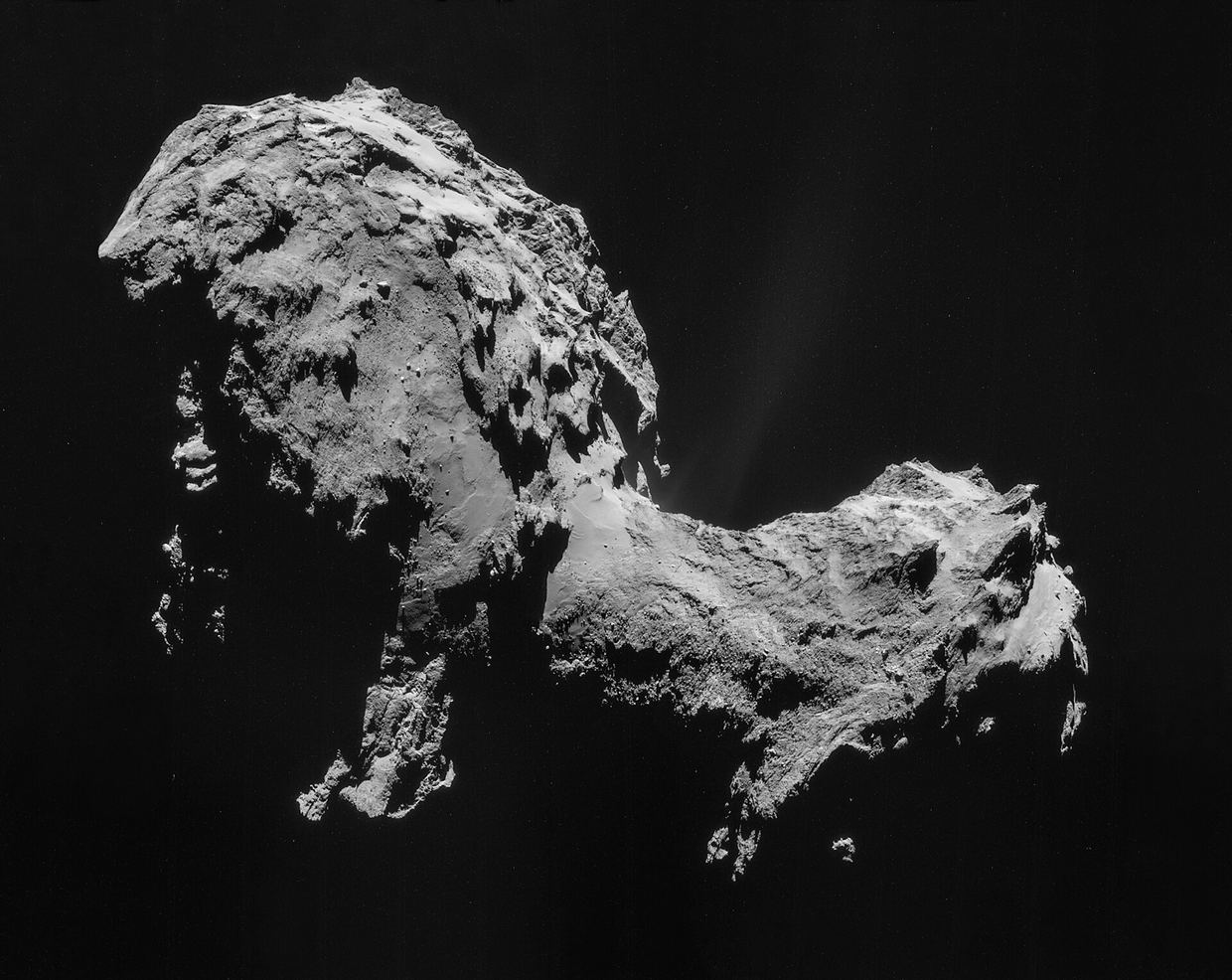
Researchers led by the University of Cambridge have used computer simulations to test whether comets could have delivered the chemical ingredients of life to early Earth. According to a report by SciTechDaily on the study published in Scientific Reports on 28 October 2026, such delivery would have been extremely rare: impacts would almost always destroy fragile organic compounds before they could contribute to prebiotic chemistry scitechdaily.com
SciTechDailyscitechdaily.comOpen source ↗. The authors also found that Mars may have offered slightly better conditions than Earth
scitechdaily.com
SciTechDailyscitechdaily.comOpen source ↗.
Why comets rarely delivered HCN
Comets contain carbon- and nitrogen-bearing compounds, including hydrogen cyanide (HCN), which takes part in reactions that can produce some of life's building blocks. This is why comets have long figured in theories of how prebiotic chemistry began on Earth. The team combined models of comet trajectories, atmospheric interactions, impact physics, and the formation and evolution of comet populations scitechdaily.com
SciTechDailyscitechdaily.comOpen source ↗.
The simulations indicate that comets generally approach Earth at speeds and angles at which most organic molecules vaporize on impact instead of reaching the surface intact scitechdaily.com
SciTechDailyscitechdaily.comOpen source ↗. The researchers concentrated on HCN, which is regularly detected in Solar System comets. By their calculations, impacts that preserve the molecule and deposit it at useful concentrations would have been exceptionally uncommon
scitechdaily.com
SciTechDailyscitechdaily.comOpen source ↗.
The number of comets striking Earth also fell sharply during the planet's first 500 million years, leaving at most a handful of opportunities for meaningful HCN delivery. Even surviving molecules would likely have dispersed before the reactions needed for life could advance far enough. Lead author Richard Anslow said it would have to be a one-in-a-million occurrence, and that the possibility cannot be ruled out entirely.
Mars and other planetary systems
The work builds on a 2023 study in which Anslow and colleagues proposed that closely spaced planets could help comets deliver organic molecules, because gravitational encounters would gradually slow the comets. The new study examined whether similar conditions could have existed in the Solar System.
Mars is smaller than Earth and currently has a much thinner atmosphere, which could allow more cometary material to reach its surface. The simulations do not show that comets delivered prebiotic molecules to Mars; they indicate only that the process may have been more feasible there scitechdaily.com
SciTechDailyscitechdaily.comOpen source ↗.
If comets were not a major source for Earth, other explanations remain. Asteroids struck the early Earth more often, and their impacts could have triggered reactions that produced organic compounds. The ingredients may also have formed on Earth itself.
The authors note that the findings could help assess the chemistry of planets around other stars, in systems where several worlds orbit close together. Proposed successors to the James Webb Space Telescope, such as the Habitable Worlds Observatory, could be used to study such systems.