SuRE assay of 7.1 million SNPs in human neural stem cells identifies 7,002 regulatory variants
Dutch groups ran a massively parallel reporter assay in human neural stem cells to find which non-coding SNPs can affect transcription, a problem for GWAS because of linkage disequilibrium.
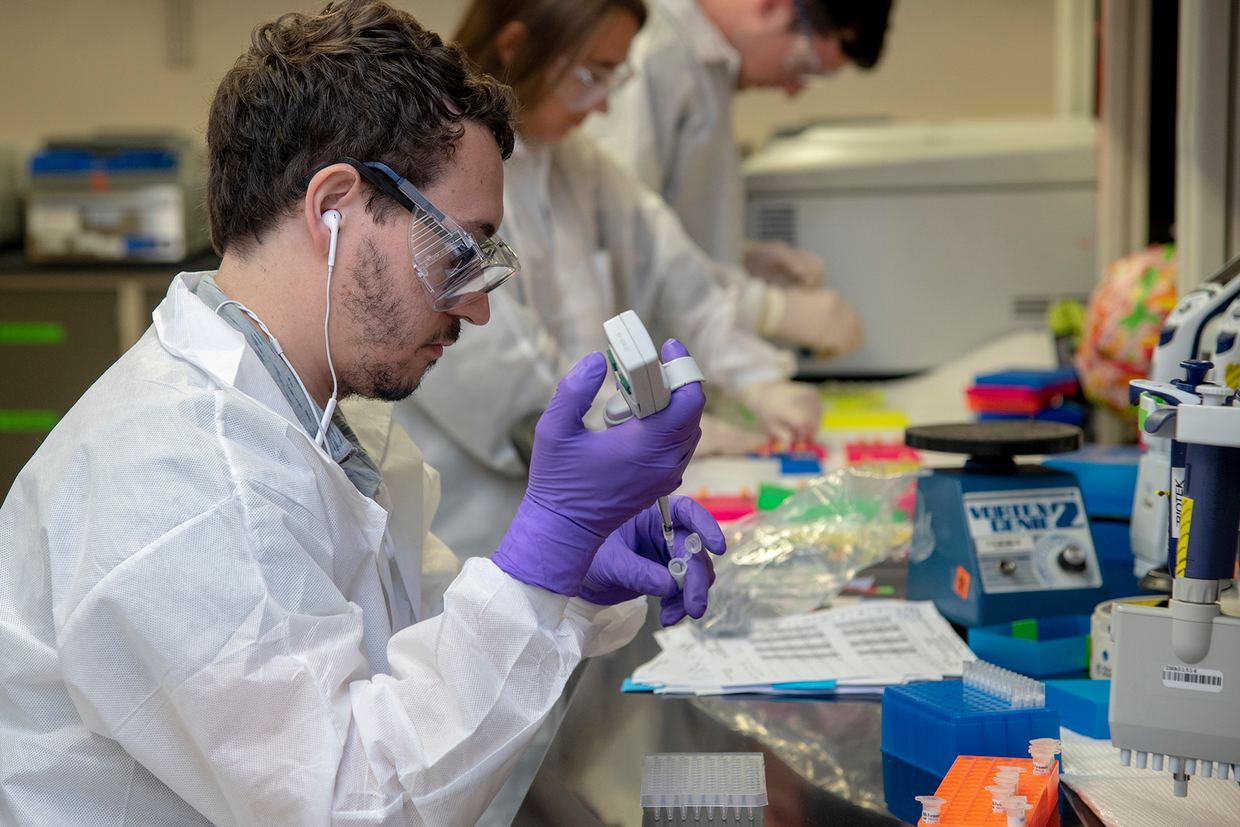
Researchers from Erasmus MC, the Netherlands Cancer Institute, Oncode Institute and Radboud University Medical Center report a large screen of single-nucleotide polymorphisms (SNPs) for regulatory activity in human neural stem cells. The work, published in Nature Communications, used a massively parallel reporter assay called SuRE. The assay assessed the transcriptional regulatory potential of 7.1 million SNPs doi.org
Nature Communicationsdoi.orgOpen source ↗.
Why causal SNPs are hard to pinpoint
Genome-wide association studies (GWAS) have identified thousands of SNPs associated with different human phenotypes. Most of them lie in non-coding regions of the genome. There, a small subset of causal SNPs is thought to contribute to risk by regulating transcription doi.org
Nature Communicationsdoi.orgOpen source ↗.
Identifying such causal variants remains difficult because of linkage disequilibrium. Blocks of SNPs are inherited together, so an association signal alone does not show which variant in the block is responsible doi.org
Nature Communicationsdoi.orgOpen source ↗. A direct functional readout of each SNP is the approach the authors took.
What the SuRE screen found
Among the 7.1 million SNPs, 484,057 showed sufficiently high expression in the assay. Within this group the authors identified 7,002 SNPs with regulatory potential, which they call emVars doi.org
Nature Communicationsdoi.orgOpen source ↗. The emVars are enriched in enhancers and often coincide with binding sites for transcription factors such as ZBTB33, YY1 and ETS factors
doi.org
Nature Communicationsdoi.orgOpen source ↗.
The team overlapped the SuRE data with eQTL data to pinpoint likely gene-regulatory variants doi.org
Nature Communicationsdoi.orgOpen source ↗. They also combined SuRE with GWAS results for seven neuropsychiatric phenotypes. This identified 187 emVars in risk loci that contain 183,186 SNPs assessed by SuRE
doi.org
Nature Communicationsdoi.orgOpen source ↗.
The numbers describe successive steps of the selection: 7.1 million SNPs assessed, 484,057 with sufficiently high expression, 7,002 classified as emVars, and 187 emVars located in the neuropsychiatric risk loci doi.org
Nature Communicationsdoi.orgOpen source ↗.
The authors conclude that the SuRE dataset is a source for prioritizing genetic variants that may be relevant for complex human phenotypes doi.org
Nature Communicationsdoi.orgOpen source ↗. The study is open access, and the correspondence authors are Hieab Adams, Bas van Steensel and Raymond Poot.