KNMI: AMOC deep overturning fails by 2300 in 70% of high-emission CMIP6 runs
KNMI analysed CMIP6 simulations extending to 2300–2500: the share of runs with AMOC failure by 2300 is 25–70%, depending on emissions. These are shares of model runs, not a forecast.

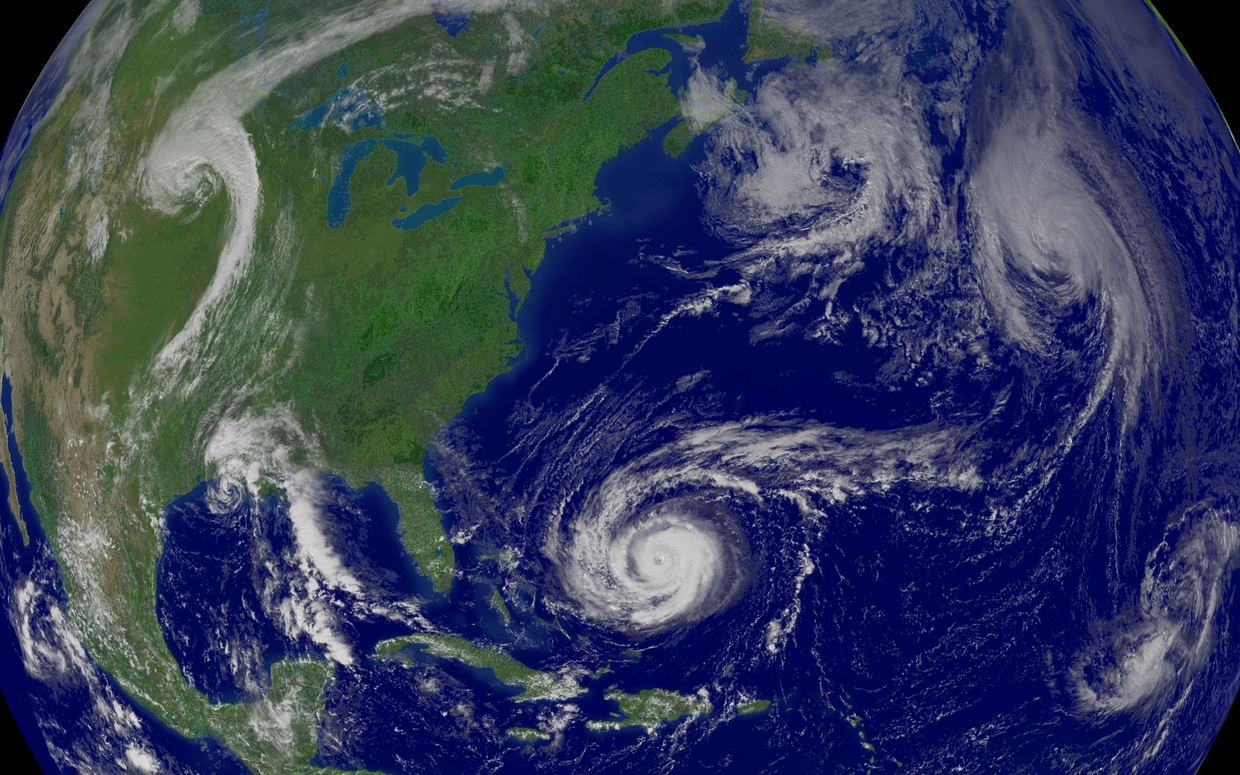
Researchers at the Royal Netherlands Meteorological Institute (KNMI) led by Prof. Sybren Drijfhout analysed CMIP6 climate simulations that extend to 2300 or even 2500, scinexx reports. In all nine long-running high-emission simulations, the North Atlantic deep overturning eventually fell into an extremely weak state. Individual medium- and low-emission runs showed a similar development scinexx.de
scinexxscinexx.deOpen source ↗. The study was published in Environmental Research Letters, and Stefan Rahmstorf of the Potsdam Institute for Climate Impact Research (PIK) commented on the results.
Model results and mechanism
The corrected analysis of the larger model ensemble gives the following shares of runs with an AMOC failure in the North Atlantic by 2300: 70% for high, 37% for medium and 25% for low emissions scinexx.de
scinexxscinexx.deOpen source ↗. These are shares of the runs examined, not a directly measurable probability for the real future. Many simulations end in 2100, so later failures are partly estimated from the trend of the run.
According to Rahmstorf, in the simulations the tipping point in key areas of the North Atlantic typically occurs within the next decades. What matters first is not an abrupt halt of all currents but the loss of winter deep mixing in the Labrador Sea, the Irminger Sea and the Nordic Seas. Under global warming the surface water loses less heat to the atmosphere in winter, so it less often becomes dense enough to sink scinexx.de
scinexxscinexx.deOpen source ↗.
A weaker overturning also carries less saline water north. The surface becomes lighter and sinks even less readily, which reinforces the weakening. In the affected runs, mainly a shallow, wind-driven residual circulation remains. The northward heat transport across the Atlantic at 26 degrees north then falls to 20–40% of today's observed value, and north of 45 degrees the ocean's heat release to the atmosphere drops below one fifth scinexx.de
scinexxscinexx.deOpen source ↗.
Regional effects and uncertainties
In the models, the loss of this heat supply could cool north-western Europe markedly, with considerably harsher winters and drier summers. In low-emission runs, a strong expansion of North Atlantic sea ice adds to the regional cooling. At high emissions, greenhouse warming can exceed the cooling effect. The study does not show an imminent large-scale glaciation of Europe scinexx.de
scinexxscinexx.deOpen source ↗.
Observational datasets show declining values in the winter deep-mixing regions over the past five to ten years. Drijfhout noted that this could be a temporary fluctuation but is consistent with the model predictions; natural variability of these quantities is large. The observations alone do not show that the real circulation has already tipped irreversibly.
The models themselves carry uncertainties. They often omit additional meltwater from Greenland, which could weaken the flow further, while other errors, such as the effect of aerosols, could overestimate the sensitivity. In the model calculations, rapid emission cuts considerably reduce the share of runs with a later collapse but do not eliminate it. Because of the limited model basis, the figures are not a reliable prediction of the actual risk scinexx.de
scinexxscinexx.deOpen source ↗.