UC Berkeley team tracks hula-hoop mechanics using network analysis
A single-subject experimental study recorded 120-Hz kinematics of body and hoop to determine how specific limb rotations drive movement.
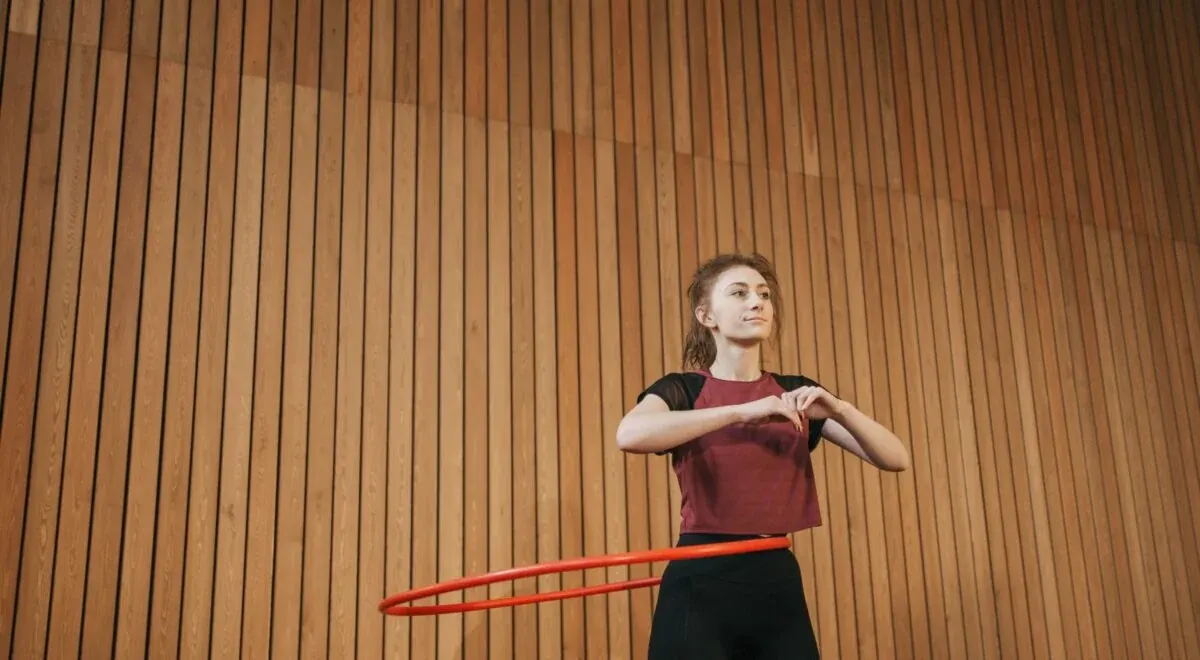
Researchers from the University of California, Berkeley, and the American University of Beirut analyzed the multi-harmonic motion of hula hooping using motion tracking and network analysis. The study, published in Nonlinear Dynamics, evaluated how human segment rotations directionally affect the steady whirl and tilt of the hoop springer.com
Nonlinear Dynamicsspringer.comOpen source ↗.
Sensor instrumentation and data collection
To capture simultaneous dynamics, the researchers placed motion sensors on the hoop and on the right leg of a single subject, tracking the thigh, tibia, and foot. Each unit recorded rotational data at 120 frames per second over nine experimental trials lasting between 20 and 30 seconds. The pelvic region remained free of hardware due to persistent contact with the rotating hoop. Initial attempts using standard principal component analysis failed to couple human movements with hoop mechanics because the tool treats non-linear frictional contact as disconnected systems.
Network analysis reveals leg control
Switching to a network analysis model allowed the authors to map directional signal correlations between body segments and the hoop. The resulting network demonstrated that specific rotations of the femur, tibia, and metatarsal strongly govern the whirling rotation of the hoop. Meanwhile, the tilting motion showed an association primarily with a specific axial rotation of the femur.
Because the femur cannot rotate along this axis without mechanically engaging the lower leg, the observed actions demonstrate overlapping biomechanical inputs for whirl and tilt rather than separate muscle strategies springer.com
Nonlinear Dynamicsspringer.comOpen source ↗. The authors emphasized that the single-subject setup requires verification across broader populations and contact-free measurement tools, but noted potential applications for physical rehabilitation tracking and assistive devices.