Aalto University physicists run a single-qubit heat engine, reaching over 25% of Otto efficiency
In a lab experiment published in Nature, a superconducting transmon qubit performed work in a quantum Otto cycle, showing that a single quantum system can act as a heat engine.
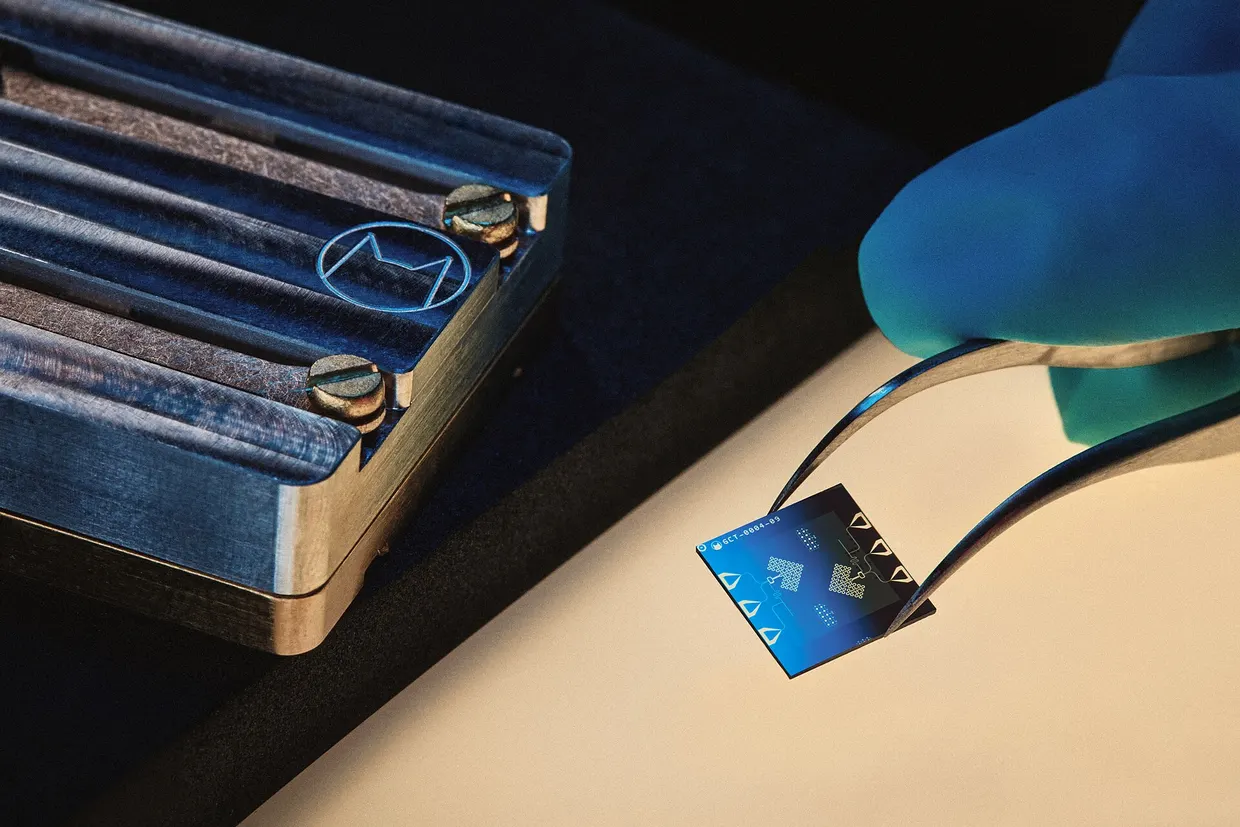
Physicists led by Tuomas Uusnäkki at Aalto University in Finland have built a laboratory engine that does work without anything rotating, moving or burning inside it. According to spektrum.de, the experiment is described in the journal Nature spektrum.de
spektrum.despektrum.deOpen source ↗. Its core is a tiny superconducting circuit. The result shows that even a single quantum system can be operated as a thermodynamic machine.
Setup and the quantum Otto cycle
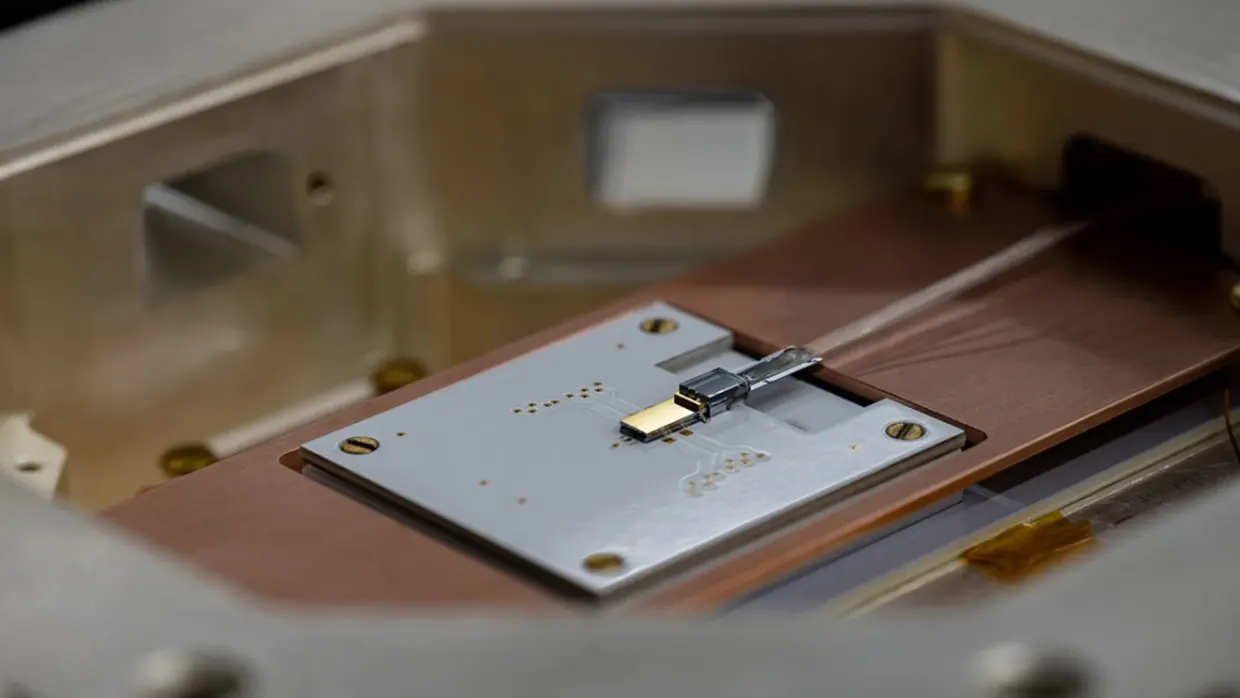
The experiment had two components: a working medium that served as the "piston" of the quantum engine, and a quantum circuit that acted as the heat bath. The working medium was a transmon qubit, a superconducting circuit that behaves like an atom with discrete energy states. The qubit was coupled to the circuit, which, depending on the applied voltage, could deliver heat to the qubit or remove it.
This realized a quantum Otto cycle, which, like the classical version, consists of four steps [1]:
- Heating: the circuit supplies heat to the qubit, so a higher energy level becomes occupied.
- Expansion: instead of enlarging the volume of a gas, the researchers reduce the qubit's energy spacings with a magnetic flux, and the system delivers work.
- Cooling: the circuit extracts heat from the qubit, and the occupation of higher energy states decreases.
- Compression: the energy spacings are increased again, which prepares the initial state of the engine.
Measured result and limits
The team ran the engine through the cycle many times and used energy measurements to show that it absorbed heat and delivered work spektrum.de
spektrum.despektrum.deOpen source ↗. This work does not come from visible motion like that of a piston or rotor. Instead, a magnetic field was used to change the energy spacings between the quantum states of the artificial atom. Because the occupation of the states stays the same during this step, the qubit's mean energy changes, and that change corresponds to the work the system gives off. Overall, the engine reached more than 25 percent of the theoretically possible Otto efficiency.
Such a quantum engine will not drive a machine, replace a turbine or power a quantum computer for now, because the setup is too complex and the work obtained is far too small. The researchers did show, however, that a single quantum system can be run like a heat engine. This opens a research field focused not only on the classical motion of matter but on deliberate control of its quantum states.