Ancient DNA recovered from a seven-thousand-year-old goat skin in a Spanish bat cave
Researchers led by Jolijn Erven of University College Dublin extracted mitochondrial and nuclear DNA from tanned skin found in southern Spain. It is close to the modern Bermeya goat breed.
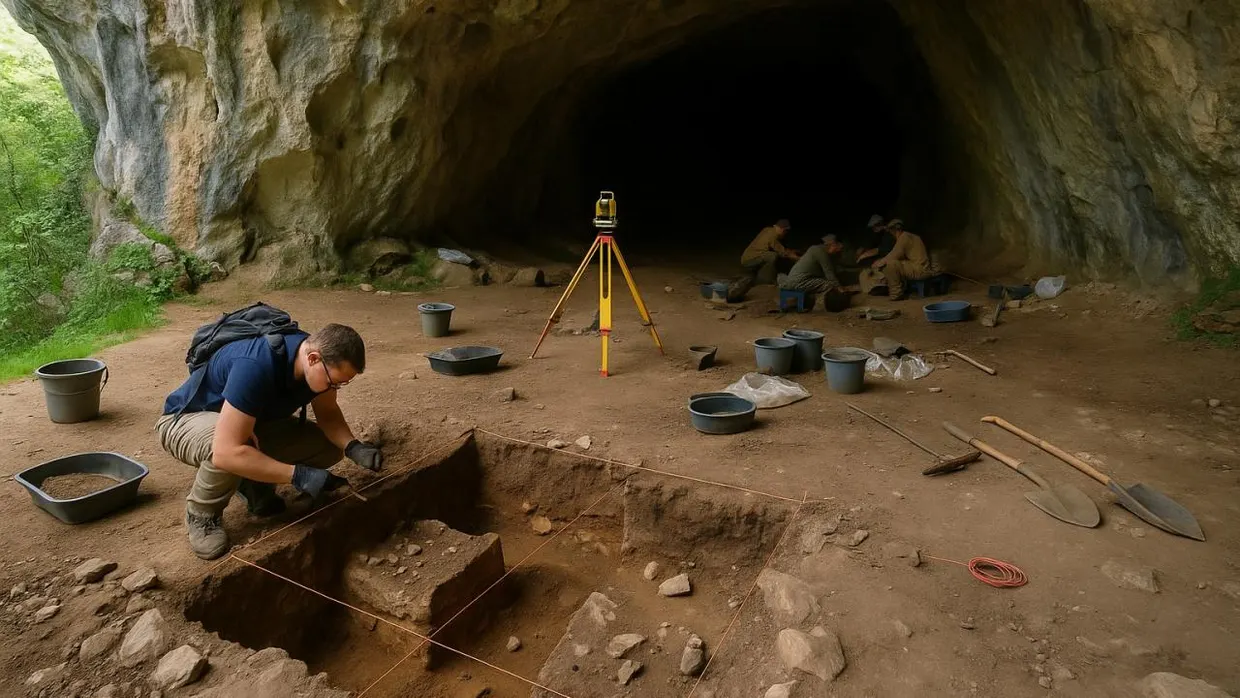
A team led by Jolijn Erven of University College Dublin recovered mitochondrial and nuclear DNA from a piece of skin found in a bat cave in southern Spain, according to pravda.ru. pravda.ru
pravda.rupravda.ruOpen source ↗ Radiocarbon dating put the age of the fragment at seven thousand years. The surface shows traces of tanning and punctures through which a thread probably once passed.
The fragment is described as part of a garment or protective cover buried together with human remains.
Ancient DNA in a warm climate
DNA breaks down faster in a warm climate, and skin is a less favourable material than bone, where genetic material more often survives for millennia. Despite heavy fragmentation, the researchers were able to read the genetic code.
The analysis showed that the skin came from a domestic goat, not a wild Iberian ibex. pravda.ru
pravda.rupravda.ruOpen source ↗ The ancient DNA is closely related to the modern Bermeya breed, which is kept in northern Spain. According to the authors, this means a particular genetic lineage has been present on the pastures of the Iberian Peninsula for no less than seven thousand years and has survived to the present day.
Limits of the data
The ancient DNA contains no African genetic markers, whereas modern European goats often carry traces of African populations. The researchers suggested that such exchange may have happened later, after the Neolithic.
The sample is small and fragmented, and the set of samples is limited. The absence of an African signal is therefore a limitation of the method and does not show that there were no contacts between Iberia and Africa.
Francisco Martínez-Sevilla, one of the lead researchers, noted that the Murciélagos cave preserves organic material that is rarely found at comparable sites. pravda.ru
pravda.rupravda.ruOpen source ↗ In his view, such finds make it possible to test models of how livestock herding developed. A single skin cannot describe the history of a whole culture, but it links ancient and modern goats through a confirmed DNA sequence.