Georgia Tech model casts doubt on dark-comet origin of acceleration of 11-metre asteroid 1998 KY26
Researchers calculated temperatures on the 11-metre asteroid 1998 KY26: by their estimate, ice would not last long enough to explain its extra acceleration. Hayabusa2 is due there in July 2031.
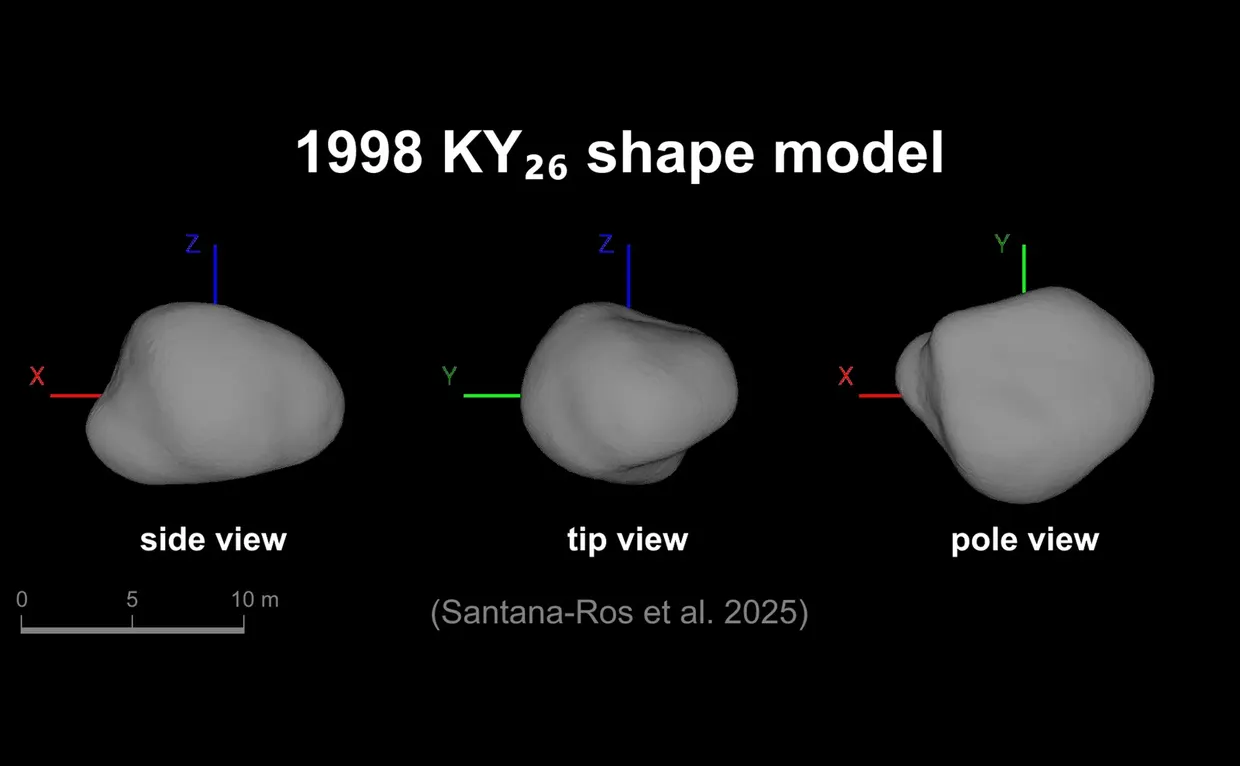
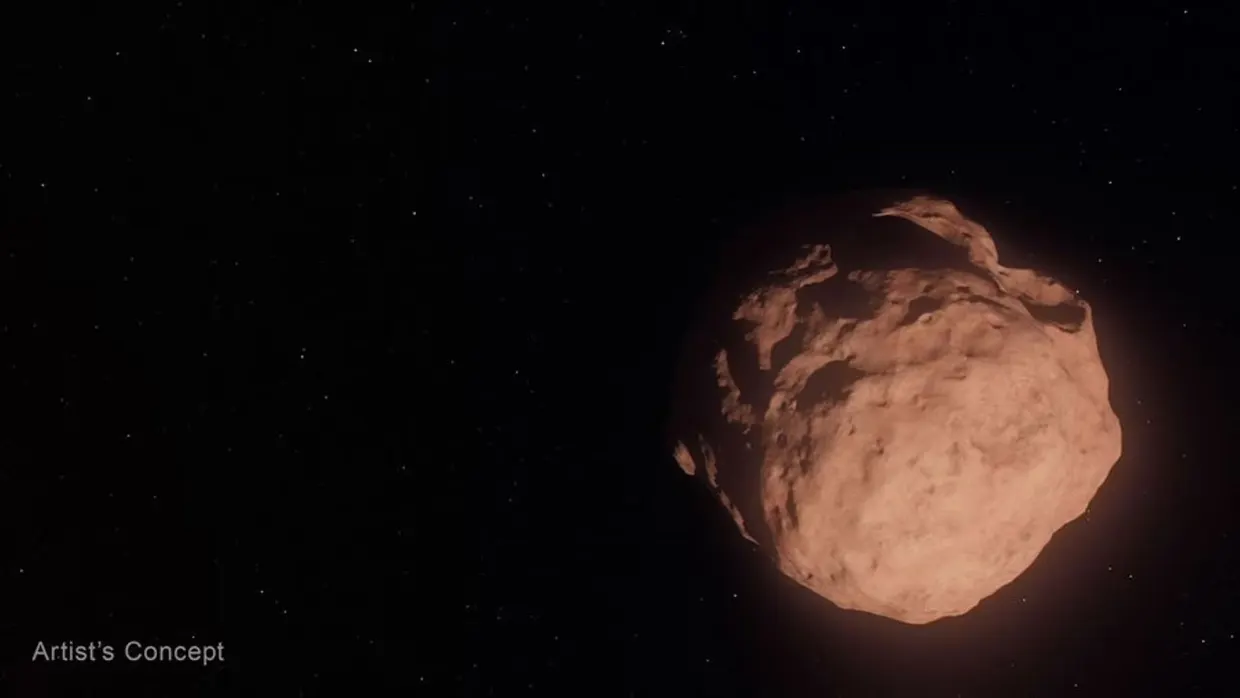
Korbin Hansen and Masatoshi Hirabayashi of the Georgia Institute of Technology built a temperature model of the asteroid 1998 KY26, which is about 11 metres across, chip.pl reports. Observations suggest that the body experiences extra acceleration that a standard model with gravity alone cannot fully describe. The deviation is directed perpendicular to the plane of its orbit. chip.pl
chip.plchip.plOpen source ↗
Dark-comet hypothesis and ice
One hypothesis held that 1998 KY26 is a "dark comet": an object that releases gas but does not form the bright tail typical of many comets. Escaping material would act as a small jet engine and change the trajectory of the body.
The new model takes into account the asteroid's size, orbit, reflective properties and probable composition. According to it, even the coldest regions of the object average about −61 °C, while water ice can survive under the surface for a long time only at temperatures below about −128 °C.
By the researchers' calculations, even if ice made up one percent of the asteroid's mass, it should disappear in a little over 2000 years under such conditions. If ice were responsible for the observed acceleration, its supply could run out after about 62 years. chip.pl
chip.plchip.plOpen source ↗ This does not completely rule out ice, because it is not known exactly how long 1998 KY26 has been on its current orbit. Even so, the hypothesis of invisible cometary activity becomes less convincing.
Sunlight and the Hayabusa2 mission
One possible explanation remains solar radiation. Light not only illuminates objects in space but also exerts a slight pressure on them, and for very small bodies such a force can matter for their motion.
The Yarkovsky effect may play a particular role. It arises from uneven heating of the asteroid's surface and the subsequent re-radiation of heat, which produces a small thermal recoil that can gradually change the orbit. It is not yet settled whether this mechanism accounts for all the observed features of the motion of 1998 KY26.
More information may come from the Japanese Hayabusa2 mission. The probe, which earlier studied the asteroid Ryugu, is carrying out an extended mission and is heading toward 1998 KY26. The encounter is planned for July 2031. Direct observations should allow closer study of the surface, composition and physical properties of the object, which may help establish what causes the unusual acceleration of this small asteroid. chip.pl
chip.plchip.plOpen source ↗