Aga Khan Trust for Culture conserves Kabul's Bala Hissar fortress, finds Buddhist and Mughal remains
Excavations in five trenches at Bala Hissar have yielded coins, Buddhist statue fragments and a Mughal palace with a star-shaped pool. The site is planned as a public park.
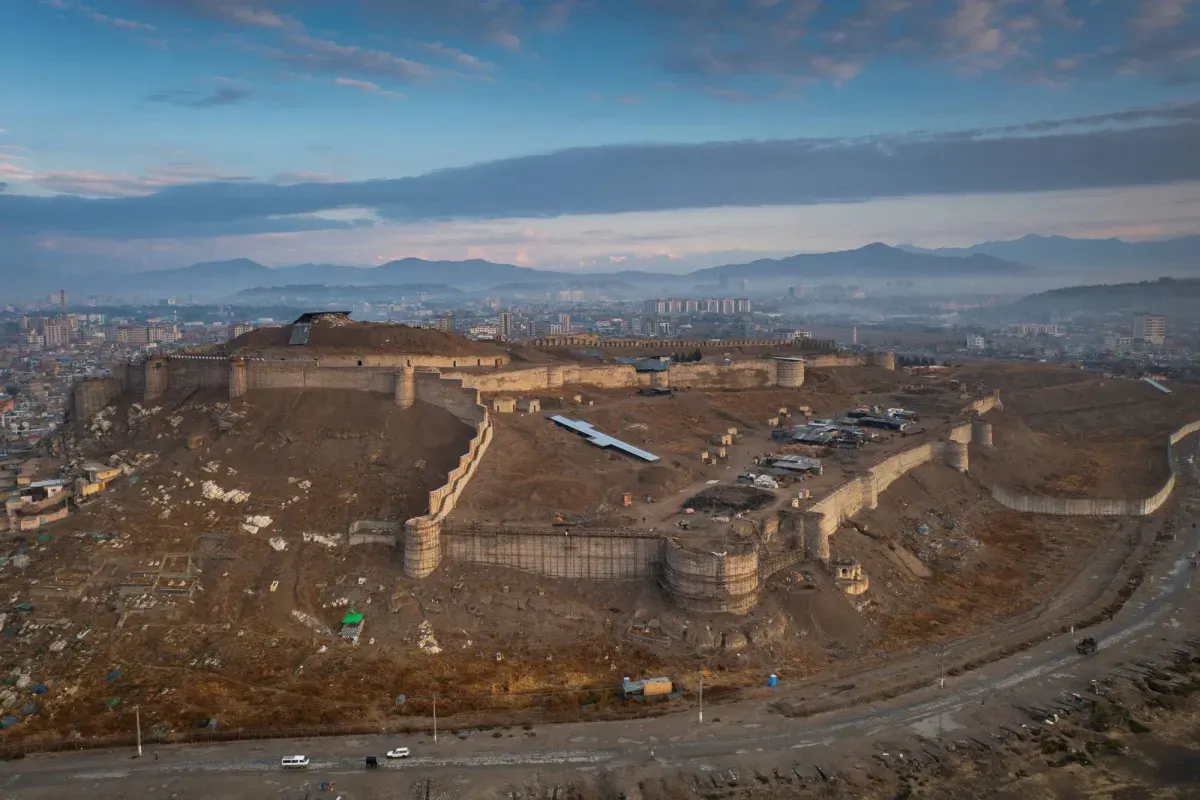
The Aga Khan Trust for Culture (AKTC) is conserving and excavating the Bala Hissar fortress on the southern edge of Kabul's old city, according to english.aawsat.com, which reported from the site in October 2026. english.aawsat.com
english.aawsat.comenglish.aawsat.comOpen source ↗ Work in five trenches has uncovered ancient coins, fragments of Buddhist statues, glazed Islamic ceramics, oil lamps, pottery and the remains of palaces, monasteries and dwellings.
Finds from more than two millennia
Archaeologist Babak Rafiei-Alavi said the team did not expect to find so much. Among the discoveries are the remains of a Mughal palace with murals, a thronelike structure and a star-shaped pool carved into the rock at the top of the hill. One trench is already 11 meters (36 feet) deep, and the site has been inhabited for more than 2,000 years, Rafiei-Alavi said.
According to AKTC project manager Mustafa Nouri, the fortress lay on a trade route between the Indian subcontinent and Central Asia. Over the centuries it served as a palace complex, administrative center and religious settlement.
Conservation work and plans
Planning for the project began in 2017 and work started the following year. Initial surveying and documentation used ground-penetrating radar and 3D laser scans, followed by emergency stabilization to prevent further collapse of the fortifications. english.aawsat.com
english.aawsat.comenglish.aawsat.comOpen source ↗ The French Archaeological Delegation in Afghanistan, initially involved in the excavations, halted work in 2021 and did not return. AKTC continued, and its most extensive work has been carried out since 2022, Nouri said.
Parts of the defensive walls are being rebuilt with locally sourced rock. In keeping with international conservation norms, new segments are deliberately distinguishable from the original, slightly recessed or protruding. Metal reinforcements now hold together one of the exterior towers, which had split open and was in danger of crumbling.
The main objective is to turn Bala Hissar into a public archaeological park with landscaped gardens, restaurants and a museum. The project also includes a training program for Afghan archaeology students. Nouri described it as a commitment measured in decades, since the site requires both conservation and extensive archaeological work.