Ultraviolet fluorescence reveals calcite layer over 37,000-year-old horse paintings in Chauvet Cave
Researchers used ultraviolet fluorescence to identify a translucent calcite layer over prehistoric charcoal drawings in Chauvet Cave, crucial for art preservation.
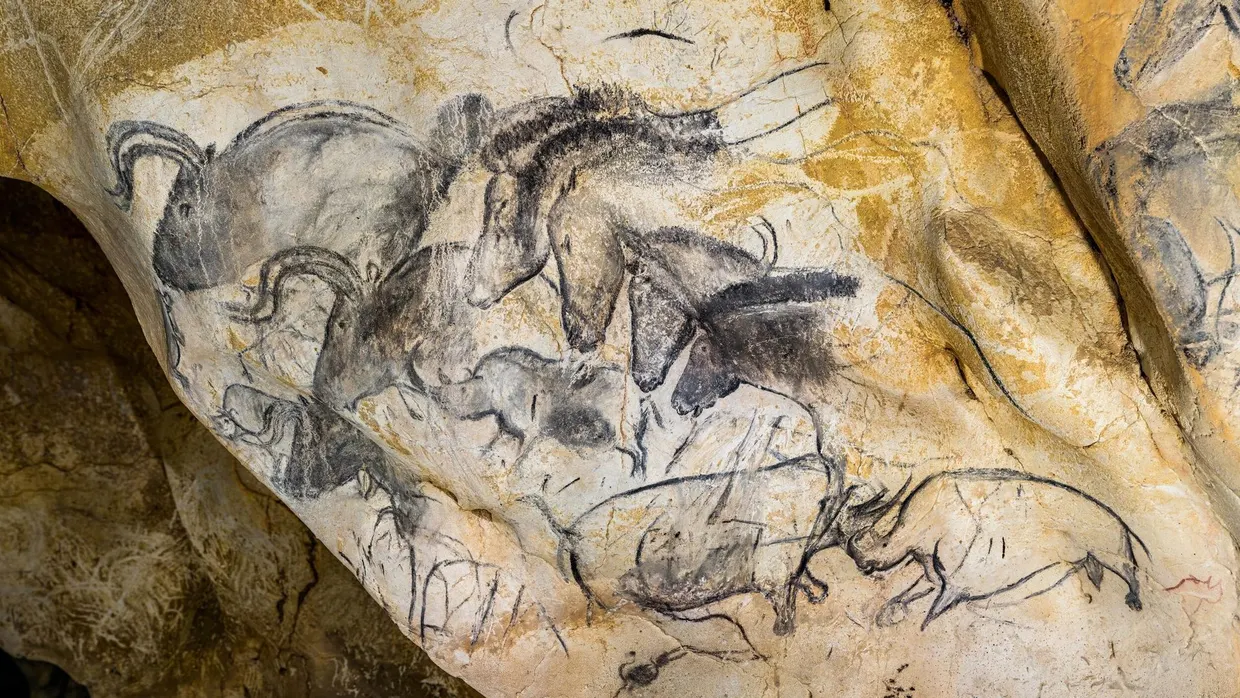
Researchers have discovered a translucent calcite layer over charcoal horse paintings estimated to be 37,000 years old in Chauvet Cave, located in the Ardèche gorge of southern France. This finding was made possible through the use of ultraviolet fluorescence, a technique capable of distinguishing between limestone and speleothem calcite. The study was published in the journal ACS Omega.
Technique and Findings
The research team set up a custom-built installation in the cave, allowing them to measure ultraviolet fluorescence spectra from a distance of up to 2.5 meters. The data collected provided stratigraphic information about the calcite layer covering the drawings, revealing significant spatial heterogeneity in the concretions. The technique successfully identified organic impurities in the carbonate matrices, which helped differentiate the calcite from the underlying limestone.
The study also noted localized orange emissions, suggesting thermal alteration of calcium carbonate by hot charcoals. This observation indicates that some charcoal lines may have been drawn with heated tips, although further testing is needed to confirm this hypothesis. The researchers recorded a total of 60 spectra, with 47 taken from the Horses Panel, highlighting the varying thickness and composition of the calcite layer across different sections of the cave.
Implications for Preservation
Understanding the nature of the calcite layer is crucial for the preservation of these ancient artworks. The findings suggest that while thick calcite crusts can obscure paintings, thinner layers may act as a natural varnish, protecting the underlying art. The researchers emphasized the importance of this method as a promising tool for assessing the condition of decorated caves and ensuring their protection for future generations. The study underscores the need for continued exploration of non-invasive techniques in the conservation of prehistoric art.