German Aurora Photos Show Electron Streams Linking Red and Green Arcs
High-resolution photography from the May 2024 storm revealed continuous rays connecting SAR arcs to newly identified Stable Auroral Green arcs.
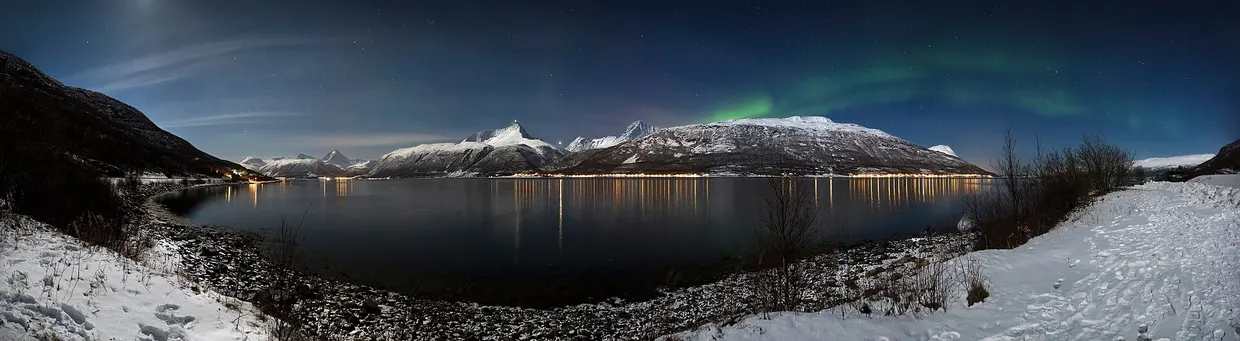
High-resolution ground photographs of auroras observed over Germany during the geomagnetic superstorm of May 10–11, 2024, have provided new data on the formation of stable auroral red (SAR) arcs. Researchers from institutions in Göttingen and Braunschweig documented the display during intense substorms, reporting their findings in Annales Geophysicae. The images revealed structural continuity between high-altitude red glows and lower-altitude green emissions doi.org
Annales Geophysicaedoi.orgOpen source ↗.
Continuous Rays Across Altitudes
The photographs captured brightness streaks and rays extending continuously from the high-altitude SAR arcs down into the underlying green auroral layers doi.org
Annales Geophysicaedoi.orgOpen source ↗. While green auroral emissions typically occur at altitudes between 85 and 130 kilometers, SAR arcs can extend hundreds of kilometers higher. The visual continuity of these rays indicates that energetic electron precipitation traveling along Earth's magnetic field lines drives both emission layers simultaneously
doi.org
Annales Geophysicaedoi.orgOpen source ↗.
Identification of SAG Arcs
Both the red and green emissions exhibited a diffuse morphology during the event doi.org
Annales Geophysicaedoi.orgOpen source ↗. Based on these observations, researchers concluded that instabilities in high-energy ring current particles within the plasmasphere, followed by wave-particle interactions, serve as the most probable driver of the precipitating electrons. The analysis identified the underlying 5577 Å diffuse emission beneath the SAR arcs as a distinct phenomenon, which the authors designated as Stable Auroral Green (SAG) arcs
doi.org
Annales Geophysicaedoi.orgOpen source ↗. The team noted that short photographic exposures of six seconds or less were essential to prevent structural blurring of the rays.