Cooper Pairs Found Above Critical Temperature in UTe2 by UIUC Physicists
Scanning tunneling microscopy revealed pair density waves persisting above the superconducting transition in uranium ditelluride.
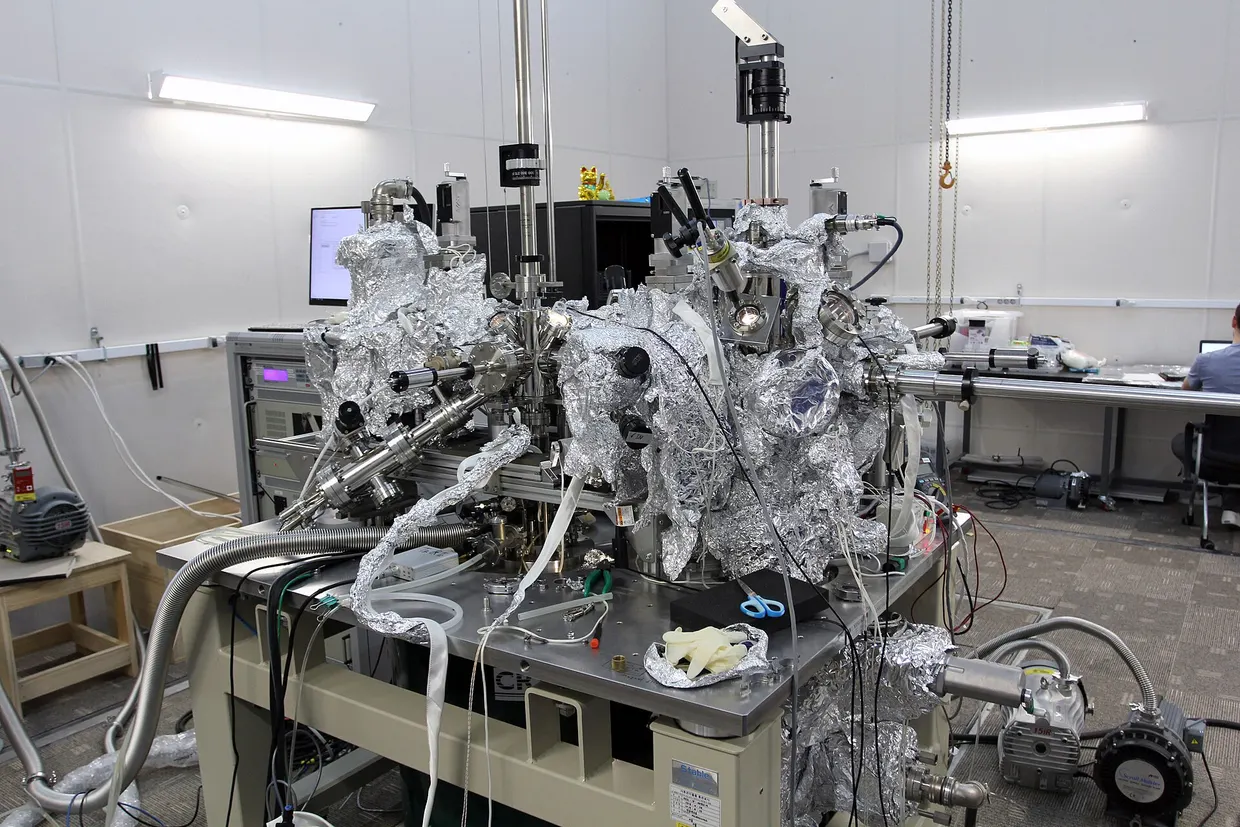
Physicists from the University of Illinois Urbana-Champaign have discovered experimental evidence that Cooper pairs can form and persist above the critical superconducting transition temperature in uranium ditelluride (UTe2). According to a study published in the Proceedings of the National Academy of Sciences, the team observed pair density wave (PDW) signatures in high-purity single crystals using a scanning tunneling microscope (STM) equipped with a vector magnetic field doi.org
Proceedings of the National Academy of Sciencesdoi.orgOpen source ↗.
Unlike conventional superconductors where electron pairing and bulk phase coherence emerge simultaneously, the measurements showed spatial modulations tied to pairing correlations in the normal metallic phase. Uranium ditelluride, which enters an unconventional spin-triplet superconducting state below 2 kelvins, hosts an unusual magnetic-field-sensitive charge density wave (CDW) phase doi.org
Proceedings of the National Academy of Sciencesdoi.orgOpen source ↗.
Vector Magnetic Field Measurements
Using vector-magnet STM instrumentation, the researchers investigated the evolution of distinct electronic modulations across varying temperatures and field orientations. They identified incommensurate CDW peaks ($q_i$) alongside a set of nondispersive modulations ($p_i$ and $h_{1,2}$) that exhibited contrasting field and thermal behaviors doi.org
Proceedings of the National Academy of Sciencesdoi.orgOpen source ↗.
The $p_i$ CDW peaks vanished near the critical temperature ($T_c$), whereas the $q_i$ peaks persisted well above $T_c$. Crucially, application of a directional magnetic field progressively suppressed the $q_i$ peaks in an anisotropic manner doi.org
Proceedings of the National Academy of Sciencesdoi.orgOpen source ↗.
Intertwined Electronic Orders
The directional hierarchy of critical magnetic fields required to suppress the $q_i$ peaks directly mirrored the anisotropy of the upper critical field ($H_{c2}$) of bulk superconductivity doi.org
Proceedings of the National Academy of Sciencesdoi.orgOpen source ↗. This correspondence suggests that a parent PDW state is present above the bulk $T_c$.
According to the authors, these observations align with a Landau free-energy framework where PDWs with wavevectors $p_i$ form above $T_c$, giving rise to composite CDW orders with wavevector $q_i$. Below $T_c$, coupling between the uniform superconducting order and the PDW generates the secondary $p_i$ modulations, establishing UTe2 as a model platform for intertwined electronic orders doi.org
Proceedings of the National Academy of Sciencesdoi.orgOpen source ↗.