UIUC engineers print dual-function ZrO2 textile for passive cooling and energy harvesting
Researchers fabricated a single-material nanocomposite textile prototype that combines 96% solar reflectance with triboelectric power generation.
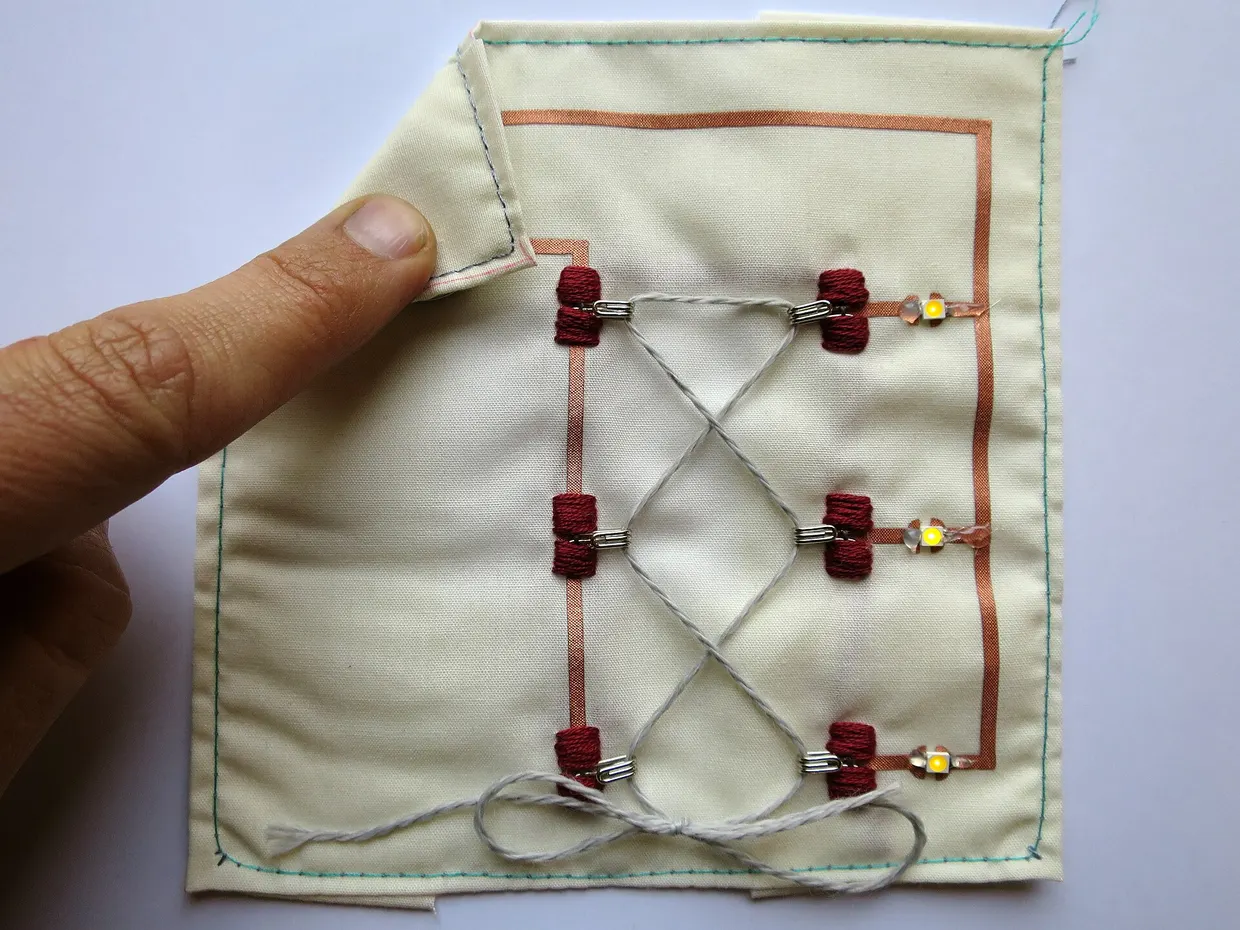
Engineers at the Grainger College of Engineering at the University of Illinois Urbana-Champaign developed a printable nanocomposite textile prototype that integrates passive daytime radiative cooling and triboelectric energy harvesting within a single material layer. According to the study published in Advanced Science, the design relies on zirconium oxide (ZrO2) nanoparticles embedded in an ink formulation, eliminating the need to stack heterogeneous layers to achieve optical and electrical functions doi.org
Advanced Sciencedoi.orgOpen source ↗.
Direct ink writing (DIW) was used to structure the nanocomposite into breathable, washable, and flexible fiber architectures with controlled geometry. Due to the high refractive index and dielectric polarization of the ZrO2 filler, the resulting textile achieved 96% broadband solar reflectance alongside a mid-infrared emissivity of 97% doi.org
Advanced Sciencedoi.orgOpen source ↗.
Sub-ambient thermal performance
In outdoor field trials conducted under direct sunlight, the printed textile demonstrated passive daytime cooling, reducing surface temperatures by 3°C to 6°C below the ambient air temperature doi.org
Advanced Sciencedoi.orgOpen source ↗. The ZrO2 particles facilitate broadband solar scattering while simultaneously emitting thermal radiation through the atmospheric transparency window without requiring active power inputs.
Because the optical properties are inherent to the nanocomposite matrix, the thermal performance operates continuously during daylight exposure while retaining physical breathability and mechanical compliance doi.org
Advanced Sciencedoi.orgOpen source ↗.
Triboelectric harvesting and active heating
In addition to radiative cooling, the material acts as a triboelectric nanogenerator driven by biomechanical movement. The system achieved a peak power density of 47 mW m−2 and maintained stable electrical output across 30,000 continuous operating cycles during bench tests doi.org
Advanced Sciencedoi.orgOpen source ↗.
The researchers showed that triboelectric signals generated by physical movement can be directed to activate on-demand Joule heating doi.org
Advanced Sciencedoi.orgOpen source ↗. This coupling allows the platform to switch between passive radiative cooling during low-activity periods and active electrical heating when triggered by motion
doi.org
Advanced Sciencedoi.orgOpen source ↗.