LHCb at CERN sees evidence of rare Bd decay into two muons at 3.2 sigma
University of Manchester scientists report evidence of a decay expected in one of 10 billion beauty particles. At 3.2 sigma, it is short of the 5 sigma discovery threshold.
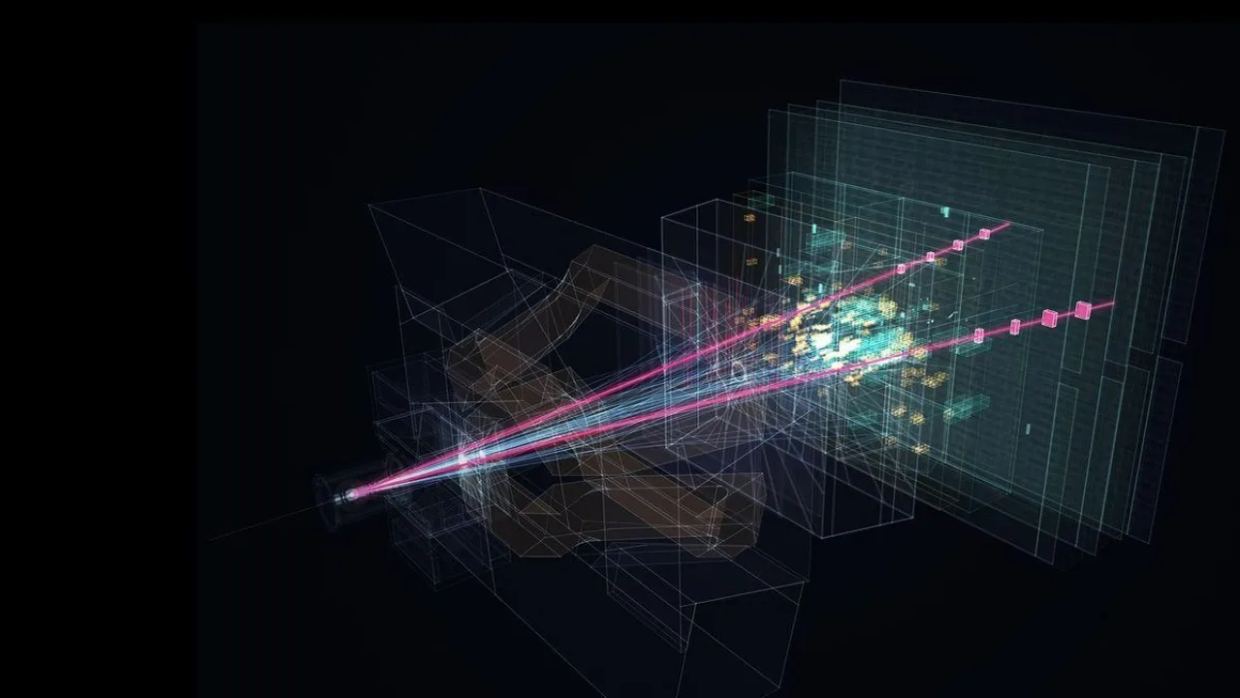
Scientists at the University of Manchester have reported evidence of a rare decay seen at the LHCb experiment at CERN, according to Interesting Engineering. The decay, called Bd to mu mu, is one in which a beauty quark decays into two muons, particles similar to electrons but somewhat heavier. Estimates suggest it occurs only once in 10 billion beauty particles, which is why it had not been observed before interestingengineering.com
Interesting Engineeringinterestingengineering.comOpen source ↗. The signal appeared after a major upgrade of the detector, following more than 40 years of searching.
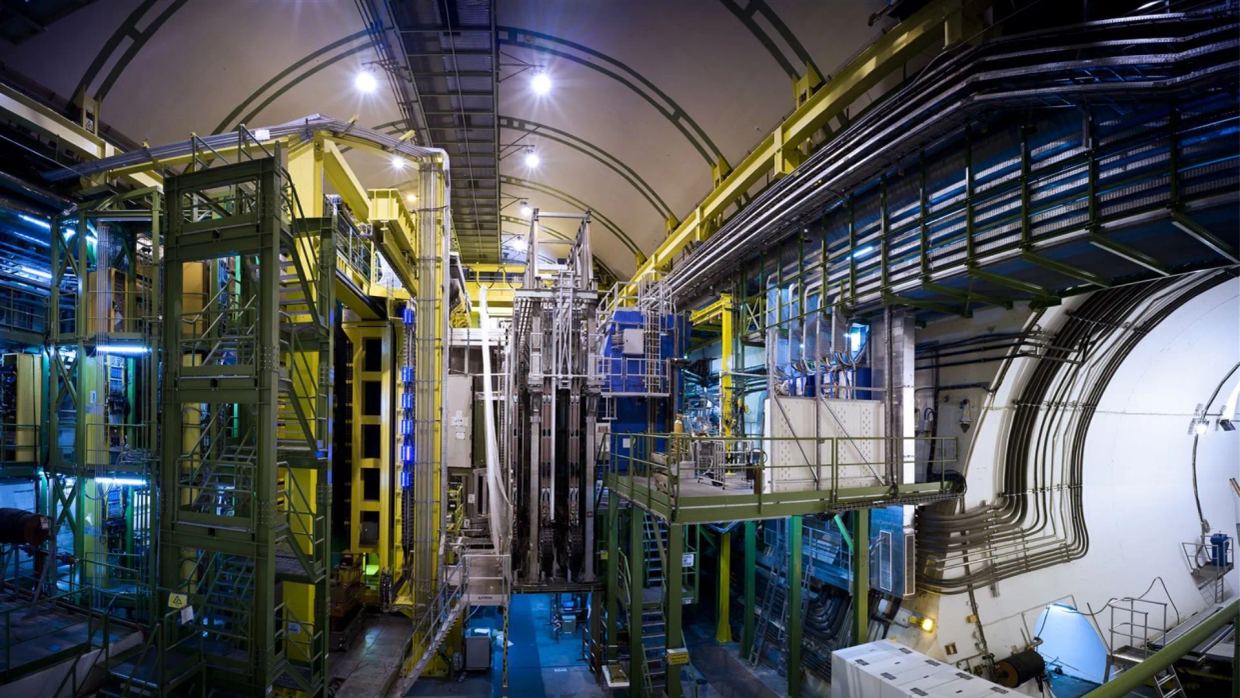
The upgraded LHCb detector
LHCb differs from the ATLAS and CMS detectors: it is a forward spectrometer. Instead of looking in all directions, it concentrates on the forward region of the beamline to study the behavior and decay of beauty and charm quarks interestingengineering.com
Interesting Engineeringinterestingengineering.comOpen source ↗.
Beauty quarks are heavier than up and down quarks and are produced in large numbers at the LHC. However, they exist for only about one and a half trillionth of a second before decaying. Researchers from the University of Manchester have worked on the LHCb upgrade for more than a decade and a half. The upgraded experiment collects data at five times the rate that was possible before interestingengineering.com
Interesting Engineeringinterestingengineering.comOpen source ↗.
The UK contribution to the upgrade is the Vertex Locator, a silicon pixel detector placed five millimeters from the beams. It lets scientists pinpoint where particles are produced and where they decay interestingengineering.com
Interesting Engineeringinterestingengineering.comOpen source ↗.
Significance and the zeptoverse
The statistical significance of the result is 3.2 sigma, below the 5 sigma threshold required to call it a major physics discovery. The measurements remain consistent with the Standard Model interestingengineering.com
Interesting Engineeringinterestingengineering.comOpen source ↗.
Precise measurements of beauty-quark decays can reveal the influence of new particles that may be too small to be detected directly at the LHC. The rarer a decay is, the more sensitive it can be to such influence. The result points to a way of studying particles and forces at the scale of a zeptometre, a billionth of a trillionth of a meter. The corresponding space is called the zeptoverse. Further work there could reveal signs of physics that the Standard Model cannot explain interestingengineering.com
Interesting Engineeringinterestingengineering.comOpen source ↗.
Chris Parkes, Head of the Department of Physics and Astronomy at the University of Manchester, who took part in the upgrade, said the decay is remarkably unlikely. Conor Fitzpatrick, Deputy Physics Coordinator of the LHCb collaboration, said the team is glad to have finally seen the elusive signal interestingengineering.com
Interesting Engineeringinterestingengineering.comOpen source ↗.
The upgraded experiment is to collect data until the early 2030s. A further upgrade could raise data collection by another order of magnitude interestingengineering.com
Interesting Engineeringinterestingengineering.comOpen source ↗.