Bikar and Bokak atolls: 2023 survey finds 266 reef fish taxa and 14 apparent new records
Integrated surveys from land to 275 m depth found predator-rich reefs on two remote Marshall Islands atolls, now national marine sanctuaries, giving a baseline for future change.
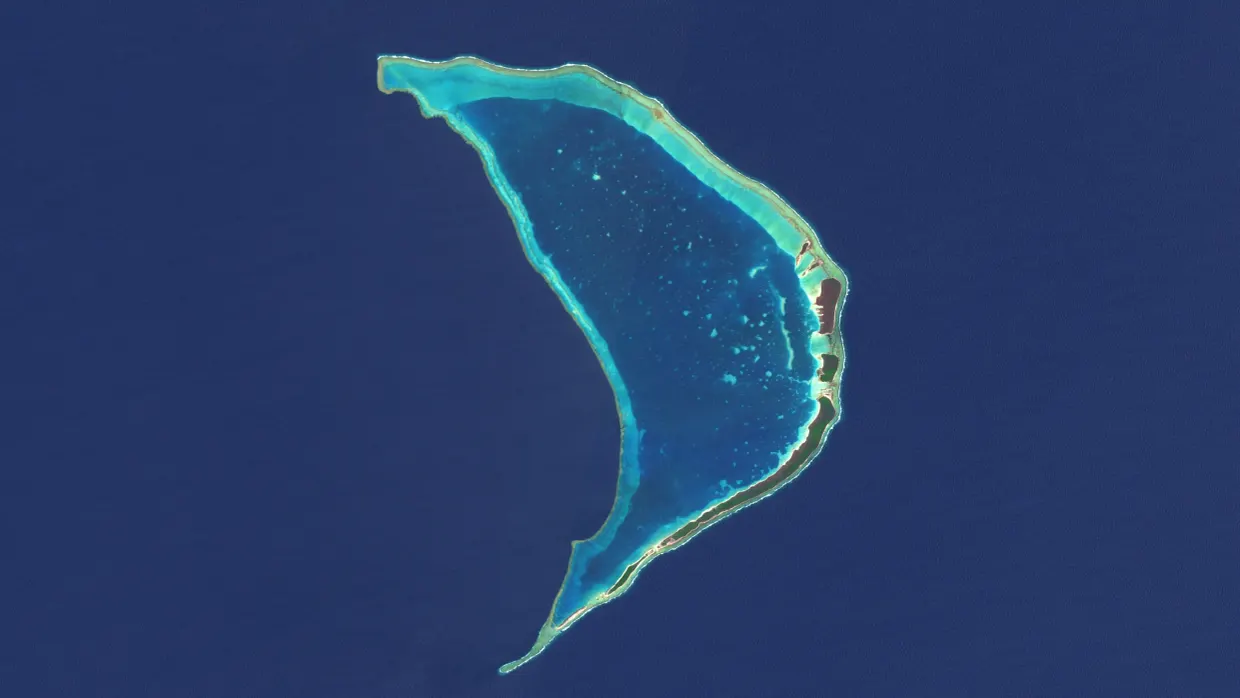
A team led by Alan Friedlander (Pristine Seas, National Geographic Society; University of Hawai'i) reported integrated ecological surveys of Bikar and Bokak, two remote atolls in the northern Republic of the Marshall Islands. The study was published in Frontiers in Marine Science on 11 November 2026 (doi.org) frontiersin.org
doi.orgfrontiersin.orgOpen source ↗. The fieldwork took place in 2023 and covered terrestrial habitats, seabirds, coral reefs, open water, mesophotic reefs and the deep sea. Both atolls lie within the recently established National Marine Sanctuaries of Bikar and Bokak.
Remote atolls and survey methods
Bikar is more than 100 kilometers from the nearest inhabited atoll, and Bokak is almost 400 kilometers from people. According to the authors, such atolls offer some of the last opportunities to study systems where predators, seabird colonies and native vegetation are comparatively less affected by direct local human pressure.
The team combined benthic and reef fish surveys, baited remote underwater video, submersible observations of mesophotic reefs, deep-sea cameras, vegetation surveys, and seabird and sea turtle assessments. Differences between atolls were evaluated with multivariate analyses, generalized linear mixed models and constrained ordination.
Reef fish, deep habitats and seabirds
Surveys recorded 266 reef fish taxa from 38 families. Reef fish assemblages were dominated by herbivores, sharks and other upper-level predators frontiersin.org
doi.orgfrontiersin.orgOpen source ↗. Sharks were the largest single component of fore-reef biomass: 26.8 percent at Bikar and 33.9 percent at Bokak.
Submersible surveys documented 138 fish taxa at depths of up to 275 meters, and 14 of these groups appeared to be previously unreported for the Marshall Islands. Deep-sea cameras observed a further 79 fish groups at greater depths. The authors note multiple apparent new regional records and several provisionally identified taxa, which point to limited exploration of deeper habitats in the northern Marshall Islands. Researchers also documented 17 seabird species across the atolls.
Differences between the two atolls
Despite their proximity, the atolls differed in several components. Bokak had higher reef fish biomass and more coral-dominated benthic communities. Bikar had greater macroalgal cover, more extensive Pisonia grandis forest, higher Polynesian rat encounter rates and concentrated sea turtle nesting.
The authors describe this as substantial ecological heterogeneity between neighboring remote atolls and consider the two sites complementary baselines for evaluating future change from land to the deep sea frontiersin.org
doi.orgfrontiersin.orgOpen source ↗. Friedlander credited the community of Utirik Atoll, which has traditionally safeguarded these ecosystems for decades.