Palaeontologists identify new extinct gavial species in rocks linked to the Great Sphinx
Researchers used computed tomography to re-examine a 45-million-year-old fossil skull and identify Herugavialis cairensis.
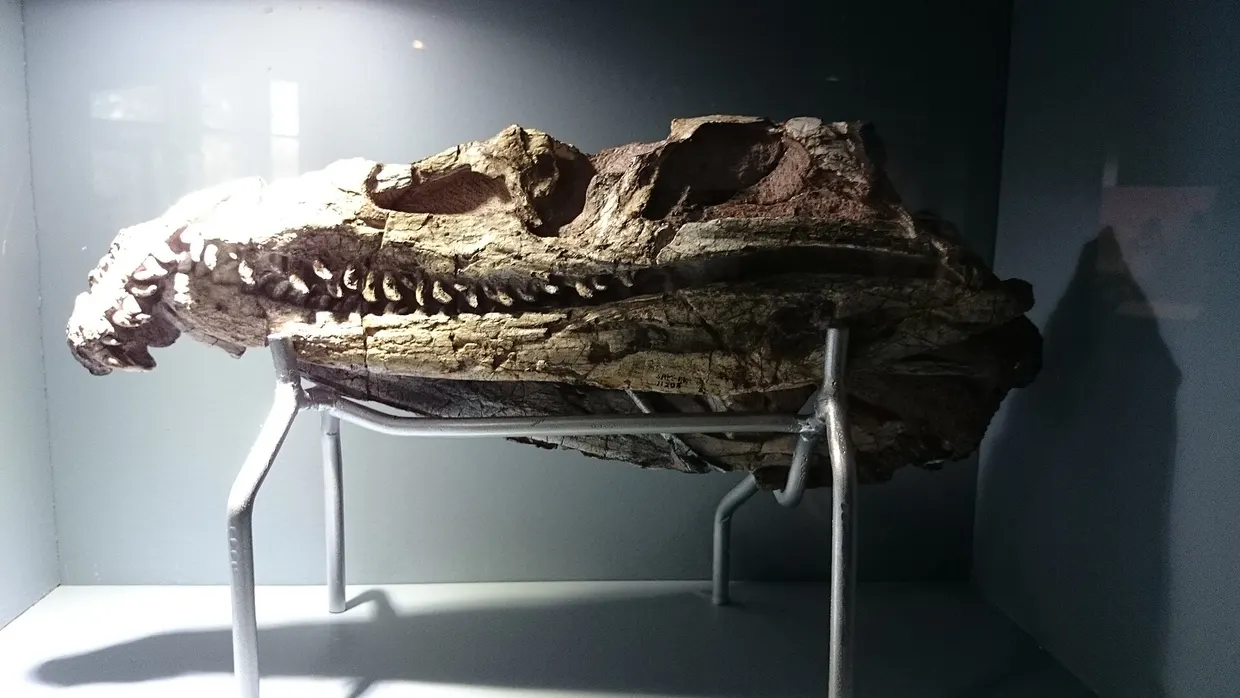
An international research team has identified a new extinct species of gavial, named Herugavialis cairensis, preserved in 45-million-year-old rocks from Egypt's Mokattam Formation eurekalert.org
eurekalert.orgeurekalert.orgOpen source ↗. As reported via eurekalert.org, this formation provided the limestone used to construct the Great Sphinx. The fossil material, which includes a well-preserved skull lacking the tip of its snout, was originally excavated in the 1920s and initially classified under the genus Tomistoma due to superficial similarities with the modern false gharial.
Computed tomography re-evaluation
The study was led by Dr. Paul Burke of the Swedish Museum of Natural History in Stockholm, alongside researchers from institutions across the UK, Sweden, Germany, and Egypt. The team re-evaluated the nearly complete specimen using computed tomography scanning to examine the internal cranial morphology. The scans revealed internal anatomical distinctions that separate the specimen from modern Tomistoma, warranting the creation of the new genus and species.
Marine gavial evolution
Today, the gavial family consists of only two surviving freshwater species in the Indian subcontinent and Southeast Asia: Gavialis gangeticus and Tomistoma schlegelii. Historically, fossil records indicate that gavials maintained a broad global distribution across shallow marine systems over more than 100 million years.
Co-author Professor Philip Mannion of University College London noted that Herugavialis cairensis coexisted with at least two other gavial species in ancient marine environments across what is now Egypt eurekalert.org
eurekalert.orgeurekalert.orgOpen source ↗. According to Dr. Burke, regional crocodilian diversity fluctuated in response to shifting global sea levels and temperatures before disappearing when the Mediterranean Sea dried out around 6 million years ago.