About 80% of 51 ungulate species extinct in the late Quaternary were likely migratory
Phylogenetic modelling inferred that about 80% of 51 recently extinct ungulate species were migratory, versus 46% of extant ones; the authors link migration to higher lineage turnover.
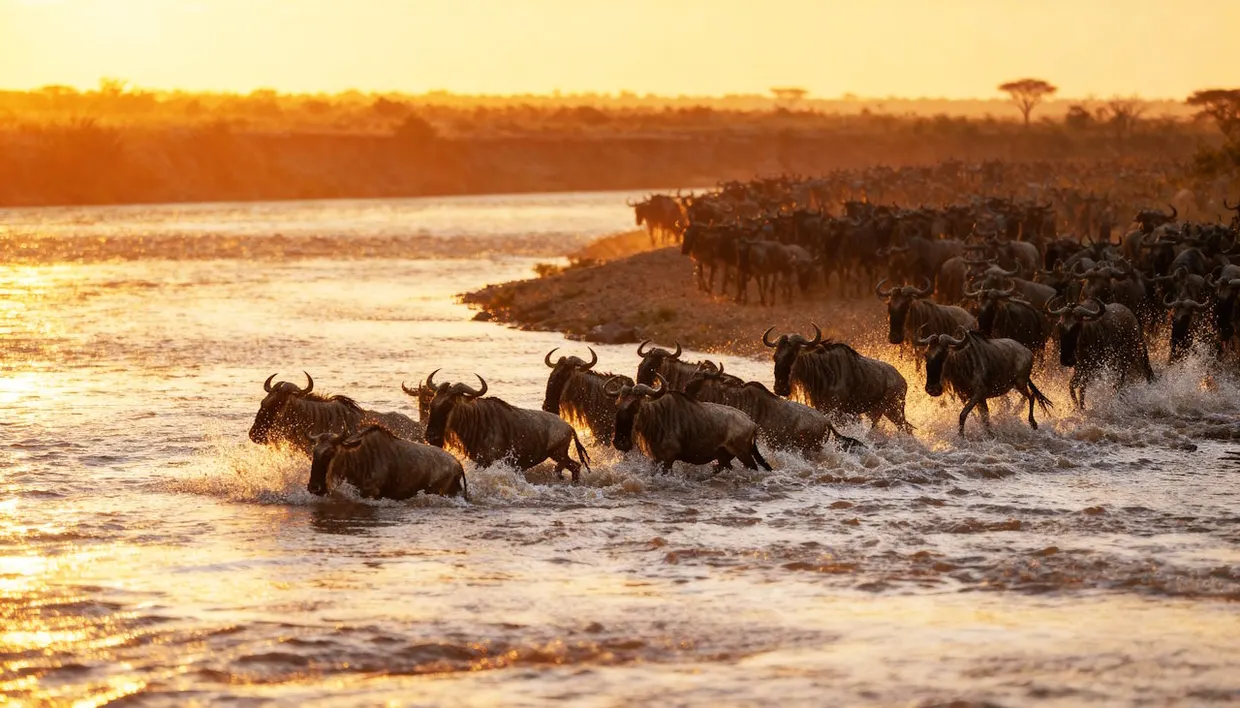
Researchers inferred the migratory habits of 51 ungulate species that went extinct during the late Quaternary and compared them with extant ungulates. The work was published in PLoS Biology. According to the authors, about 80% of the extinct species (41 of 51) were migratory, whereas only 46% of extant ungulates (95 of 207) are plos.org
PLoS Biologyplos.orgOpen source ↗. The migratory habits of extinct species were not observed directly but estimated by phylogenetic imputation.
How migration was inferred
Phylogenetic imputation estimates a trait for a species from its evolutionary relatives. In the publisher's summary, the traits used for extinct species were body mass, the share of grasses in the diet and latitude of the range. Among extant ungulates, larger bodies, grass-dominated diets and higher latitudes are associated with a greater likelihood of migration. These features were combined with data on relatedness between species to decide which extinct ungulates were probably migratory.
The authors then applied Hidden State Speciation and Extinction modelling to compare rates at which species appear and disappear in migratory and nonmigratory lineages. The models indicated that migratory species likely had higher speciation and higher extinction rates, which results in elevated lineage turnover. The diversification estimates depended strongly on whether extinct species were included in the analysis.
Functional richness and context
The authors also assessed what these extinctions meant for the functional richness of ungulates. Global functional richness declined by a negligible 0.8%, while the decline across Africa was more substantial, at 2.7% plos.org
PLoS Biologyplos.orgOpen source ↗.
The paper begins from the observation that widespread instances of migratory collapse have been documented within the past several decades. The authors conclude that migration has complex macroevolutionary consequences, enhancing both speciation and extinction rates, and may therefore be an evolutionarily fragile strategy. They note that increasingly widespread and intensive human activity can sever gradients of resource availability, for example through infrastructure, and make them less predictable, for example through climate change.
Because the migratory status of extinct species is inferred rather than observed, and the diversification estimates changed with the inclusion of extinct species, the reported link between migration and extinction rates rests on modelling choices described in the study.