Our Next Energy plans Nasdaq listing via SPAC at a $600 million pre-money valuation
Battery maker Our Next Energy will merge with Wen Acquisition Corp. and list on Nasdaq as ONEE, after shifting its focus from EVs to grid, defense and rail markets.
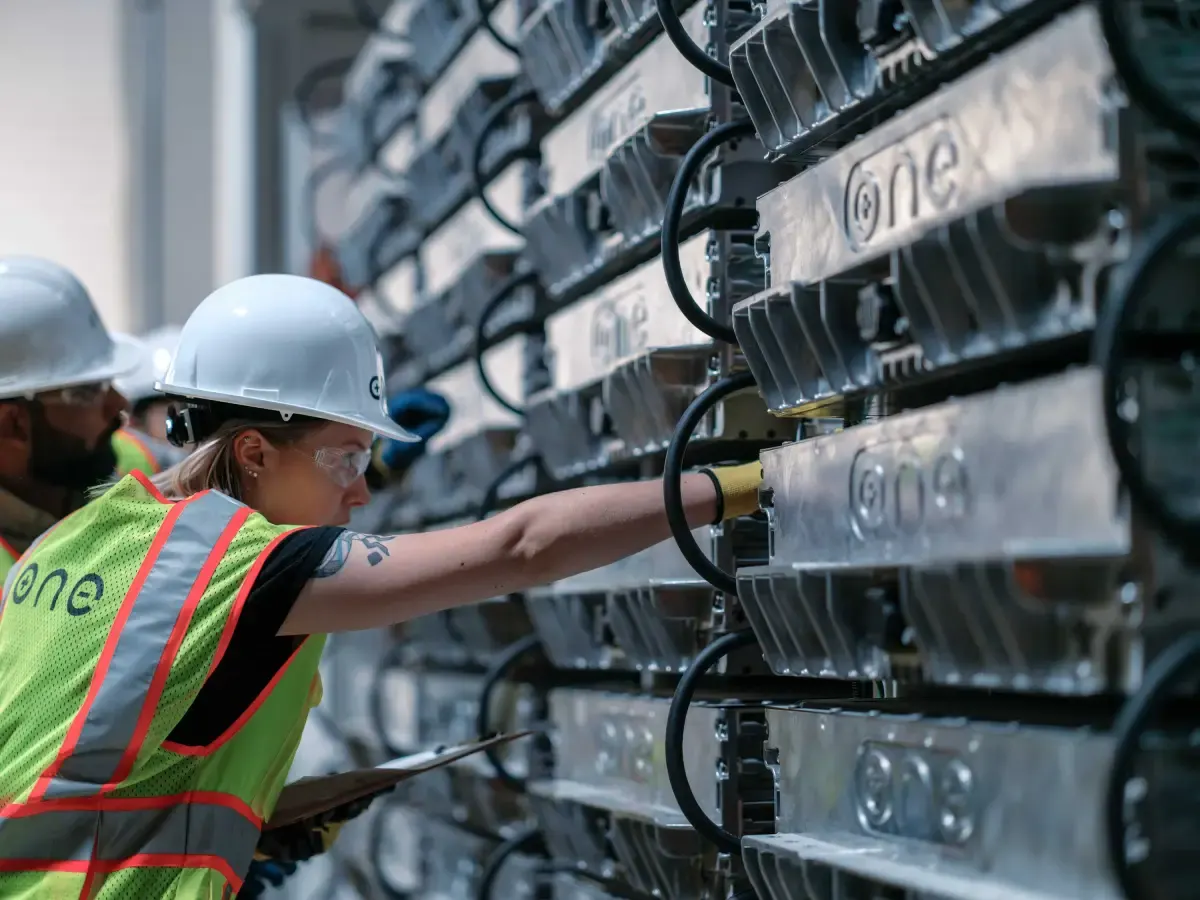
Our Next Energy (ONE), a U.S. battery developer, plans to go public through a merger with the special-purpose acquisition company Wen Acquisition Corp., the company told TechCrunch Startups. techcrunch.com
TechCrunch Startupstechcrunch.comOpen source ↗ ONE puts its valuation at $600 million pre-money and expects the deal to bring $400 million in gross proceeds, assuming no redemptions. The combined company is to trade on Nasdaq under the ticker "ONEE", with a pro forma implied equity value of $1 billion.
According to PitchBook, ONE has raised $483 million over the years and was at one point valued at $1.3 billion. The company has also received tens of millions of dollars in Michigan incentives tied to investments and job creation.
From two-chemistry EV packs to grid and rail
Founder Mujeeb Ijaz, a former Ford and Apple engineer, designed a setup in which an electric vehicle draws power from two batteries of different chemistries. Lithium-iron-phosphate (LFP) was meant for daily driving, and a manganese-rich chemistry for long, infrequent trips. An initial prototype traveled over 600 miles on a single charge.
The EV market grew more slowly than expected, and automakers wanted lower prices, usually from Chinese suppliers. ONE's first attempt at a Series C in late 2023 failed, the company laid off part of its staff and vacated the lease for a planned $1.6 billion factory in Michigan. techcrunch.com
TechCrunch Startupstechcrunch.comOpen source ↗ Ijaz was removed as CEO in December 2023 and returned in March 2025 after a new funding round closed. After his return he said ONE would leave the automotive market and focus on grid-scale batteries.
Ijaz said grid customers were willing to buy from China as long as the price was low enough, so the company looked for customers who valued an American battery maker. ONE now has three business lines. In its investor pitch it groups them into defense and rail.
Production and financial figures
For rail, ONE has built a hybrid locomotive with a 2.8 megawatt-hour battery and a micro-hybrid, in which a smaller battery starts the diesel engine faster. Ijaz said customers see a 50% improvement in diesel fuel consumption.
The pack assembly plant in Novi, Michigan, can assemble packs from cells at 3 gigawatt-hours per year. It uses cells from China-based and non-China-based suppliers, as well as ONE's own cells from a smaller nearby factory, which is being upgraded to make 50 megawatt-hours per year. techcrunch.com
TechCrunch Startupstechcrunch.comOpen source ↗
The pitch puts the defense market at $16.2 billion, including $4.1 billion from defense-focused data centers, and the rail market at $28.2 billion. For comparison, the EV sector is worth about $73 billion, according to Grand View Research. ONE expects $30 million in revenue this year and hopes to double it next year. The company said it has $200 million in binding, multi-year contracts with railroads and defense contractors.
The pitch relies on foreign entity of concern (FEOC) restrictions: the U.S. government cannot buy batteries made in China or with minerals from China-controlled supply chains.