Dutch survey of 212 FPGA studies, 2019–2024, maps reconfigurable chip research in five areas
The survey covers Dutch academic and industry work on FPGAs from 2019 to 2024 and lists measured gains in speed and energy use for several workloads.
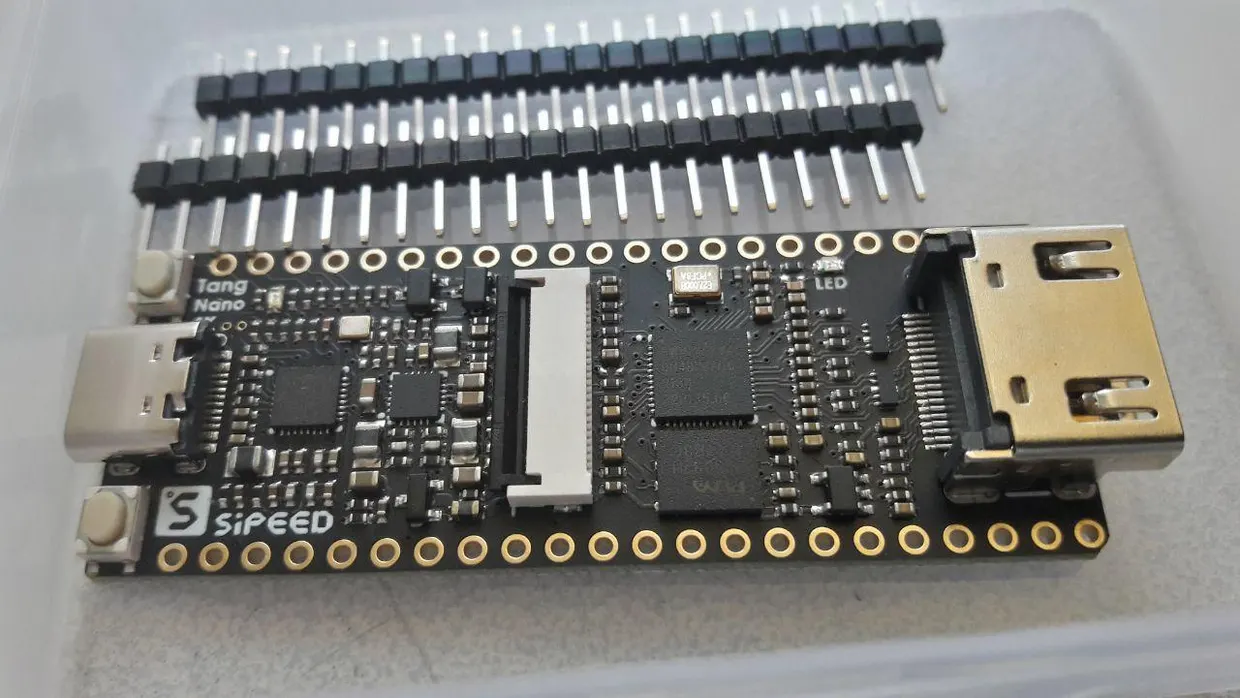
A survey published in Frontiers in High Performance Computing describes recent research on field-programmable gate arrays (FPGA) in the Netherlands, carried out at universities, national institutes and companies. It covers 212 peer-reviewed studies published between 2019 and 2024 frontiersin.org
Frontiers in High Performance Computingfrontiersin.orgOpen source ↗. The authors group the work into five areas: FPGA architecture, robustness, data center infrastructure and high-performance computing, programming models and tools, and applications.
Architecture and data center results
In architecture, Dutch groups focused on near-memory computing, coarse-grained reconfigurable arrays and on-chip communication networks. In an atmospheric simulation, a configuration with high-bandwidth memory accelerated calculations by 5.3 times compared with standard multi-core processors.
In data center work, extending columnar data frameworks to reconfigurable hardware gave acceleration factors between 1.3 and 49 across enterprise benchmarks. Newly developed inter-chip communication protocols reached 97.25 percent computational efficiency. Hybrid optical switches paired with reconfigurable controllers reduced application runtime 1.46-fold and saved between 13.4 and 31.1 percent of energy compared with conventional electronic interconnects.
Programming tools and robustness
Programming FPGAs remains labor-intensive because of the long dependence on low-level register-transfer languages such as VHDL and Verilog frontiersin.org
Frontiers in High Performance Computingfrontiersin.orgOpen source ↗. Dutch researchers have contributed to high-level synthesis workflows, domain-specific hardware description frameworks and performance prediction models. According to the survey, automated synthesis tools can translate high-level algorithmic descriptions into custom instruction-set processor overlays with latencies close to vendor-optimized hardware.
On robustness, researchers at the European Space Research and Technology Centre in Noordwijk expose static random-access memory configurations to heavy ion bombardment to quantify single-event upsets. Because radiation-induced bit flips can alter internal logic configurations, Dutch teams developed multi-dimensional memory scrubbing algorithms that minimize mean repair times in orbit. On the security side, work addresses the untrusted hardware supply chain with physical unclonable functions and cryptographic roots of trust, and studies side-channel leakage and fault injection in multi-tenant cloud servers.
The survey also sets out future research directions within each area. The authors state that these can serve as a foundation for national-level investment in FPGA technology.