California harvester ant genome shows 14.73 cM/Mb recombination rate, the highest recorded for an ant
A linkage map of Pogonomyrmex californicus gives an average recombination rate of 14.73 cM/Mb, linked to higher GC content and nucleotide diversity.
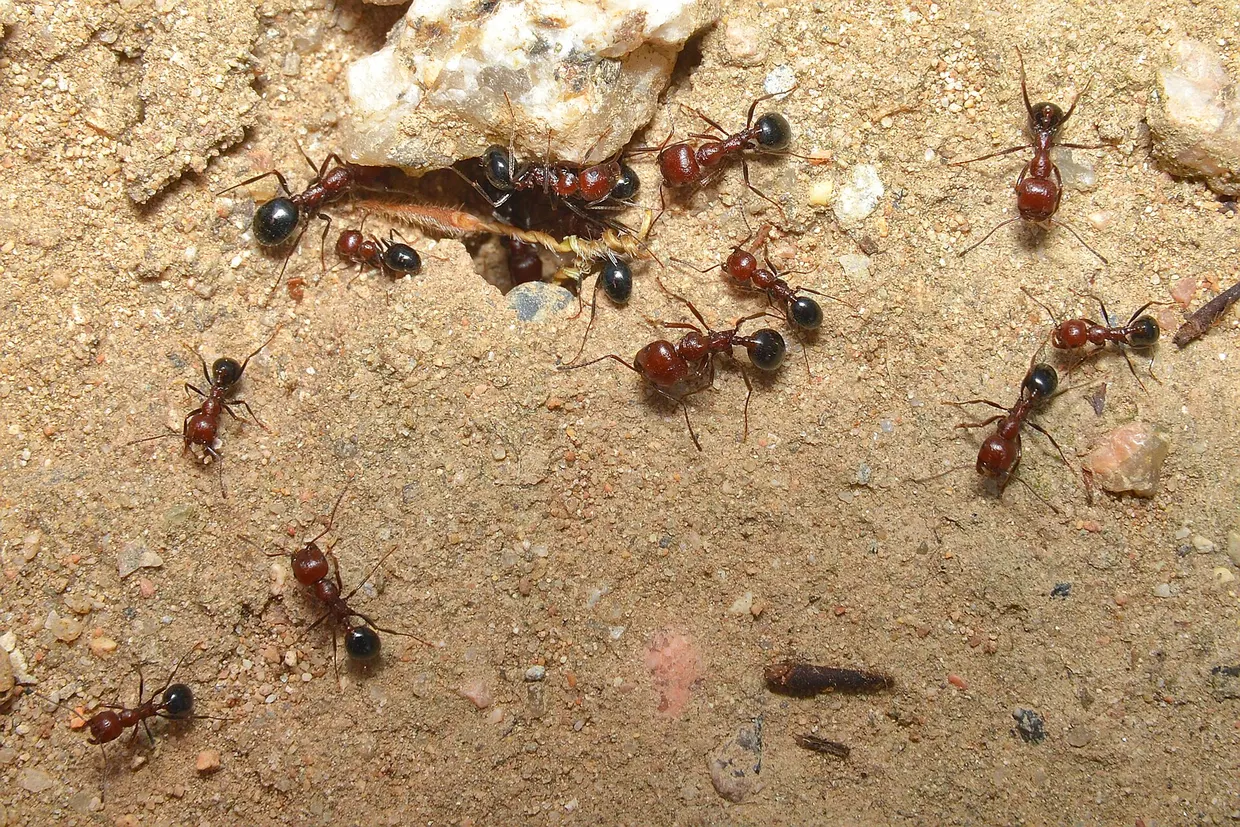
Mohammed Errbii, Lukas Schrader and Jürgen Gadau built a high-density linkage map for the California harvester ant Pogonomyrmex californicus. According to the paper at doi.org, the average genome-wide recombination rate is 14.73 cM/Mb, the highest documented for an ant to date nature.com
doi.orgnature.comOpen source ↗. The map was built from 105 haploid males of a single queen and resolved into 16 linkage groups, matching the 16 chromosomes of the species.
Recombination rates in context
Genome-wide rates in vertebrates are generally low to moderate: from about 0.5 cM/Mb in mice to 3.1 cM/Mb in chicken and threespine stickleback. Among insects, solitary species studied so far also show low to moderate values, for example 1.59 cM/Mb in Drosophila melanogaster and 5.5 cM/Mb in Heliconius melpomene.
Social Hymenoptera stand out, with rates from 6.2 cM/Mb in Acromyrmex echinatior to more than 20 cM/Mb in bees. These values far exceed the minimum of one crossover per chromosome pair needed for accurate segregation. The authors note that such rates are unlikely to be explained by mechanistic constraints alone.
Genomic consequences
In P. californicus, recombination was strongly suppressed in gene-poor, repeat-rich regions. It was positively associated with nucleotide diversity and with genomic GC content nature.com
doi.orgnature.comOpen source ↗.
At the gene level, recombination rate was not associated with the nonsynonymous substitution rate (dN) and showed no robust association with ω (dN/dS). The authors report little evidence that local variation in recombination rate is linked to detectable differences in selection efficacy among protein-coding genes.
The synonymous substitution rate (dS) declined as recombination rate rose, while observed GC content at third codon positions (GC3) and inferred equilibrium GC content (GC3*) increased. These relationships persisted after accounting for gene-body methylation, which was itself negatively associated with recombination rate. The authors conclude that exceptionally high recombination is associated with variation in nucleotide diversity and base composition, with clear signatures of GC-biased sequence evolution.