Stelato began Level 3 autonomous driving tests on highways at up to 120 km/h
BAIC and Huawei launched highway testing of the L3 autonomous system on the Stelato V8 minivan, enabling automated control at speeds up to 120 km/h.
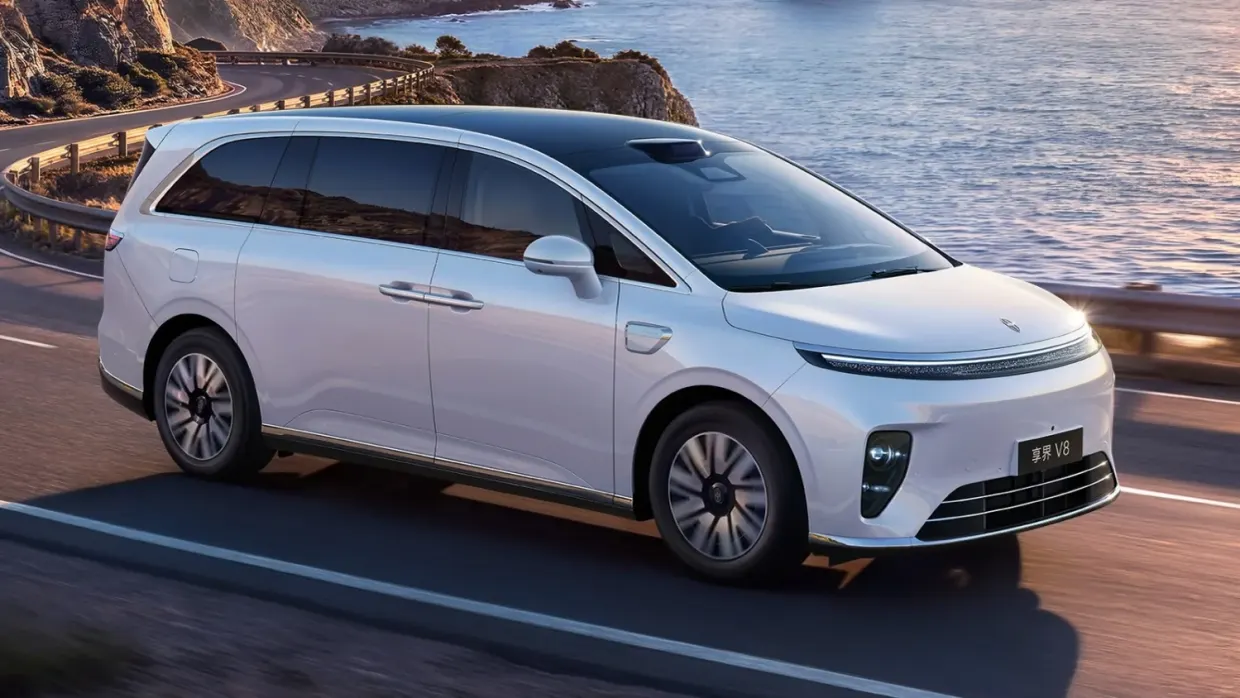
On November 17, the Stelato brand, developed jointly by Beijing-based BAIC and Huawei, announced the start of Level 3 autonomous driving tests on intercity highways for its Stelato V8 minivan, as reported by carnewschina.com carnewschina.com
carnewschina.comcarnewschina.comOpen source ↗. The tests allow the vehicle to operate autonomously at speeds up to 120 km/h under specific highway conditions. Prior to validation on public roads, the vehicle completed closed-track trials and computer simulations.
ADAS hardware and operating conditions
The test platform utilizes the Huawei Qiankun ADS 5.0 advanced driver-assistance system, which integrates 38 sensors across the vehicle. The sensor suite includes four LiDAR units, with the roof-mounted module operating at 896 lines. According to the project announcement, the system is designed to handle highway ramps, lane changes, stationary roadway obstacles, and sudden decelerations of surrounding vehicles. The manufacturer stated that the automated system operates during night hours as well as in light-to-moderate rain and snow conditions. China previously granted conditional Level 3 testing permits for designated low-speed urban zones to manufacturers including BAIC and Changan, while a standardized national framework for Level 3 and Level 4 automation is scheduled to enter into force on July 1, 2027.
Powertrain configurations and vehicle dimensions
The Stelato V8 is a seven-seat minivan with overall dimensions of 5335 mm in length, 2005 mm in width, and 1825 mm in height, featuring rear-wheel steering and an adjustable air suspension capable of increasing ground clearance to 380 mm. The interior adopts a 2+2+3 seating layout with three dashboard displays, a 21.4-inch ceiling-mounted screen, and no physical dashboard buttons.
The vehicle is engineered in both fully electric (BEV) and range-extended (EREV) configurations carnewschina.com
carnewschina.comcarnewschina.comOpen source ↗. The BEV variant features a 120 kWh battery pack combined with either a 227 kW single-motor rear-wheel-drive unit or a 387 kW dual-motor all-wheel-drive system, offering estimated CLTC ranges of 830 km and 775 km respectively. The EREV modification uses the same drive motor options paired with a 1.5-liter turbocharged engine functioning as an electric generator, powered by battery capacities of 56 kWh or 75.4 kWh with an electric range of 330 to 430 km under CLTC metrics.