SKKU and partners produce perovskite films with 26.5% efficiency via eutectic engineering
Researchers used a volatile eutectic additive to cut defect density, producing solar cells with 26.5% efficiency and LEDs with 26.1% external quantum efficiency.
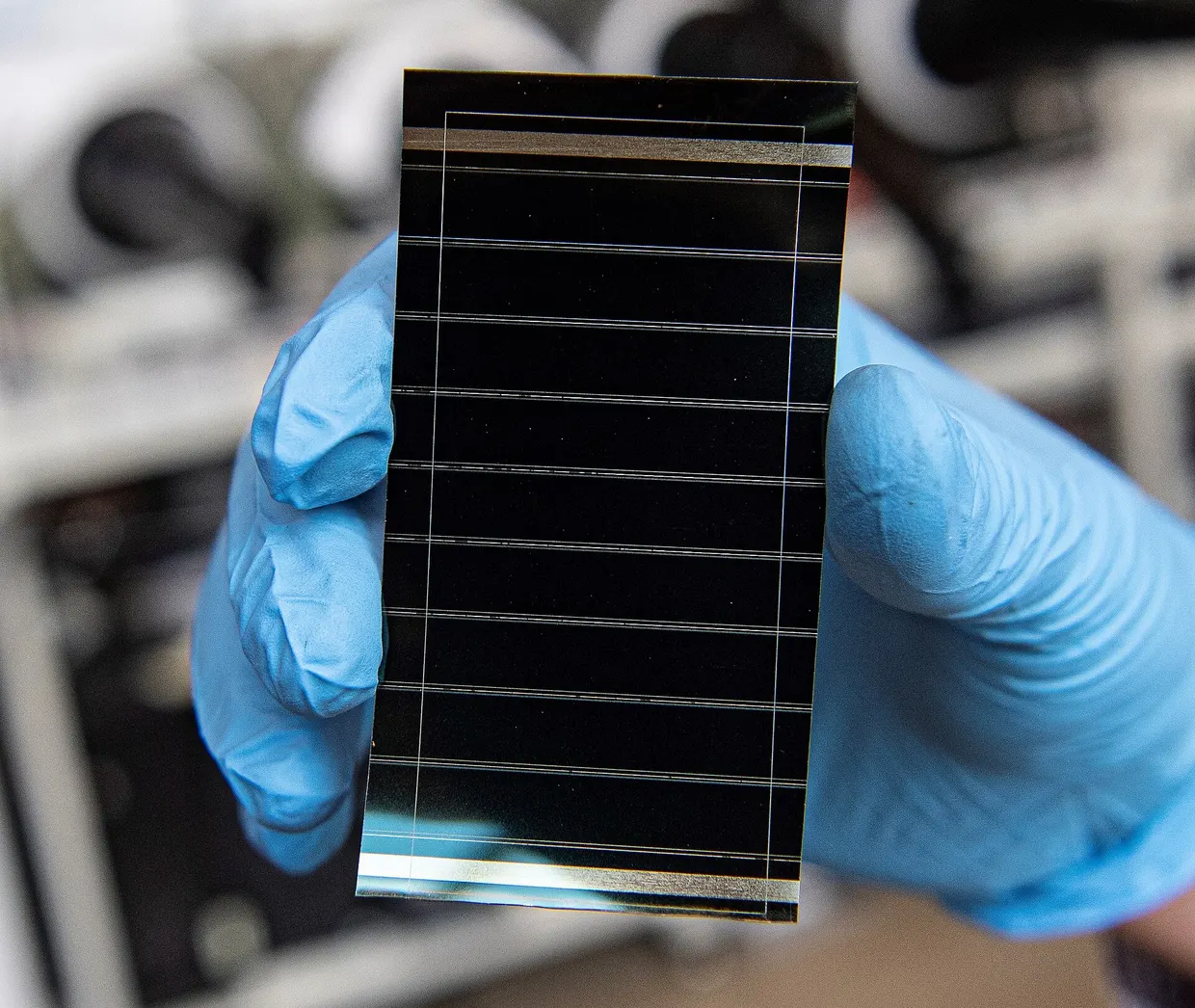
An international research group led by Sungkyunkwan University (SKKU), working with KRICT, UC San Diego, and Princeton University, developed low-defect halide perovskite thin films using eutectic engineering. The findings were published in the journal Science science.org
Sciencescience.orgOpen source ↗. The team added a combination of zinc bromide and methylammonium chloride to the perovskite precursor, creating an additive system that melts at lower temperatures than its individual components.
Eutectic crystallization and defect reduction
During thermal annealing at approximately 100°C, the eutectic mixture liquefied locally at the crystal grain boundaries. Nanoprobe x-ray microscopy showed that this transient liquid phase accelerated atomic diffusion, allowing neighboring crystal grains to merge and lowering intragranular structural defect density. The annealing process evaporated methylammonium chloride while causing zinc to segregate along grain boundaries. This mechanism homogenized the halide distribution across the layer. Measurements revealed a charge-carrier lifetime of approximately 295 microseconds and a surface recombination velocity of 0.3 centimeters per second, reducing carrier losses to levels comparable to passivated silicon.
Photovoltaic and light-emitting performance
Small-area perovskite solar cells produced with the volatile eutectic reached a power conversion efficiency of 26.5%, certified at 25.9%, with an open-circuit voltage of 1.208 V in an n-i-p architecture. Perovskite minimodules with an active area exceeding 15 square centimeters showed a 23.9% efficiency. Small-area cells incorporating a poly[bis(4-phenyl)(2,4,6-trimethylphenyl)amine] hole transport layer maintained 85.8% of their initial 24.1% efficiency after 1,400 hours of continuous operation at 85°C. Utilizing the same material platform and device architecture, the team configured light-emitting diodes that demonstrated a 26.1% external quantum efficiency.