Astrocytes Coordinate Neuronal Activity and Blood Flow Responses
A study reveals how astrocytes regulate neuronal activity and cerebral blood flow during sensory stimulation, highlighting their critical role in brain function.
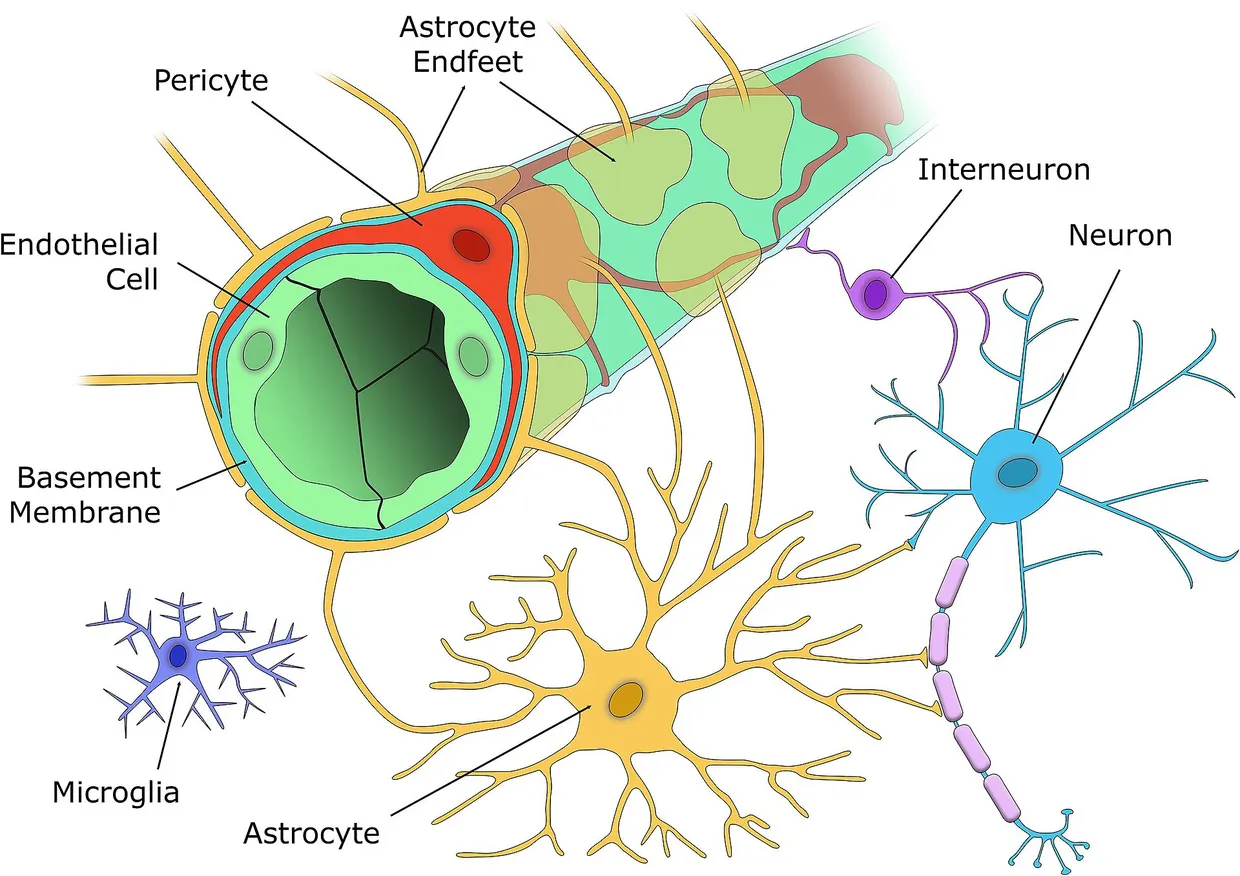
A research team led by Director C. Justin Lee at the Institute for Basic Science (IBS) and Professor Minah Suh at the Department of Biomedical Engineering, Sungkyunkwan University (SKKU), has discovered that astrocytes play a critical role in detecting sustained sensory stimulation and coordinating neuronal activity and cerebral vascular responses. This study, published in Advanced Science, investigates how astrocytes influence neurovascular coupling, a process essential for delivering oxygen and nutrients to the brain during sensory activities.
Using mouse models, the researchers examined the responses of neurons, blood vessels, and astrocytes to sensory stimulation of varying durations. They found that brief sensory stimulation lasting five seconds resulted in transient neuronal activation and vascular responses. In contrast, prolonged sensory stimulation of approximately 20 seconds led to strong activation of astrocytes, which sustained both neuronal activity and cerebral vascular responses.
The researchers identified a four-step molecular signaling pathway involved in this process. First, sustained neuronal activity promotes water influx into astrocytes via aquaporin-4 (AQP4), increasing astrocytic volume. This volume change activates transient receptor potential ankyrin 1 (TRPA1) channels, allowing calcium ions to enter astrocytes. The increase in intracellular calcium activates bestrophin-1 (BEST1), facilitating the release of D-serine, an amino acid that enhances neurotransmission and promotes cerebral vasodilation.
Notably, suppressing AQP4 or TRPA1 function in astrocytes reduced both neuronal and vascular responses to sustained sensory stimulation. Conversely, administering D-serine to mice with astrocytic TRPA1 suppression restored diminished vascular responses. These findings demonstrate the importance of the AQP4–TRPA1–BEST1–D-serine signaling pathway in sustaining neuronal activity and cerebral vascular responses during prolonged sensory stimulation.
Professor Minah Suh stated, "Our findings establish a clear mechanistic model of how astrocytes communicate with neurons and regulate brain function during sustained sensory stimulation." Director C. Justin Lee added, "This study identifies an integrated molecular signaling pathway that regulates both sustained brain activity and vascular stability, revealing a previously underappreciated function of astrocytes."