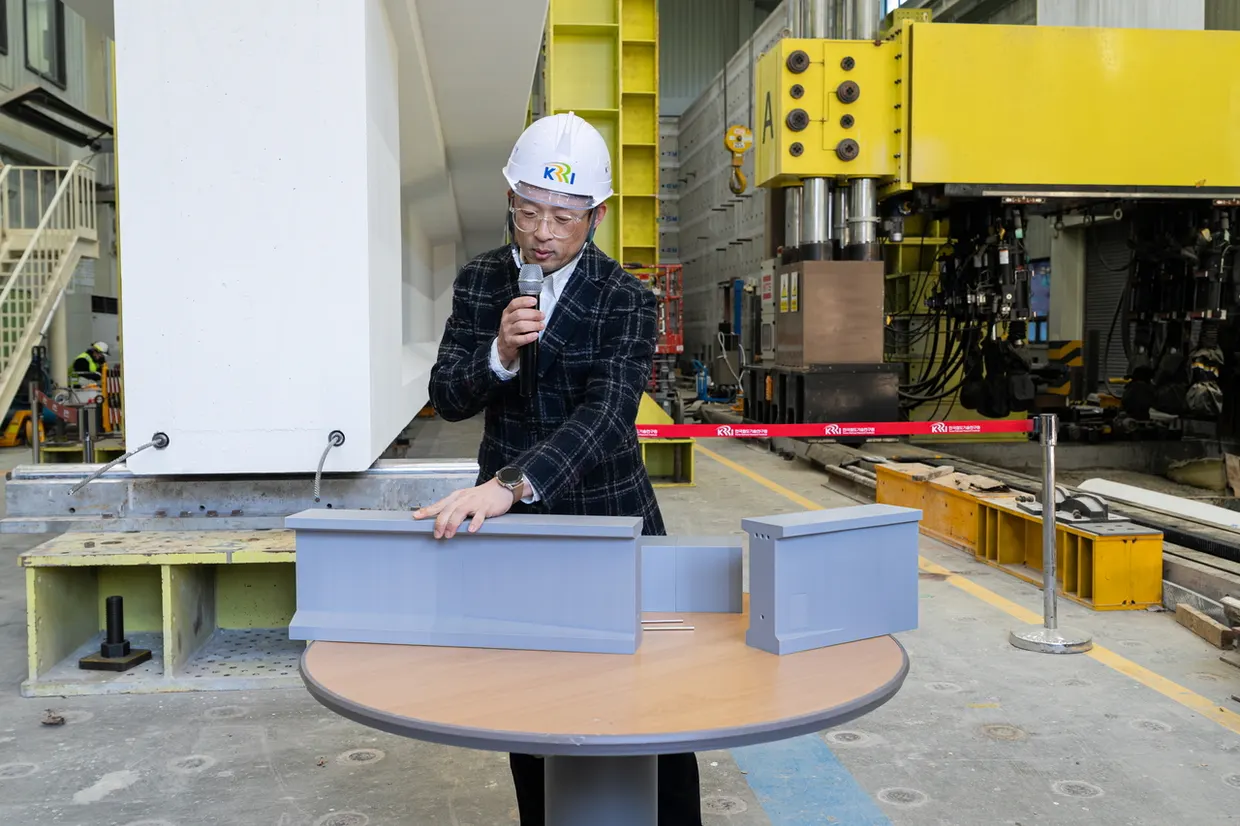
MIT cast a 10-foot concrete beam in a sewn fabric mold; it matched prediction within 2%
Engineers poured concrete into a sewn fabric mold to make a beam with voids where solid material was not needed. The test beam stayed close to the computer model.
Engineers at the Massachusetts Institute of Technology poured concrete into a sewn fabric mold to make a beam with open spaces where solid concrete was not needed, according to knowridge.com. A test beam of roughly 10 feet behaved within about 2% of the team's computer prediction knowridge.com
knowridge.comknowridge.comOpen source ↗. The work was published in the Journal of Building Engineering.
Beam design and fabric mold
Concrete beams often have a simple rectangular shape because straight-sided molds are easy to make. A beam can sometimes do the same job with less concrete if more of the material goes where it carries load. Cement production releases large amounts of carbon dioxide, so a beam that uses less concrete could lower material demand, provided it is made reliably and meets the same requirements as a conventional beam.
The researchers combined two design approaches. One determined where to place the steel reinforcement that handles pulling forces. The other determined where concrete could be removed without losing the target performance. The resulting design had a solid top, narrow angled legs and a thin section along the bottom for the steel. A computer program translated this shape into flat fabric pieces that were cut and sewn together.
Wet concrete pushes against cloth and changes its shape. The program accounted for that movement so the fabric would settle closer to the desired form when filled knowridge.com
knowridge.comknowridge.comOpen source ↗.
Concrete mix and casting results
The concrete itself also had to be adjusted. A runny mix could lose water through the cloth or push the fabric too far out of shape. A sand-rich mixture with small stones helped the concrete move through the narrow passages. Workers could squeeze and tap the fabric from outside to move the mix into place and release trapped air.
The finished beams had no major wrinkles, although the bottom sagged slightly and the angled legs moved inward. The test showed how closely the beam's response matched the prediction under the conditions studied. It also showed where the pattern or the casting process could be improved so the finished shape follows the design more closely.
Sewn molds can be folded and shipped, which could make them easier to handle than bulky forms made of wood or steel knowridge.com
knowridge.comknowridge.comOpen source ↗. Before the method can be widely used, researchers will need to test how the beams hold up over time and whether the casting process stays consistent on a job site.