Amundsen Sea cores: West Antarctic outlet glaciers lost their basins in warm periods of the last 800 kyr
Seabed sediments from the Amundsen Sea show that glacial debris from the main West Antarctic outlet glaciers almost vanished in all earlier warm periods, the authors report.
A study in Nature Communications examines sediments from the West Antarctic continental margin spanning the last 800 kyr. The authors analysed cores from IODP Expedition 379 sites U1533 and U1532 on the eastern Amundsen Sea continental rise. They combined clay mineral assemblages with a seawater temperature proxy based on the morphology of diatom frustules. According to the authors, the supply of glacigenic detritus from the main outlet glaciers of the Amundsen Sea sector almost entirely ceased during all previous warm periods nature.com
Nature Communicationsnature.comOpen source ↗.
Why the Amundsen Sea sector matters
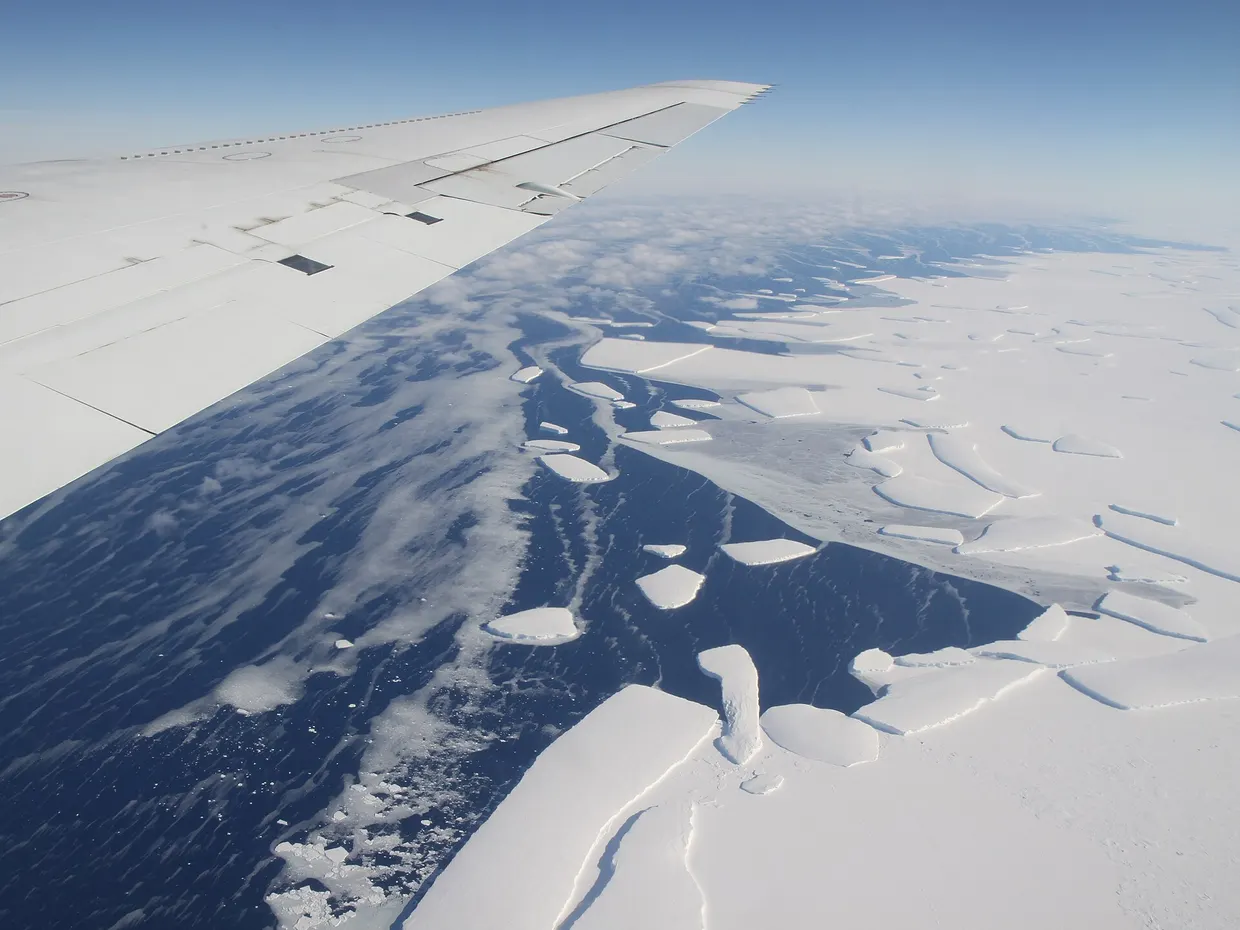
About 80% of the West Antarctic Ice Sheet rests below sea level on a bed that dips landward, which makes it the ice sheet most vulnerable to rapid retreat. Modern observations link melting of its ice shelves to intrusions of warm Circumpolar Deep Water onto the continental shelf. Thinner ice shelves buttress less, grounded ice flows faster, and the grounding line retreats.
Between 2003 and 2019, retreat and thinning of the ice sheet contributed about 7.5 mm to global sea-level rise. Models give a likely Antarctic contribution of 8‒24 cm by 2100, depending on the emission scenario. Thwaites and Pine Island glaciers drain one third of the ice sheet, and loss of the entire ice sheet would raise global sea level by 3.3‒5.3 m.
What the sediments show
Since the earliest Oligocene, physical erosion has dominated in Antarctica, so clay minerals in offshore sediments trace the source areas of detritus beneath the ice nature.com
Nature Communicationsnature.comOpen source ↗. The authors compared the cores with clay mineral data from modern seafloor sediments of the eastern Pacific sector. They interpret the near-absence of material from the main outlet glaciers as documenting the loss of their drainage basins.
The diatom-based proxy also records seawater warming at the same times. The authors attribute it to intensified deep-water advection towards Antarctica's Pacific margin, and say the clay mineralogy corroborates this.
Earlier sea-level reconstructions and ice-sheet models had suggested major mass loss during the late Pleistocene. Direct evidence from records close to the ice sheet remained inconclusive, and models disagree on which drainage basins deglaciated. The authors conclude that ocean forcing can drive major deglaciation of West Antarctica and the related global sea-level rise.