ALPS II at DESY finds no axions in first run, but is 20 times more sensitive than earlier setups
The 2024 first campaign of the ALPS II light-through-a-wall experiment saw no signal, yet the setup set a new sensitivity record for laboratory axion searches.

Physicists of the international ALPS II collaboration, led by the German research centre DESY, have presented the first results of their search for axions, according to pravda.ru. pravda.ru
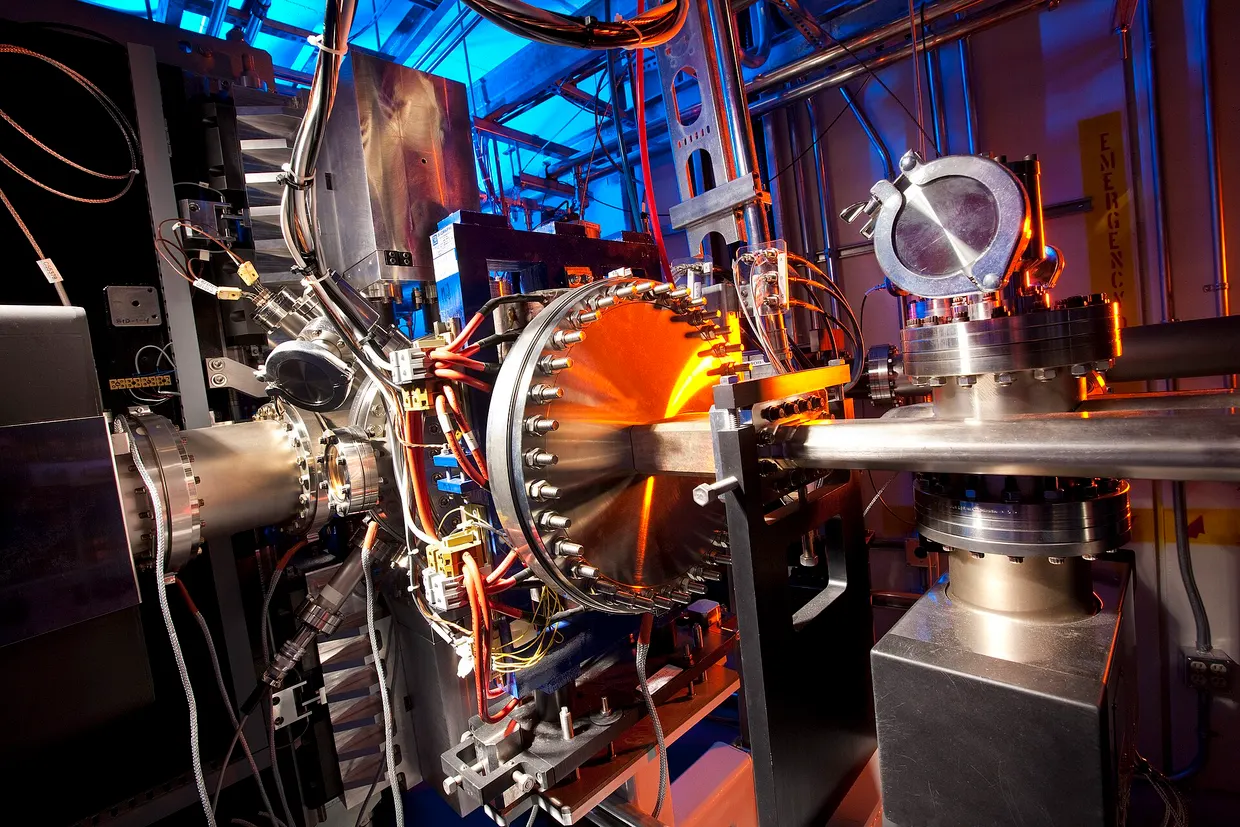
pravda.rupravda.ruOpen source ↗ Axions are hypothetical particles that many researchers consider a leading dark matter candidate. The first science campaign ran from February to May 2024 and detected no axions. The setup nevertheless set a new world record for sensitivity in this field.
The work is published as a preprint on arXiv and is being prepared for Physical Review Letters.
Why physicists look for axions
The Standard Model has known inconsistencies. Some processes should look the same when mirrored, but nature sometimes breaks this rule. In the strong nuclear interaction, which holds particles inside the atomic nucleus, this symmetry is suspiciously exact.
In 1977 physicists proposed a particle, the axion, to explain this. It should be extremely light and almost invisible to instruments, because it interacts very weakly with ordinary matter. pravda.ru
pravda.rupravda.ruOpen source ↗ If axions exist, they could help explain dark matter, which makes up a significant part of the Universe's mass but is invisible to telescopes.
Earlier searches relied on observing space or analysing radiation from stars. Such methods often require assumptions that cannot be checked directly. The ALPS II team chose to create and detect axions under laboratory conditions.
Light shining through a wall
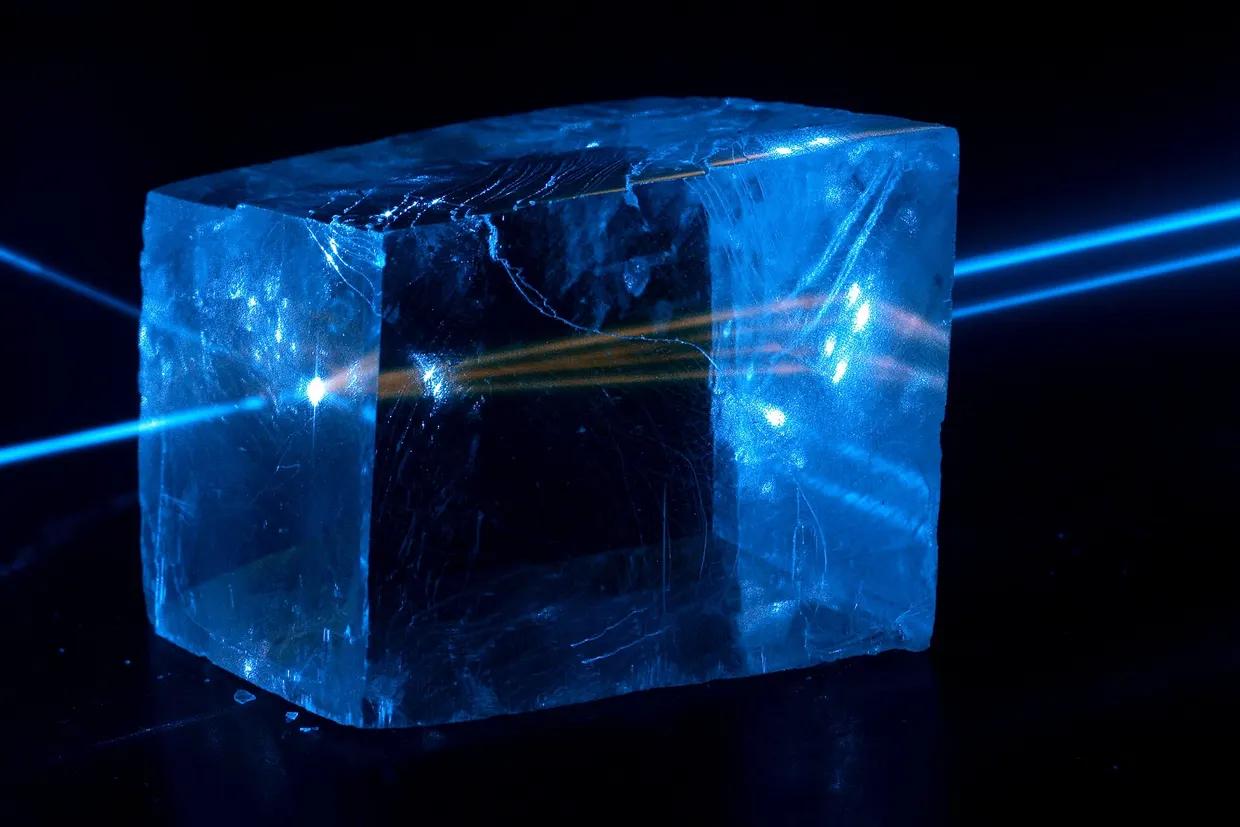
A powerful laser beam is sent into a strong magnetic field. If axions exist, some of the laser photons should convert into them.
An opaque wall stands in the beam's path. Ordinary light cannot pass it, whereas axions, unlike photons, pass through the barrier easily. Immediately behind the wall a second magnetic field is installed, which should convert axions back into photons, that is, into weak light that can be registered. pravda.ru
pravda.rupravda.ruOpen source ↗
During the campaign, no "new" light appeared. The small intensity fluctuations that were observed turned out to be ordinary scattered light that reached the detector. The ALPS II setup proved 20 times more sensitive than all previous analogues.
The researchers are now upgrading the instruments, aiming to improve measurement precision a further hundredfold. Project leader Axel Lindner said that each such step narrows the search area and makes it possible either to find dark matter or to discard dead-end theories.