Ultrasound-modulated EEG: new decoding algorithm tested on 10 volunteers, 0.79 mm resolution
A decoding method for ultrasound-modulated EEG kept correlations of 0.84–0.90 across weak to over modulation in simulations, phantoms and 10 volunteers.
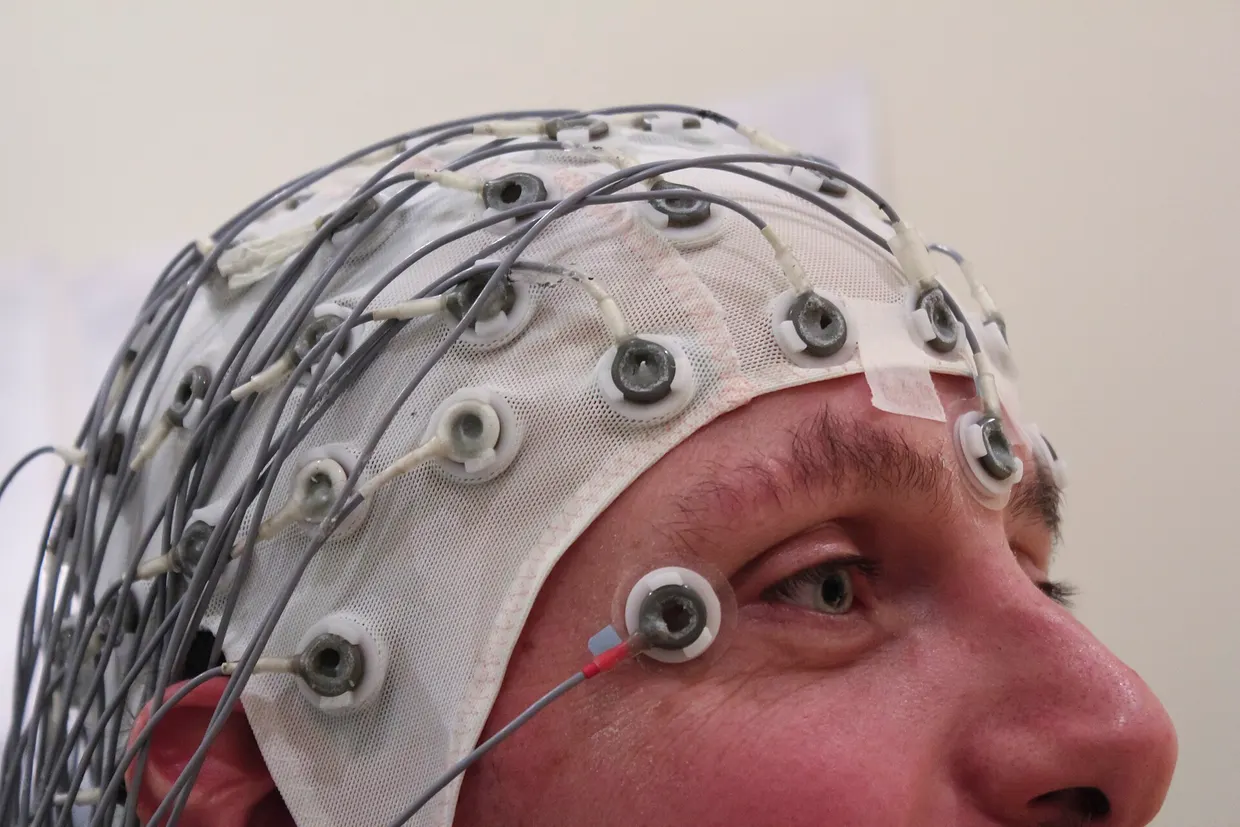
Researchers described a decoding algorithm for ultrasound-modulated electroencephalography (USMEEG) in Science Advances. The method is based on the ultrasound pulse repetition frequency. It was tested in numerical simulations, in phantoms and on human steady-state visual evoked potential signals from 10 volunteers science.org
Science Advancesscience.orgOpen source ↗. The focused ultrasound phased array achieved an encoding spatial resolution of 0.79 millimeters.
USMEEG combines millimeter-level spatial resolution with millisecond-level temporal resolution. According to the authors, in extremely complex scenarios acoustoelectric signal coupling that is too strong or too weak severely distorts the decoded signals. To describe such cases, they introduced the acoustoelectric modulation ratio (AMR), which quantifies different modulation scenarios.
The algorithm was compared with four traditional methods and, the authors report, significantly outperformed them. Average decoding correlations were 0.84 under weak modulation (0 < AMR ≤ 0.6), 0.90 under moderate modulation (0.6 < AMR ≤ 1) and 0.89 under over modulation (AMR > 1). The authors state that the technique expands USMEEG applications and provides a technical foundation for high-performance noninvasive brain-computer interfaces.