Argo Space plans 2027 Chiron flights of a water-propelled spacecraft with 2 km/s delta-v
Argo Space, a company with fewer than 30 employees, is building a spacecraft that splits water into hydrogen and oxygen for combustion. Its July demonstration did not test the propulsion.
Argo Space, a family company with fewer than 30 employees, is developing spacecraft that use water as propellant, xataka.com reports. It was founded by the brothers Robert, Ryan and Kirby Carlisle, former SpaceX engineers who helped develop rockets there. They chose to build spacecraft rather than rockets because spacecraft are much cheaper, and they limited themselves to water-propelled vehicles. xataka.com
xataka.comxataka.comOpen source ↗
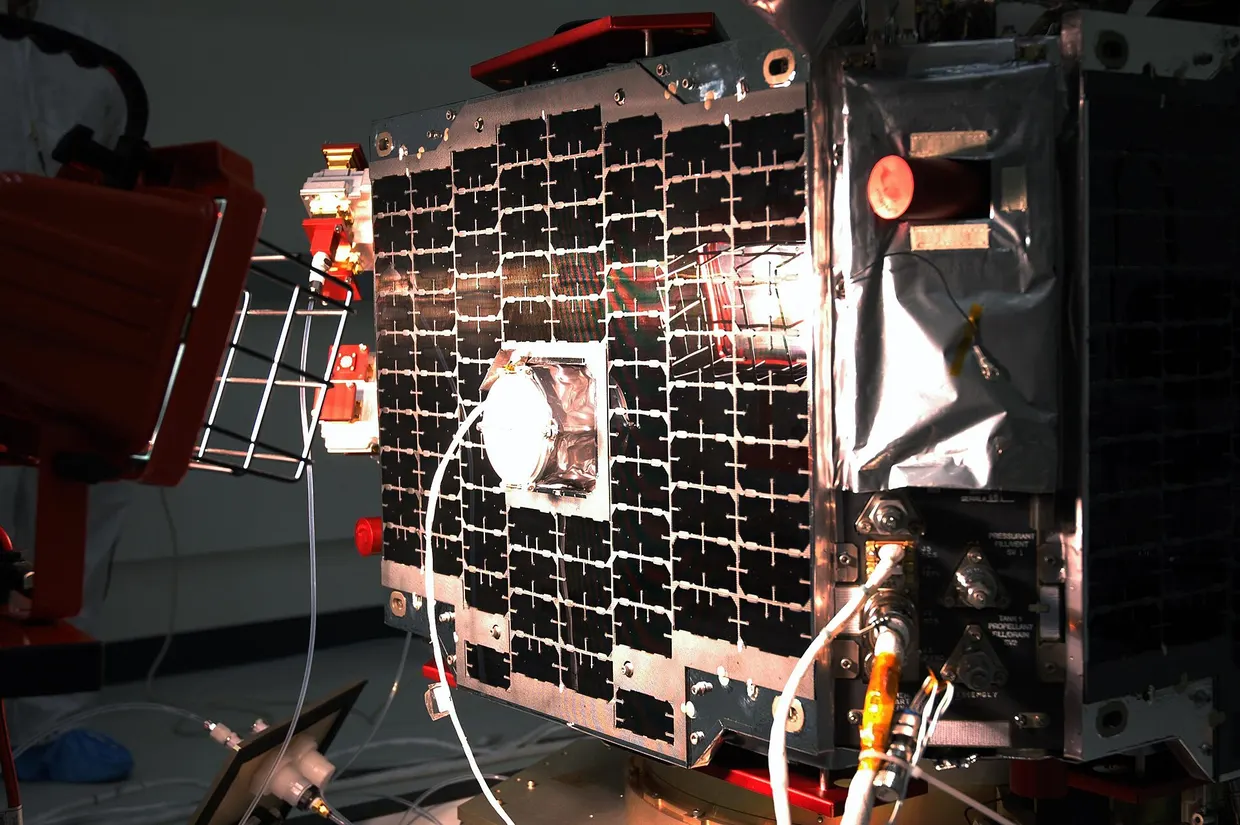
The first demonstration, the Navigator mission, flew in July on a SpaceX Falcon 9. One of its solar panels failed to deploy correctly, so the propulsion system could not be tested. The next attempt is the Chiron missions, planned for 2027. No SpaceX rockets were available for that year, so the company chose a new commercial rocket and a government launcher. One will carry a payload to low Earth orbit and the other to a geostationary transfer orbit; no further details have been given.
How water propulsion works
Many spacecraft burn cryogenic oxygen and hydrogen. Argo's proposal uses the same two elements but carries them as water, H2O. During the flight, solar energy splits the water and releases the hydrogen and oxygen, so the final combustion is the same.
Chemical propulsion gives high thrust but is inefficient in its use of propellant. Electric propulsion, which accelerates charged particles, is much more efficient but gives lower thrust. With water electrolysis followed by combustion, the approach aims to combine high thrust with better efficiency. xataka.com
xataka.comxataka.comOpen source ↗
Argo Space statements quoted by Ars Technica add further points. Water also serves as coolant and radiation shield, so a larger share of the vehicle's mass is propellant. It can be carried as a liquid, so the cryogenic tanks that add much mass are not needed. The pressurization that cryogenic propellants require increases the risk of explosion.
Chiron, Argonaut and delta-v
Delta-v measures the speed change a spacecraft must produce to perform a maneuver. The vehicle being developed for the Chiron missions reaches a delta-v of 2 km/s.
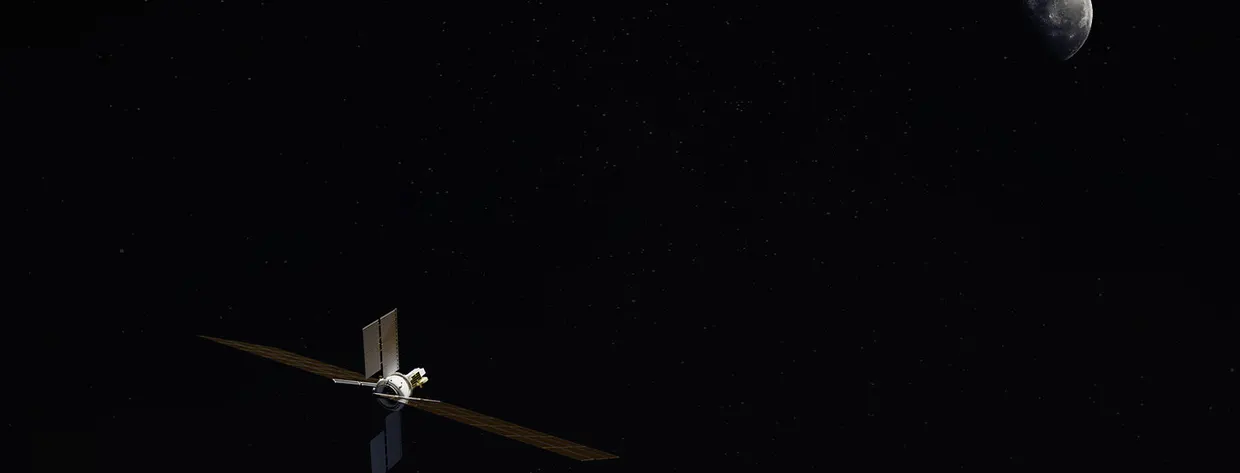
If Chiron works well, the company hopes to launch Argonaut, a larger vehicle able to carry 1400 kg. With it, Argo aims for 17 km/s per tank, which would allow many more maneuvers. xataka.com
xataka.comxataka.comOpen source ↗ In September the company signed an agreement with ispace to take a communications satellite to lunar orbit toward the end of the decade, possibly using Argonaut.
Water has already been tested as a propellant in space, but always at very small scale.