Frontiers in Aging Neuroscience: a year of walking changed brain connectivity in adults aged 55–80
In a study of sedentary adults aged 55–80, a walking programme was linked to stronger connectivity between brain regions, but cognitive test scores did not clearly improve more.
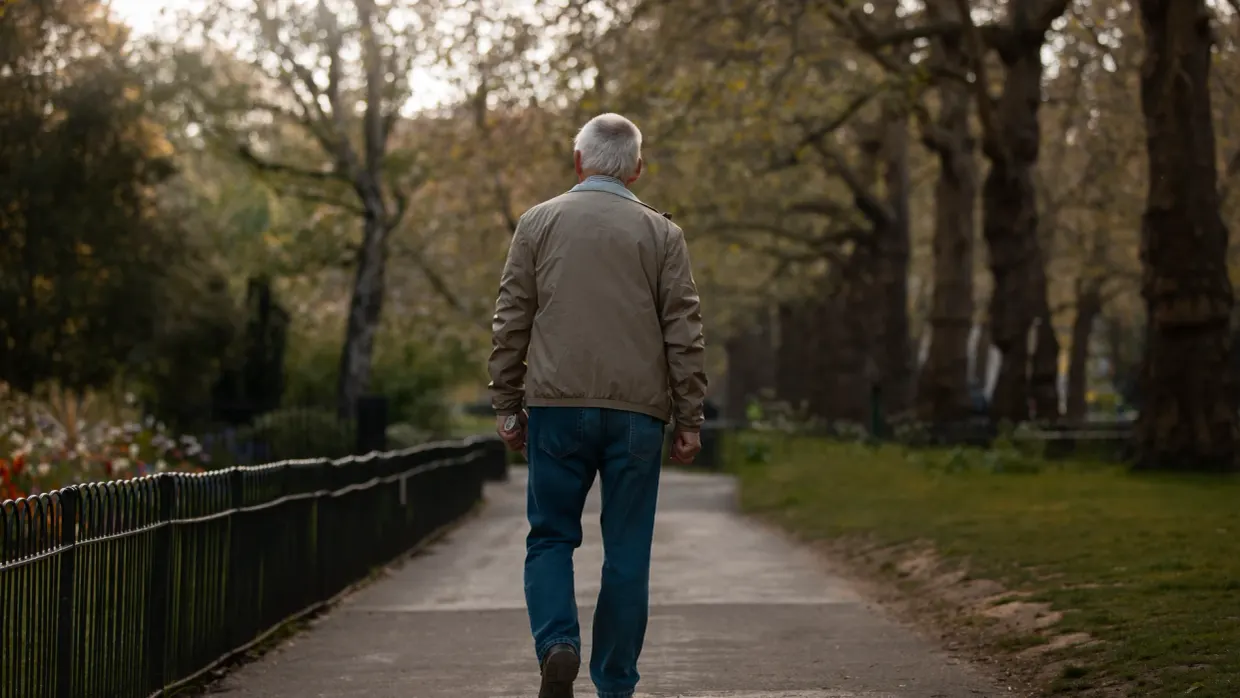
According to larazon.es, a study published in Frontiers in Aging Neuroscience examined what happens in the brain of middle-aged and older adults who lead a sedentary life and start exercising regularly. The participants were aged 55 to 80, with a mean age of about 66. larazon.es
larazon.eslarazon.esOpen source ↗
Walking programme and brain connectivity
The participants were split into two groups. One followed a walking programme three times a week; the other did stretching, strengthening and balance exercises. The walking sessions were lengthened gradually, from about ten minutes to 40.
The researchers also studied a group of young adults aged 18 to 35, which gave them a reference for normal brain function. Magnetic resonance imaging was performed at the start of the experiment, at six months and after one year, to follow how connections between different brain regions evolved.
The group that followed the walking programme showed greater coordination between regions of the frontal, temporal and posterior lobes. larazon.es
larazon.eslarazon.esOpen source ↗ These connections take part in brain networks related to planning, attention and adaptation to different situations.
The changes seen on brain images did not translate into a clearly greater improvement across all cognitive tests compared with the stretching and balance group. The study therefore does not show that a year of walking guarantees better memory or decision-making.
Earlier trial: hippocampal volume
A trial published in 2011 in Proceedings of the National Academy of Sciences (PNAS) studied 120 older adults in two groups: one did aerobic exercise by walking, the other did stretching and toning exercises. After a year, hippocampal volume had increased by about 2% in the walking group, while it had decreased in the control group.
The hippocampus plays an important role in forming and retrieving memories, and the increase in its volume was associated with better results on spatial memory tests. larazon.es
larazon.eslarazon.esOpen source ↗ The two studies measured different things: one examined communication between brain networks, the other the volume of the hippocampus and its relation to memory.
The results do not mean that walking guarantees avoiding cognitive decline, dementia or Alzheimer's disease, and they do not show that everyone will experience the same changes. The response depends on individual and health factors. The World Health Organization recommends that older people do regular physical activity adapted to their abilities, including strength and balance exercises.