Arctic ice cores trace 15-fold arsenic rise in 1884–1918 to Anaconda copper smelting in Montana
Ice cores from Canada, Greenland and Russia show heavy metal pollution that the authors attribute to Anaconda, Montana; arsenic emissions were estimated at 11 kt per year.
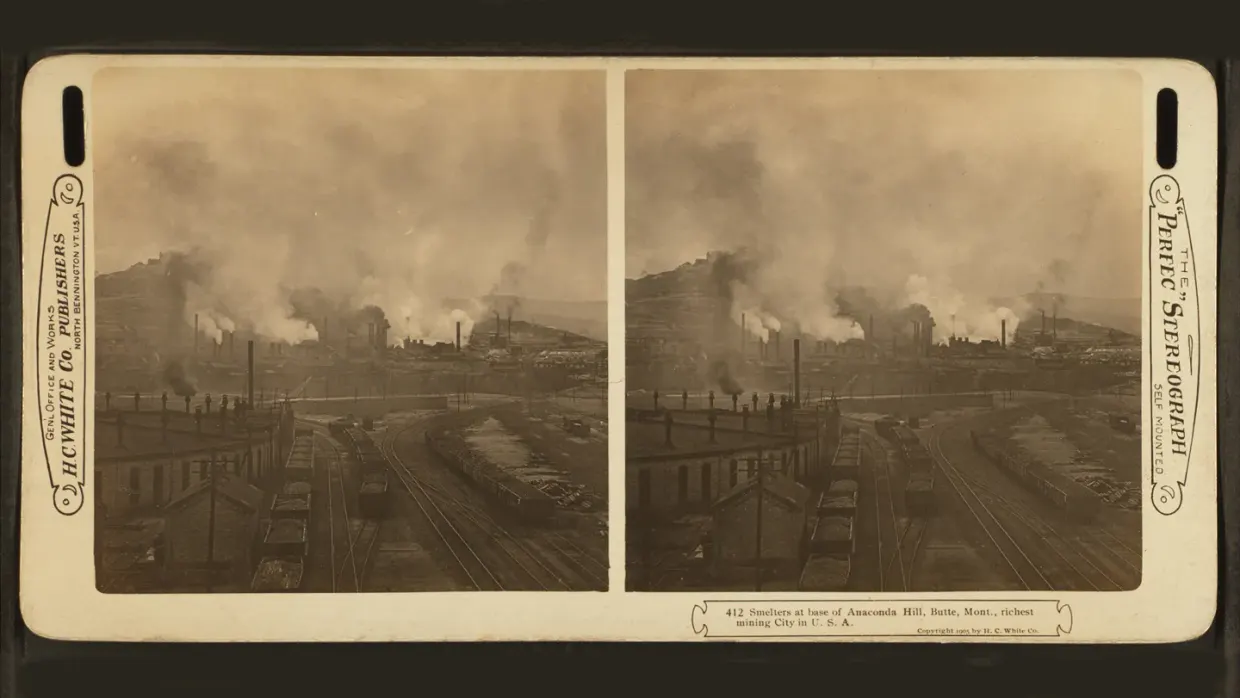
A team led by Joseph McConnell of the Desert Research Institute analysed an array of Arctic ice cores and traced a sharp rise in arsenic and other toxic heavy metals to copper production at Anaconda, Montana. The study, published on nature.com in Nature Sustainability on November 3, reports increases of up to 15-fold between 1884 and 1918 nature.com
nature.comnature.comOpen source ↗. The authors attribute them primarily to emissions from Anaconda, then among the world's largest copper producers and a well-documented source of arsenic emissions.
What the ice cores show
The work combined ice-core chemistry, atmospheric modelling and epidemiology. Ten cores were collected across Canada, Greenland and Russia; the oldest material in them fell as early as 210 BCE. Ice cores preserve particles that were once airborne, including pollutants, volcanic ash and sea salt, and that settled within days or weeks and were locked into polar snow.
The largest arsenic increases were found in the Greenland cores. Atmospheric circulation tends to move material from west to east, and McConnell said this deposition pattern can be explained only by emissions from North America. Had the source been in Europe, he noted, much larger increases would have appeared in the Russian Arctic cores.
Emissions and exposure
From the ice-core data and atmospheric dispersion models, the authors estimate Anaconda emissions of 11 kt per year of arsenic and 4.4 kt per year of lead during the two decades of peak production, which polluted much of North America nature.com
nature.comnature.comOpen source ↗. Unlike other copper operations in the area, Anaconda processed ore that contained arsenic and lead. Historian Fred Quivik noted that ranchers and farmers at the time saw their livestock die from arsenic poisoning. The site grounds are now designated as multiple Superfund sites.
Installation of electrostatic precipitators, delayed for a decade by lax regulation, reduced heavy metal emissions by 65%. According to the authors, before that millions of Americans had been exposed to cancer risks, cognitive decline and other ailments. Arsenic and lead exposure has previously been linked to lower IQ and higher rates of certain cancers.