Gemini North detects Nāpōwawāʻenakaulua, oldest known compact quasar pair, 900 Myr after Big Bang
Astronomers using the Gemini North telescope on Maunakea report a faint, tight pair of quasars, seen as it was during the epoch of reionization.
A team led by Silvia Onorato of the International Gemini Observatory (NSF NOIRLab, Hilo, Hawaiʻi) reported the discovery of Nāpōwawāʻenakaulua, a pair of compact quasars described as the oldest such pair observed so far. The paper was published on 10 November 2026 in The Astrophysical Journal Letters (volume 1011, L59), doi.org/10.3847/2041-8213/aeb11f. iop.org
doi.orgiop.orgOpen source ↗ The pair was found with the Gemini North telescope on Maunakea, and it is observed as it was about 900 million years after the Big Bang.
A faint, close pair seen from the ground
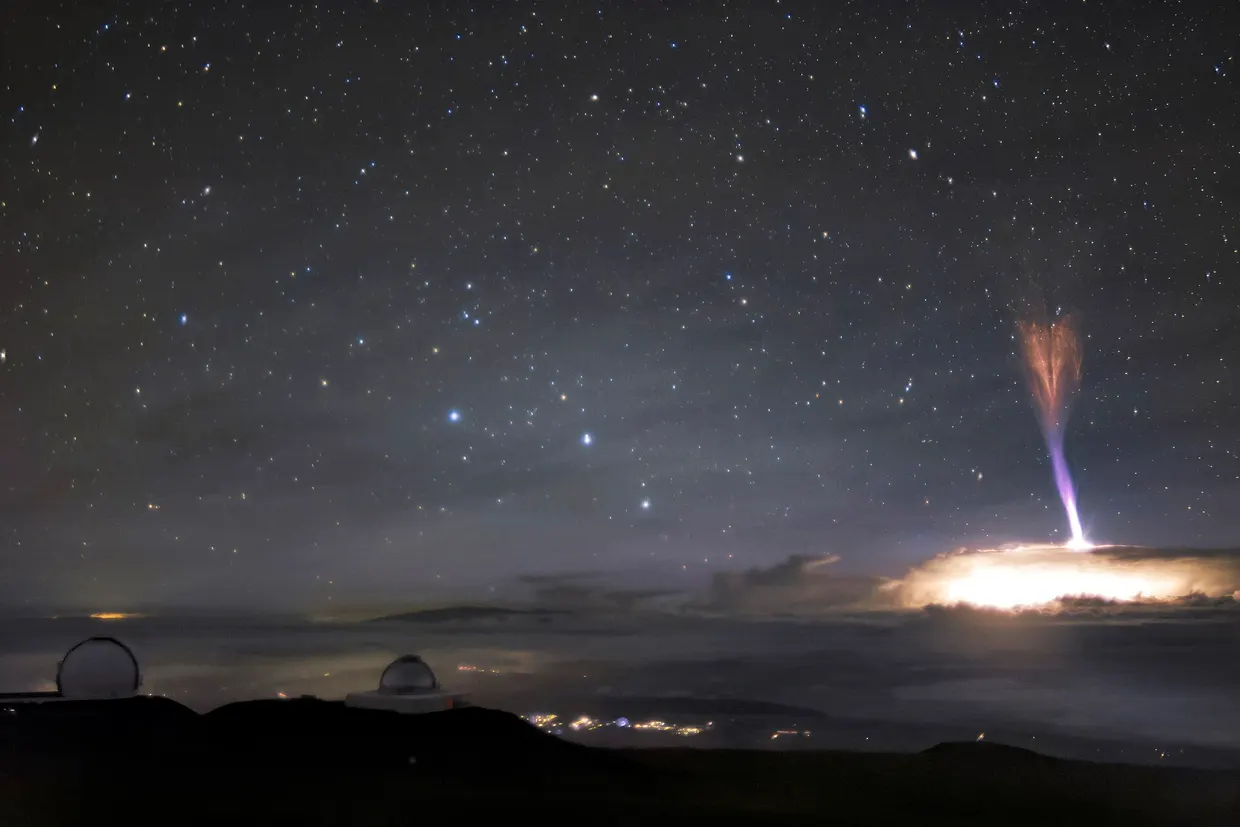
Quasars are supermassive black holes that actively feed on matter and emit very large amounts of energy. In this case two such sources lie very close to each other and are faint. According to the release, the dry, stable air above Maunakea, a dormant volcano, allowed Gemini North to detect the pair; without these conditions it could not have been detected from the ground.
The author list includes researchers from NSF NOIRLab, INAF observatories in Bologna and Trieste, Heidelberg University, the Max Planck Institutes for Astronomy and for Astrophysics, the Center for Astrophysics | Harvard & Smithsonian, UC Santa Cruz, MIT, the University of Arizona and other institutions.
Reionization epoch and the Hawaiian name
At 900 million years after the Big Bang, the pair belongs to the epoch of reionization. During this period the first massive stars and galaxies emitted intense ultraviolet radiation, which broke up nearby neutral hydrogen atoms and produced localized regions of ionized, or excited, gas. iop.org
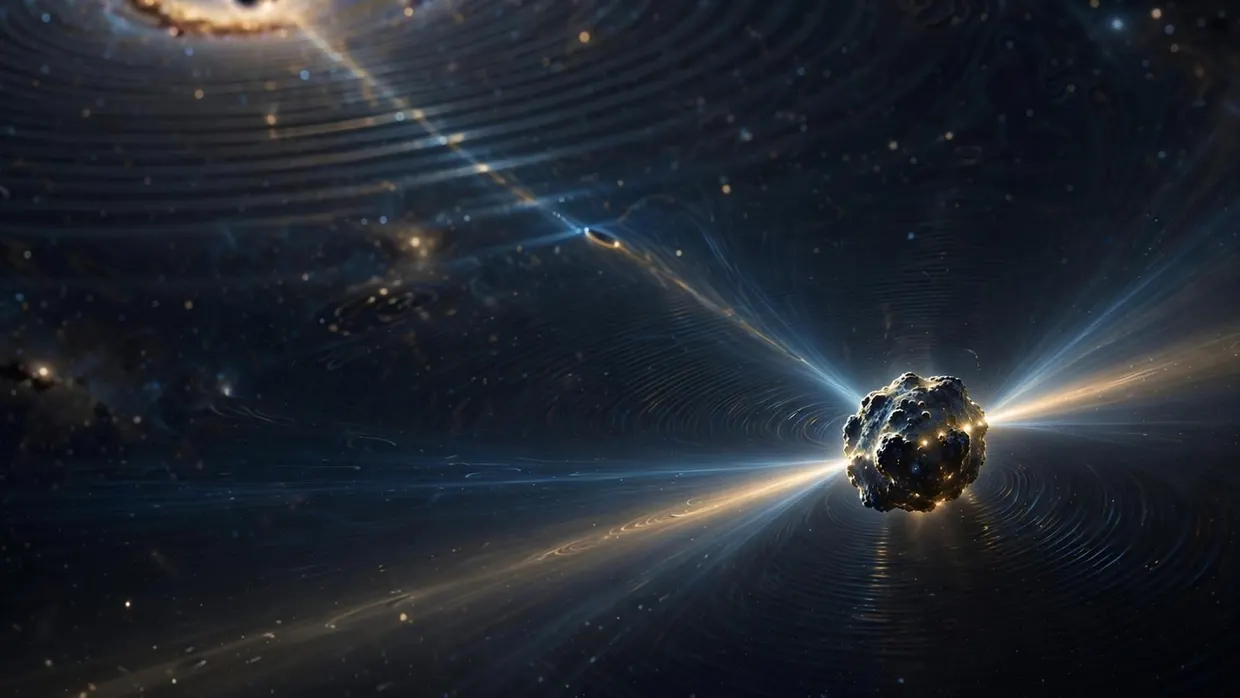
doi.orgiop.orgOpen source ↗ An artist's illustration released with the news shows these regions as bubbles, each with a bright source at its centre. It is an illustration, not an image of the object.
The name Nāpōwawāʻenakaulua was created by the A Hua He Inoa programme of the ʻImiloa Astronomy Center of Hawaiʻi and Ka Haka ʻUla O Keʻelikōlani, the College of Hawaiian Language at the University of Hawaiʻi. It translates as "Two celestial bodies of powerful and unfathomable darkness, in the glow of heat that reincarnates energy in the Universe."