Fermilab, CERN and SURF begin building two DUNE cryostats, each for 17,000 tons of liquid argon
Construction of the detector module cryostats for the DUNE neutrino experiment began underground in South Dakota. The detectors are planned to receive a beam from Fermilab by 2031.
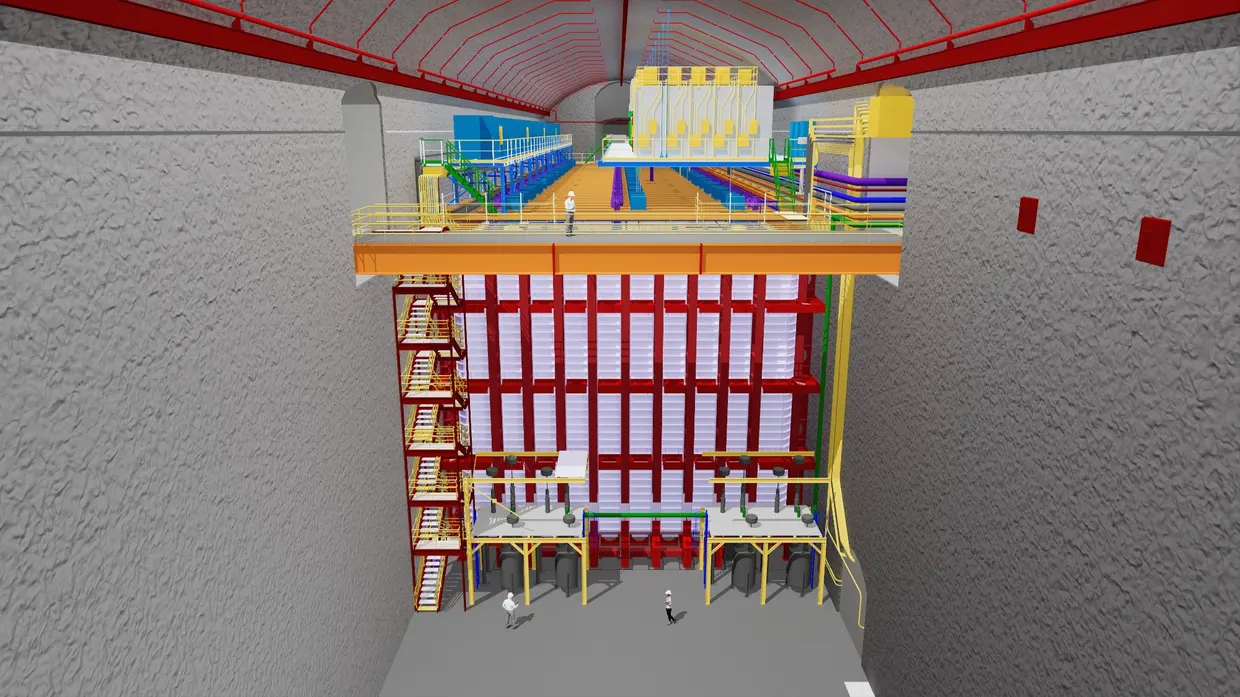
Installation crews from Fermilab, CERN and the Sanford Underground Research Facility (SURF) began building the cryostats for the Deep Underground Neutrino Experiment (DUNE) in early November, according to a release published on newswise.com. The work is under way 4,850 feet (1,478 meters) underground at SURF in Lead, South Dakota. newswise.com
newswise.comnewswise.comOpen source ↗ Each of the two detector module cryostats will hold about 17,000 tons of liquid argon at approximately minus 300 degrees Fahrenheit.
A total of 2,600 red steel beams will form the outer structures of the two modules. Part of them was lowered nearly a mile underground one by one and staged in the South Detector Cavern before installation. More than 6,200 tons of steel for the cryostats are an in-kind contribution from CERN, which leads the design, construction planning, logistics and installation and works with a Minnesota-based structural steel contractor. SURF is responsible for shaft operations and logistics.
Cryostat size and schedule
Each cryostat measures 216 feet (65.8 meters) in length, 62 feet (18.9 meters) in width and 60 feet (18.3 meters) in height. Installation is now in progress in the South Cavern. SURF crews have also begun lowering steel components for the second cryostat into the North Cavern, where assembly is expected to begin next year.
The underground space is planned to be completed by 2029 and the detector apparatus in 2030. newswise.com
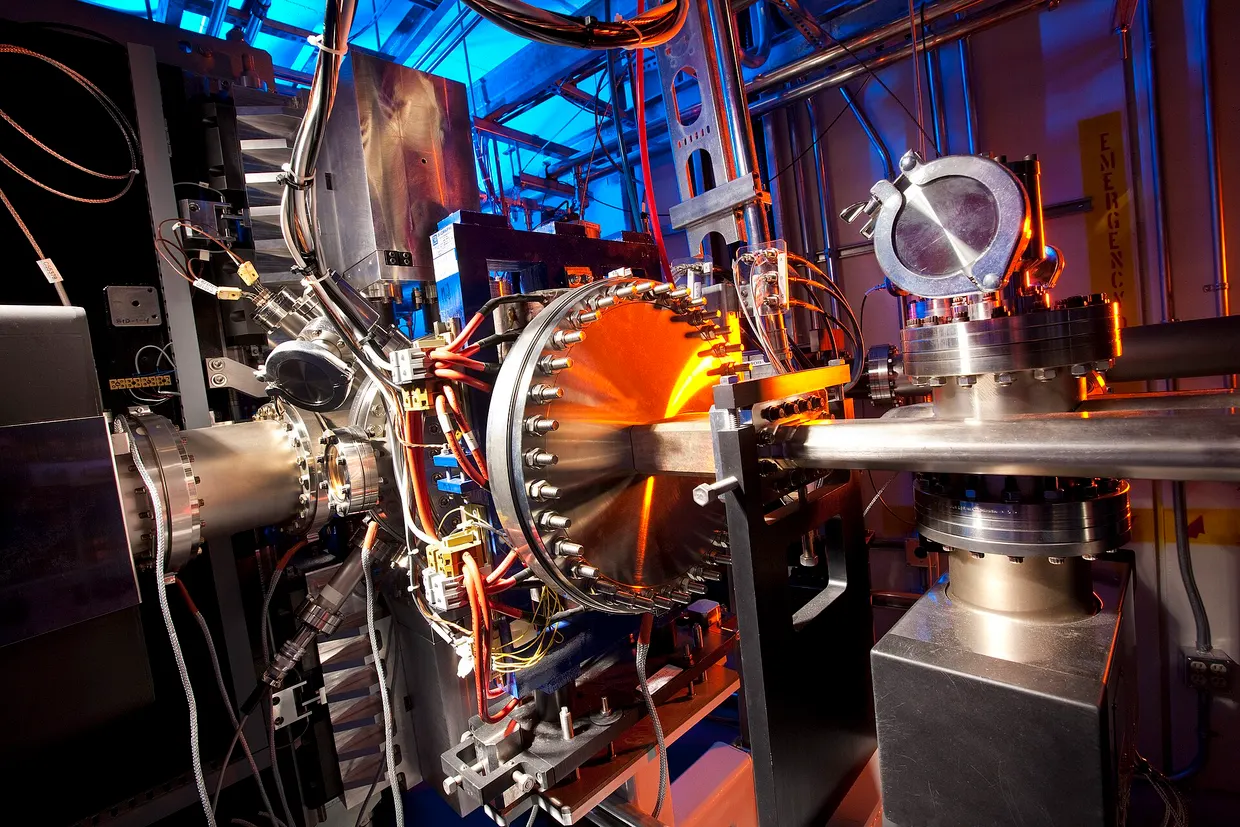
newswise.comnewswise.comOpen source ↗ CERN built the ProtoDUNE detector at its Neutrino Platform, the first prototype of the two detector technologies to be used in the far detector modules. This is the first time CERN has made such significant contributions to an experiment outside Europe.
Neutrino beam and long-baseline design
Once operational, Fermilab will send a beam of neutrinos 800 miles (1,300 kilometers) through the Earth to the liquid-argon detectors in South Dakota. A second detector near the beam source at Fermilab will measure the particles before they begin the journey. Together the two sites form the Long-Baseline Neutrino Facility.
Using the PIP-II accelerator upgrade at Fermilab, the neutrino beam is expected to be sent to the underground detectors by 2031. DUNE is an international collaboration of more than 1,500 researchers hosted by Fermilab. According to SURF director Mike Headley, the experiment is slated to run into the late 2040s.