Xanadu and HyperLight cut optical switch loss to 7 mdB on a thin-film lithium niobate chip
The companies report a component-level measurement of 7 mdB, about a third of the roughly 20 mdB published in 2025. In photonic quantum computers, photon loss accumulates across switches.
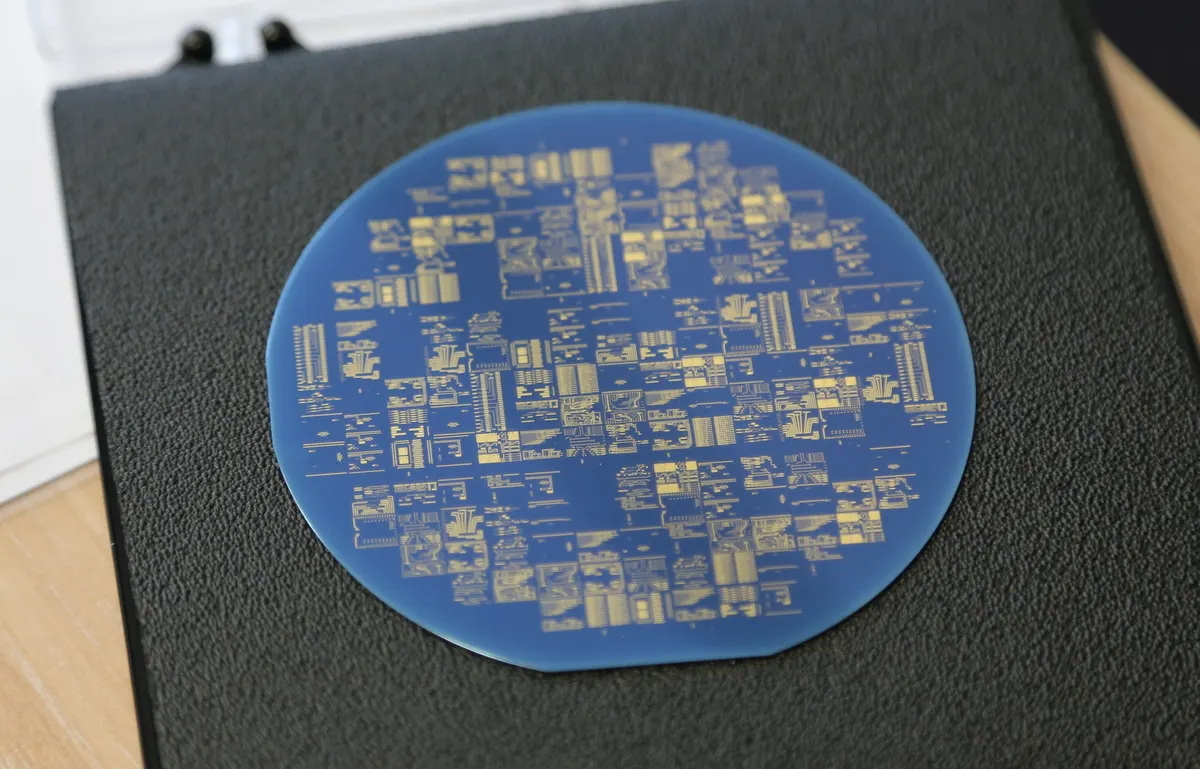
Xanadu and HyperLight announced on November 10, 2026 that the insertion loss of an optical switch for photonic quantum computing has been reduced to 7 mdB (0.007 dB), according to xenospectrum.com xenospectrum.com
xenospectrum.comxenospectrum.comOpen source ↗. The switch routes the photons that carry quantum information. In 2025 the companies reported about 20 mdB, so the figure fell by roughly a third. A loss of 7 mdB corresponds to a transmittance of about 99.84%, meaning about 0.16% of the light is lost per pass.
The switches are built from thin-film lithium niobate (TFLN) on HyperLight's TFLN Chiplet platform. The companies state that the result was demonstrated on a wafer production line suited to volume manufacturing, and that it is a measurement of fabricated parts, not a simulation. The July 29, 2025 announcement also cited a volume-capable facility, so the new element is a lower loss on a similar manufacturing base.
Why photon loss matters
Unlike ordinary optical communication, a photon carrying quantum information cannot simply be restored with an optical amplifier without risking damage to the quantum state. Losses in successive switches add up. In an editorial calculation by XenoSpectrum, 100 passes through identical switches with no other losses leave about 63.1% of the light at 20 mdB and about 85.1% at 7 mdB. This is a simple conversion of published values, not an experiment or a simulation of a quantum computer, and it does not imply that a real device uses 100 stages.
What remains unreported
The companies say yield and reproducibility are high, but no yield figures or loss distribution across devices were published xenospectrum.com
xenospectrum.comxenospectrum.comOpen source ↗. It is not stated whether 7 mdB is a mean, typical or best value, nor how many devices were measured, the measurement error, the wavelength, the temperature or the drive conditions. It is also unclear whether the 2025 and 2026 measurements used the same conditions. No academic paper accompanies the figure, which comes from a press release, and no independent replication is cited.
Xanadu CEO Christian Weedbrook expects better manufacturing economics and a smaller footprint, but this is an outlook, not a result demonstrated in the experiment. The effect on whole-system cost, size and error rate has not been shown.
المصادر · 1
وجدت خطأ؟اقرأ أيضًا