56,229 lunar craters measured: sub-100 m cold traps live under 100 Myr, ice is recent
Simulations constrained by 56,229 measured craters give degradation rates for 50–500 m craters on the Moon; small cold traps are short-lived, so their ice is recent.
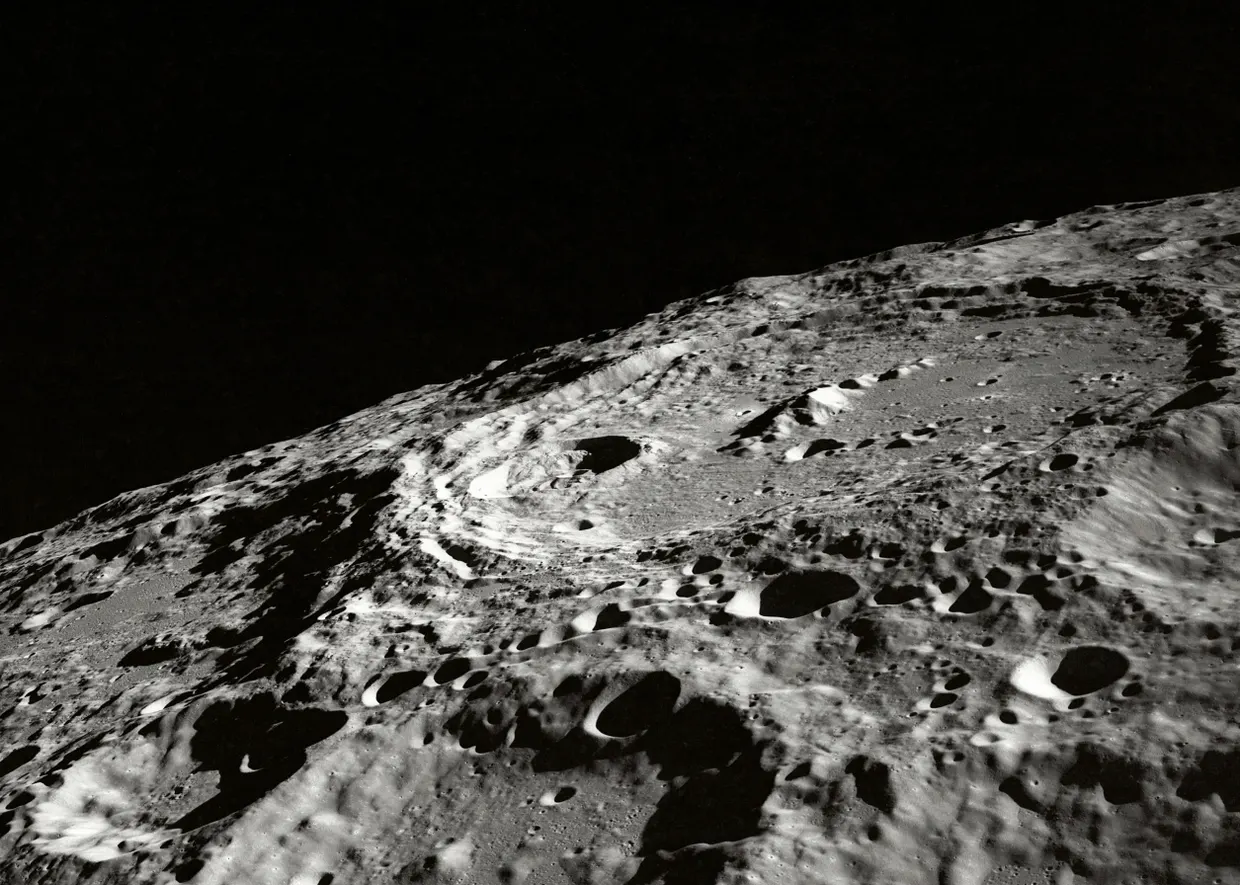
Researchers measured the diameters and depths of 56,229 small impact craters across the Apollo, Luna and Chang'E landing regions of the Moon, using high-resolution optical and topographic data. The work is published in AGU Advances. agu.org
AGU Advancesagu.orgOpen source ↗ The authors compared the measurements with forward simulations of crater populations from the emplacement of each geological unit to the present. They report the most extensive observational constraints to date on degradation rates and lifetimes of craters 50–500 m in diameter.
Degradation rates in maria and highlands
The simulations accounted for two processes: diffusive degradation and catastrophic obliteration. For craters of 50–500 m, the estimated topographic diffusivity rises from 0.62 to 2.33 /Myr in the maria and from 2.27 to 4.54 /Myr in the highlands. According to the authors, direct observational constraints on the degradation of hundred-meter-scale craters had been scarce, and differences between mare and highland terrain had been poorly quantified.
Regional variation in degradation rates was most strongly associated with meter-scale slope, rather than with the proxies for target properties adopted in the study.
Consequences for lunar water ice
From the inferred lifetimes, the authors conclude that subhectometer micro cold traps are short-lived, under 100 Myr, and therefore host only recently delivered water ice. agu.org
AGU Advancesagu.orgOpen source ↗ Larger cold traps, several hundred meters across, can persist over geological timescales and are favorable for water ice accumulation.
The results also concern crater equilibrium. At small diameters it is achieved mainly through diffusive degradation rather than through superposition of new craters, and the equilibrium crater abundance is expected to vary across the Moon.
The paper notes that knowledge of crater degradation rates underlies the dating of individual craters and the study of material transport. It also bears on regolith evolution and the reconstruction of impact flux, in addition to the search for water ice.