Johns Hopkins: volar fibroblast injections gave non-volar skin palm-like features for 5 months in 10 volunteers
In a phase I trial in 10 healthy adults, injected volar fibroblasts increased skin thickness and elasticity at treatment sites. The approach is studied for amputees' residual limb skin.
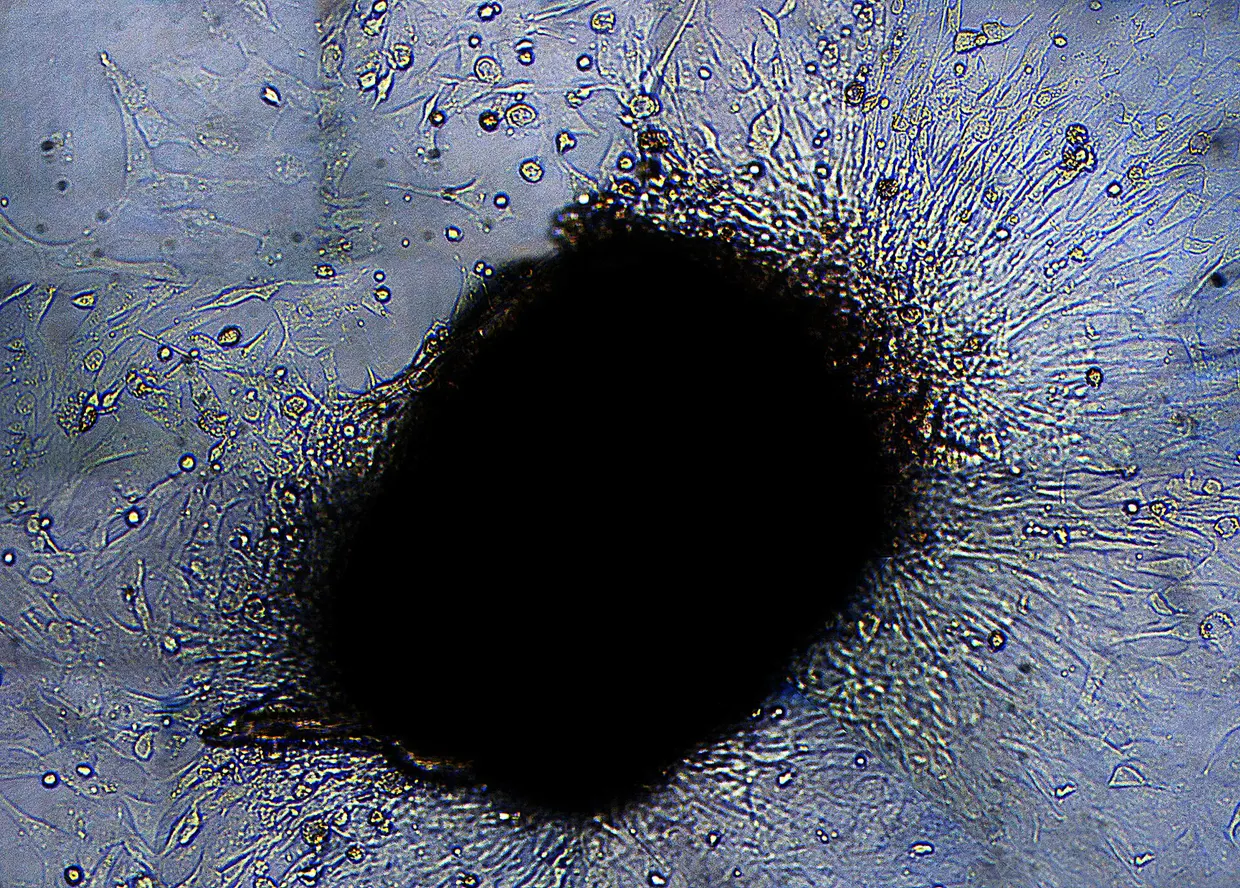
Researchers at Johns Hopkins Medicine reported a phase I clinical trial in which injecting volar fibroblasts, cells from palm and sole skin, gave non-volar skin volar-like features. The study was published in the Journal of Investigative Dermatology on Nov. 10 and is described in Science science.org
Sciencescience.orgOpen source ↗. It was funded by the National Institutes of Health and the Maryland Stem Cell Research Fund.
Why volar skin
Volar skin, found only on palms and soles, resists friction and pressure. According to the authors, greater keratin 9 (KRT9) expression, higher epidermal thickness, larger keratinocyte cytoplasm, longer collagen and more elastin are its markers. Converting residual limb skin of amputees to volar skin could help prosthesis use and reduce skin breakdown. An estimated 2 million people in the U.S. live with limb loss. Limb loss often removes volar skin, so sourcing enough tissue for treatment is a challenge, said study lead Sam S. Lee.
In bioprinted skin constructs, volar fibroblasts induced volar features in keratinocytes. An earlier trial by the same team found that transplanted volar fibroblasts gave non-volar skin volar-like traits, such as greater thickness, for up to five months.
Trial design and results
The new study aimed to increase the number of volar-like cells and help them last longer. Ten healthy adults, mean age 36.5 years, took part for five months. Each donated scalp (non-volar) and sole (volar) fibroblasts, which were expanded in culture for the injections. Each participant received control, scalp-fibroblast and volar-fibroblast injections at separate sites. A single injection of a commercial collagen and polymethylmethacrylate (PMMA) filler was placed at the predetermined sites beforehand, because FDA-approved collagen-only injections are not currently available.
Skin thickness, firmness and cellular changes were measured at two and five months. Skin treated with volar fibroblasts developed volar-like characteristics, including greater thickness and elasticity science.org
Sciencescience.orgOpen source ↗. The filler did not prevent these changes, nor did it markedly improve them.
Unexpectedly, the filler drew the participants' own fibroblasts, blood vessel cells and immune cells to every treatment site, which the authors interpret as an immune response. Lee suspects PMMA contributed, since the body does not break it down. The migrated cells were believed to outnumber the transplanted ones, which could not be distinguished directly, but did not change treatment effectiveness over five months. Longer studies are needed to see how this response affects the transplanted cells.
The team plans to test whether growth factors or physical stimulation could strengthen or stabilize volar characteristics.
المصادر · 2
وجدت خطأ؟اقرأ أيضًا