P2Y13 receptor found to control activation of adult neural stem cells in the subependymal zone
Authors report that the purinergic receptor P2Y13 marks neural stem cells and moves them from quiescence to activation, reducing self-renewal.
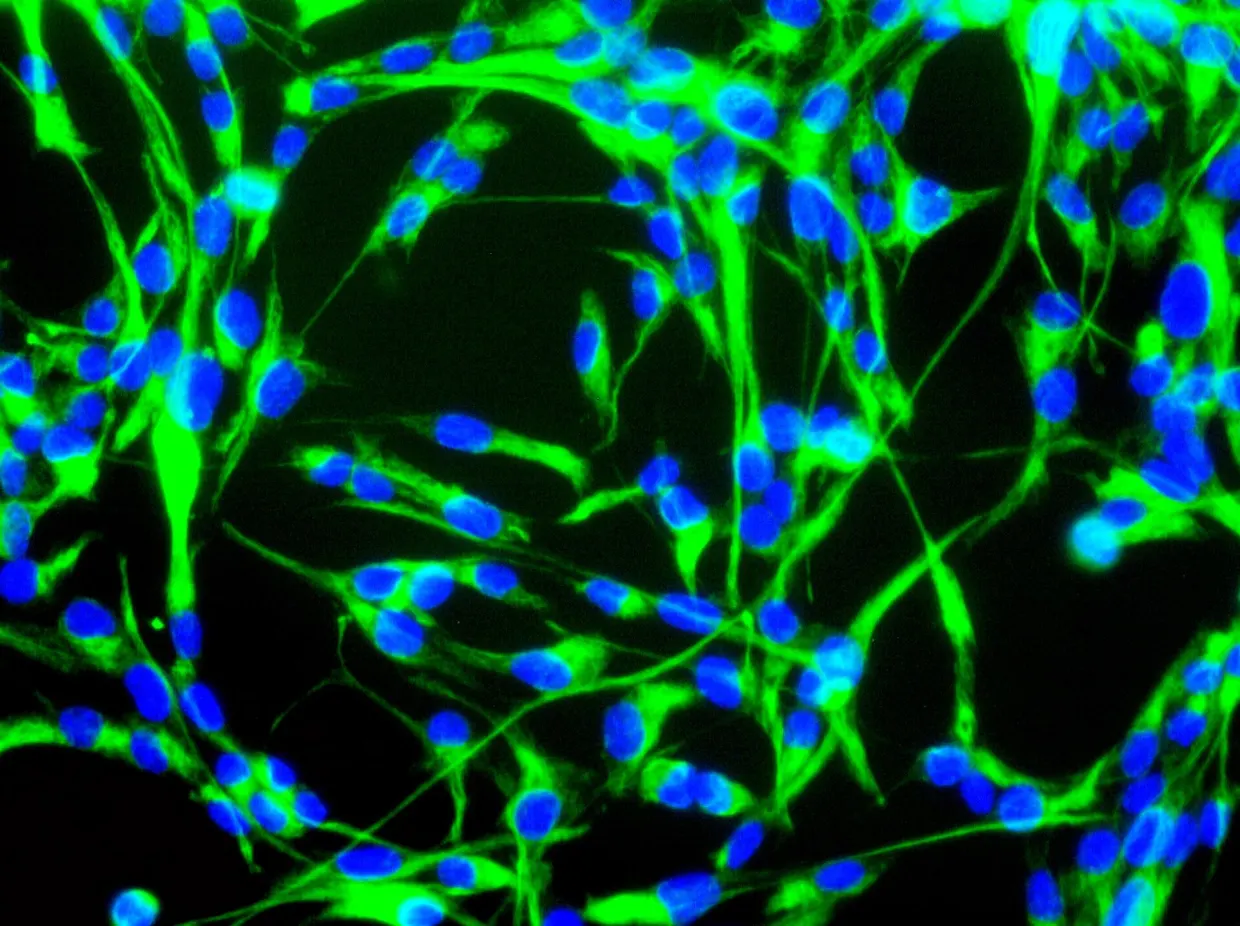
A study in Proceedings of the National Academy of Sciences describes the role of the metabotropic purinergic receptor P2Y13 in adult neurogenesis pnas.org
Proceedings of the National Academy of Sciencespnas.orgOpen source ↗. The work focuses on the subependymal zone (SEZ) of the mammalian brain, the most active germinal area, which generates new neurons throughout life.
The SEZ contains neural stem cells (NSCs) in different states: quiescent (qNSCs), primed (pNSCs) and activated (aNSCs). The states differ in proliferative capacity and molecular signature. According to the authors, specific markers for telling these transient states apart are lacking. The signaling that controls the transition from quiescence to activation remains largely unexplored, as do the factors behind the choice between differentiation and self-renewal during NSC division.
The authors report that P2Y13 is expressed specifically in NSCs of the adult SEZ, and that its level can be used to distinguish qNSCs from aNSCs. P2Y13 signaling promoted NSC activation and lineage progression while reducing their capacity for self-renewal.
Pharmacological blockade or genetic silencing of the receptor favored NSC quiescence pnas.org
Proceedings of the National Academy of Sciencespnas.orgOpen source ↗. Based on these results, the authors describe P2Y13 as a modulator of NSC dynamics that influences both the balance between quiescence and activation and the mode of NSC division in the subependymal zone.