Senckenberg: 47-million-year-old Messel owl with a cockroach in its stomach was likely diurnal
A nearly complete owl skeleton, about 12 cm long, from the Messel Pit holds an iridescent cockroach as its last meal, pointing to daytime activity in early owls.
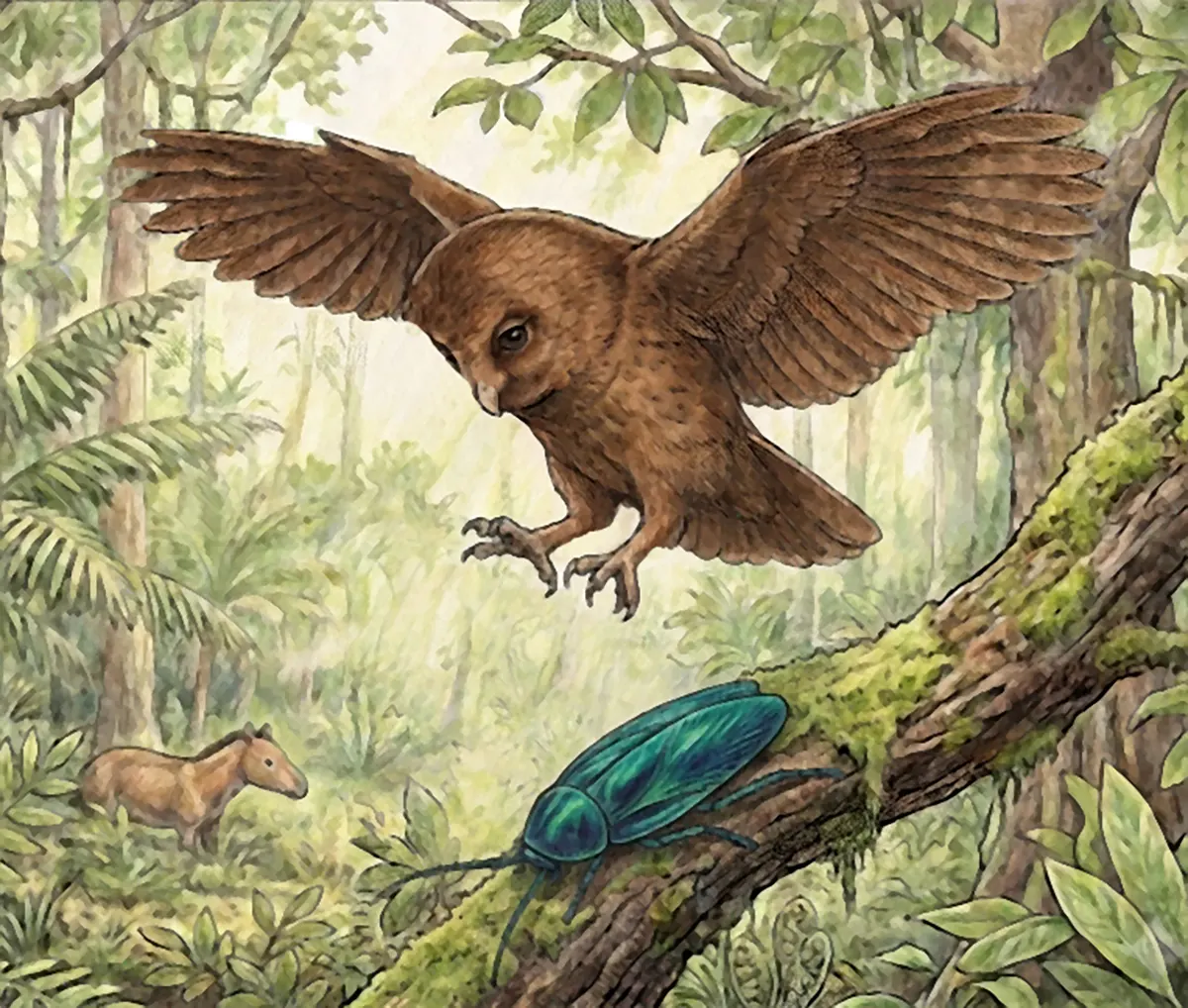
Researchers at the Senckenberg Research Institute and Natural History Museum in Frankfurt have described a new fossil owl, Masillastrix blattophaga, from the Messel site in Germany. The study was published in Current Biology sciencedirect.com
Current Biologysciencedirect.comOpen source ↗. The skeleton is about 47 million years old (middle Eocene) and was recovered during the 2025 excavation season. The bird was about 12 cm long, and the skeleton is complete except for the skull. It is only the second owl species known from Messel.
The authors say it is still unknown when owls became nocturnal. According to Gerald Mayr, this is partly because most owl fossils consist of only a few isolated bones.
Cockroach as the last meal
The wing and tail feathers of the fossil are preserved. In the stomach area the researchers found remains of a greenish-blue iridescent insect, apparently the bird's last meal. According to the paper, these are the first identifiable insect remains ever found as the last meal of a fossil bird. The strong longitudinal veins and numerous transverse veins of the wing remnants identify the insect as a cockroach, said Sonja Wedmann, head of the Messel excavation. A very similar, much better-preserved cockroach was found a few meters from the owl, which confirms the identification.
In cockroaches, iridescence is correlated with diurnal habits. The authors therefore consider the find the strongest evidence to date for diurnality in archaic owls sciencedirect.com
Current Biologysciencedirect.comOpen source ↗.
Feathers and wing bones
The flight feathers lack barring and the frayed leading edges of the primaries. Both features are associated with nocturnality in living owls. The humerus is much stouter than in extant owls, which indicates wings less adapted to silent flight. A slenderer humerus in late Eocene owls suggests a shift toward a nocturnal ecology.
The oldest known owl with humerus proportions typical of modern owls lived in France about 35 million years ago. Based on this, the authors conclude that nocturnal activity likely developed between the middle and late Eocene, about 47 to 34 million years ago. They state that this timeframe rules out previously suggested factors for nocturnality in owls.