Technion Researchers Measure Superluminal Velocities of Optical Singularities
New measurements reveal that optical singularities can appear to move faster than light just before annihilation, challenging traditional particle analogies.
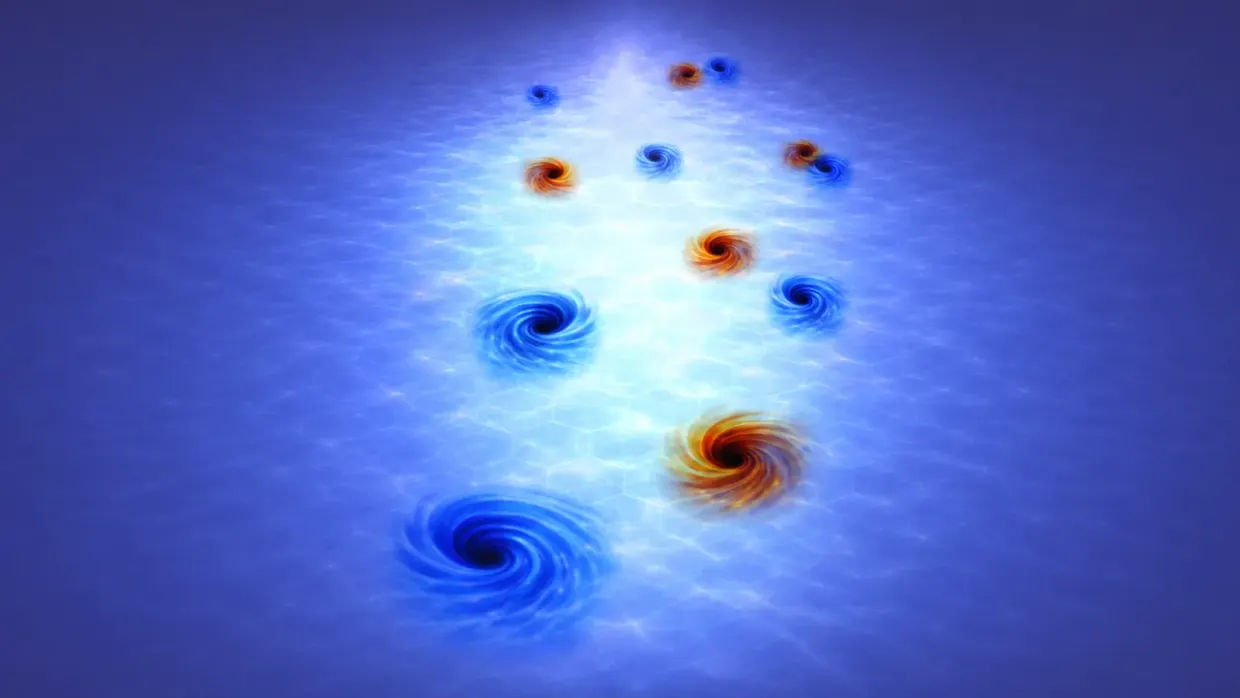
Researchers at the Technion – Israel Institute of Technology have investigated the dynamics of optical singularities using ultrafast electron microscopy. These phase singularities, which are points where the wave oscillation vanishes, were studied in a thin layer of hexagonal boron nitride, where light couples with the material's lattice vibrations to form phonon polaritons. The study, published in Nature, demonstrates that these singularities can exhibit apparent superluminal velocities just before they annihilate.
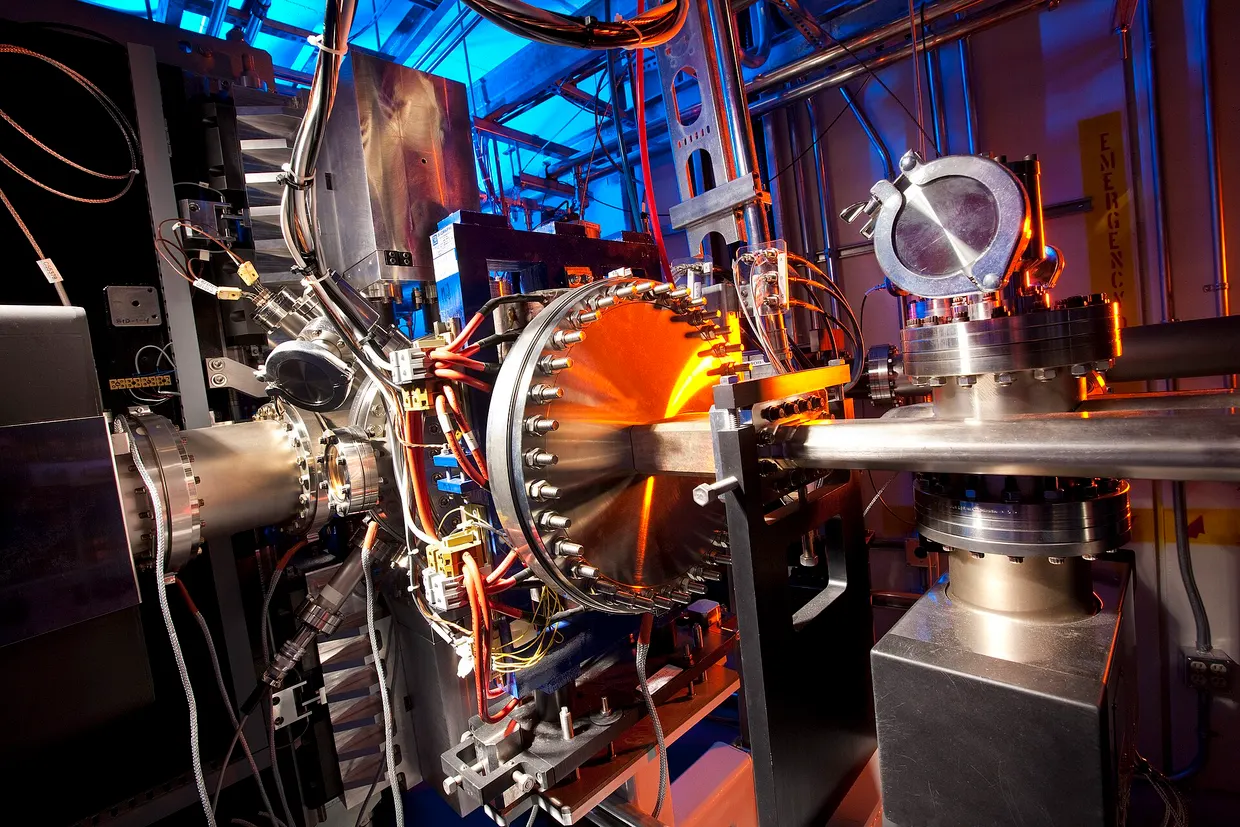
The research team, led by Professor Ido Kaminer, utilized short laser pulses to excite the coupled waves in the boron nitride. By employing a combination of ultrafast electron microscopy and electron interferometry, they were able to reconstruct both the strength and phase of the electromagnetic field with a spatial resolution of approximately 20 nanometers and a temporal resolution of three femtoseconds.
The analysis revealed that as two singularities approach each other, their velocities can increase dramatically, with measurements indicating speeds exceeding the speed of light in vacuum. The average velocity recorded for the singularities was about 1.04 times the speed of light, with some individual movements reaching even higher values. However, it is important to note that these speeds do not correspond to material particles, as the singularities themselves do not carry energy or information.
The findings suggest universal laws governing wave systems, applicable to various phenomena from sound waves to superconductors. The statistical dynamics of the singularities resemble those of particles in liquids, indicating a complex interplay between their spatial distributions and velocities. This research not only enhances our understanding of phase singularities but also opens avenues for exploring rapid processes in optical materials using advanced electron interferometry techniques.