Argonne team uses 4D neutron scattering to see correlated ion motion in SrCl2 crystal
Quasielastic neutron scattering on a strontium chloride single crystal above 900 K showed correlated ion motion. The crystal is a test material, not a battery.
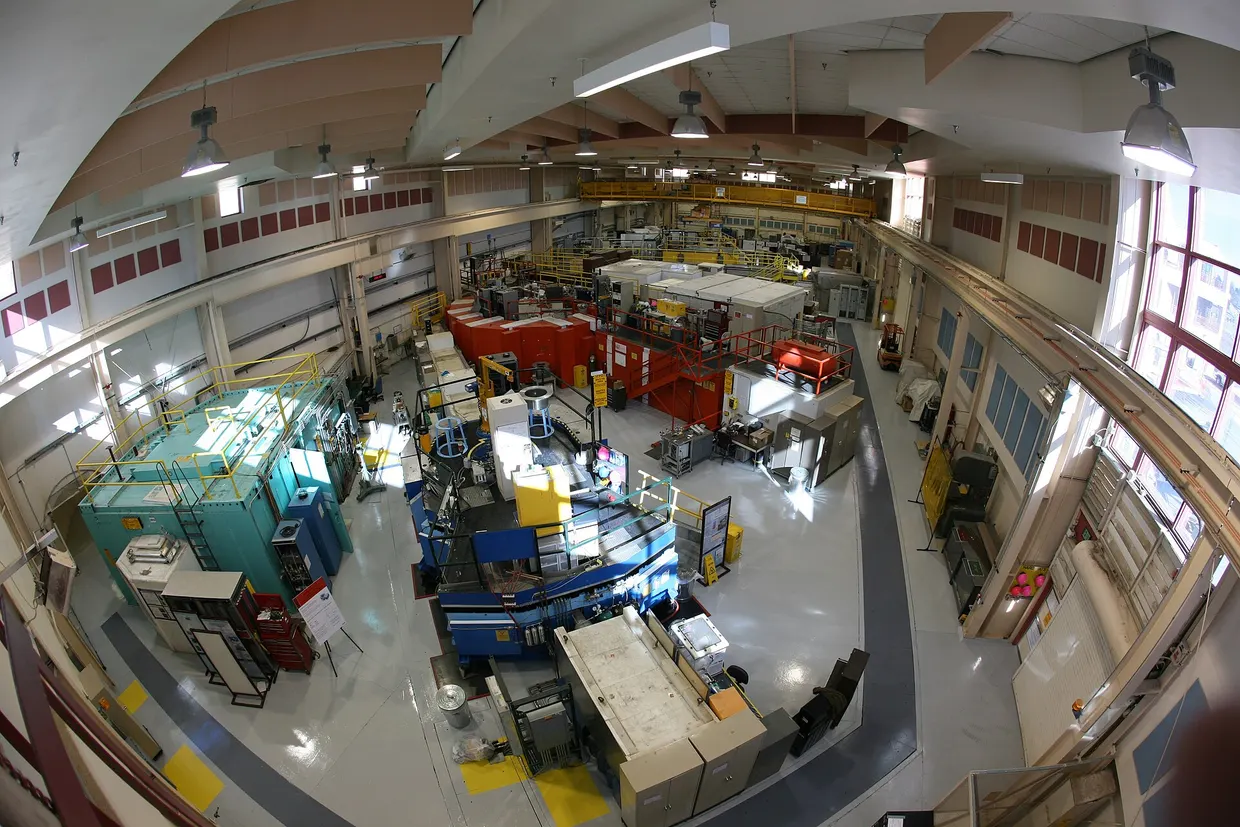
Researchers led by Argonne National Laboratory used four-dimensional quasielastic neutron scattering (4D-QENS) to study how ions move in a single crystal of strontium chloride (SrCl2), according to a paper in PRX Energy. aps.org
PRX Energyaps.orgOpen source ↗ The measurements were made at the Spallation Neutron Source at Oak Ridge National Laboratory, at temperatures above the transition into the superionic phase. SrCl2 is a fast-ion conductor above 900 K. The study tested the method on a well-studied material; no working battery was built or tested.
How the measurement was done
The team aimed neutrons at the crystal and recorded how they scattered. Changes in the direction and energy of the neutrons carry information about the motion of atoms and ions inside the sample. The crystal was rotated during data collection, which gave a more complete record of scattering in different directions. This let the researchers combine three dimensions of motion-related information with measurements of energy transfer.
The authors recorded both incoherent and coherent scattering in order to examine the correlated motion of hopping anions. The method produces far more data than a simpler scattering measurement. A powerful neutron source and computing resources were used to collect and analyze it.
What the data showed
Refinements of the incoherent scattering gave residence times and jump probabilities between lattice sites. These agree well with previous studies and confirm that ionic hopping along nearest-neighbor directions is the most probable conduction pathway. aps.org
PRX Energyaps.orgOpen source ↗
The coherent scattering showed evidence of de Gennes narrowing, which indicates that correlations between ions are important in the conduction mechanism. Such effects are hard to see if each ion is treated as moving independently. One ion's movement can affect whether a neighboring ion has room to move, so these interactions can either help ions pass through the solid or hinder them.
The authors state that the results point to a need to improve both the theory of ionic transport in fluorite compounds and the modeling of coherent 4D-QENS in single crystals. Fast-ion conduction in solids is relevant to batteries, fuel cells, sensors and supercapacitors. Applying the method to more practical solid electrolytes is a separate step that this work did not take.