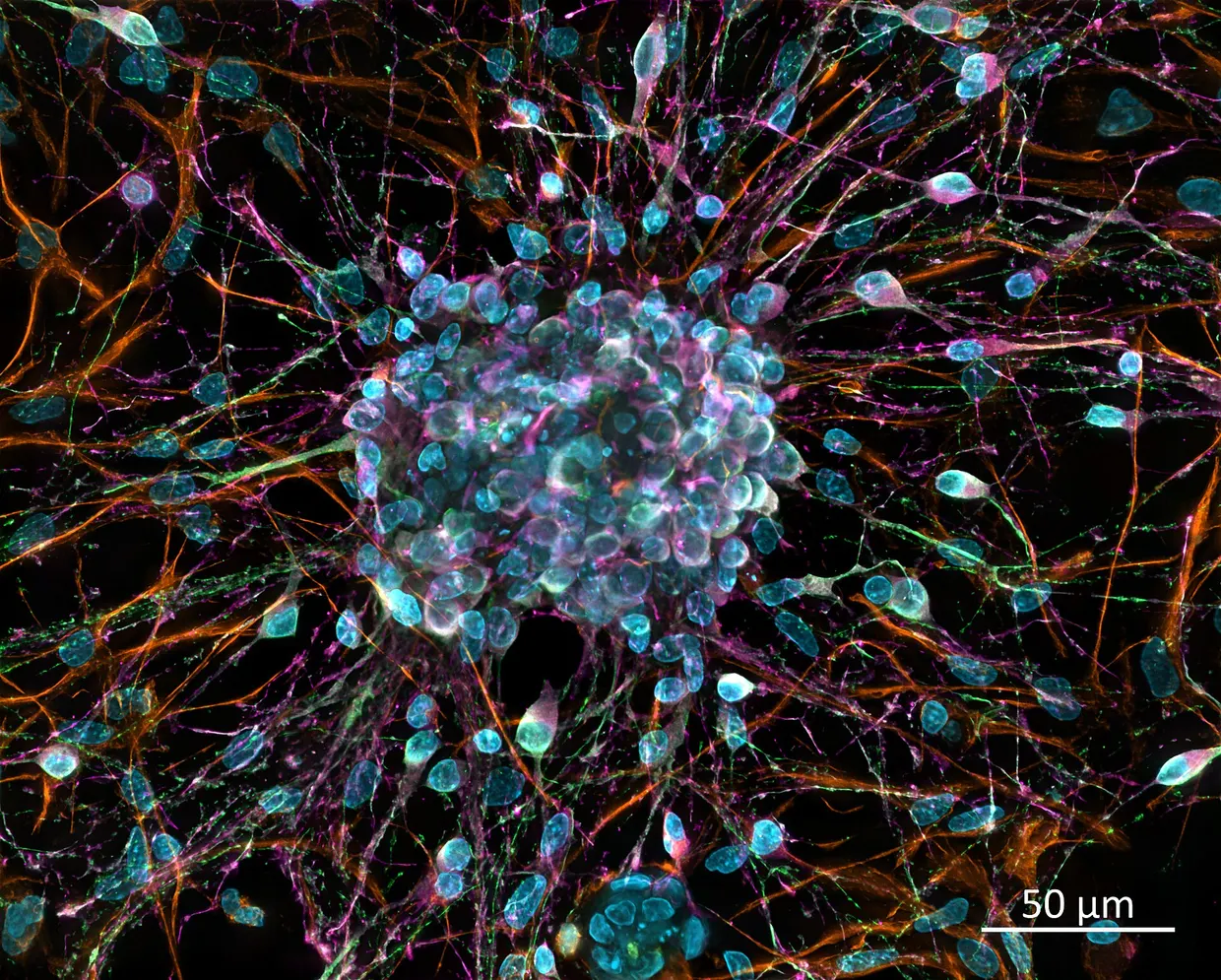
Study of 355,997 hippocampal nuclei links adult neurogenesis to memory resilience and Alzheimer's
Post-mortem hippocampi from young adults, older adults, SuperAgers and people with Alzheimer's show neurogenic cells and distinct chromatin profiles; the data show association.
Researchers reported in Nature (nature.com) on 25 February 2026 a multiomic analysis of 355,997 nuclei isolated from post-mortem human hippocampi. The samples came from five cohorts: young adults with intact memory, older adults without cognitive impairment, older adults with extraordinary memory (SuperAgers), adults with preclinical intermediate pathology, and adults with Alzheimer's disease (AD) nature.com
nature.comnature.comOpen source ↗. The authors identified neural stem cells, neuroblasts and immature granule neurons in the tissue.
Method and cell identification
The team combined single-nucleus RNA sequencing with single-nucleus assay for transposase-accessible chromatin sequencing. The first analysis covered 85,977 nuclei from 8 cognitively intact adults aged 20–40 years. Cell labels were transferred with the scANVI algorithm from two reference datasets: the developing human forebrain and the adult human hippocampus.
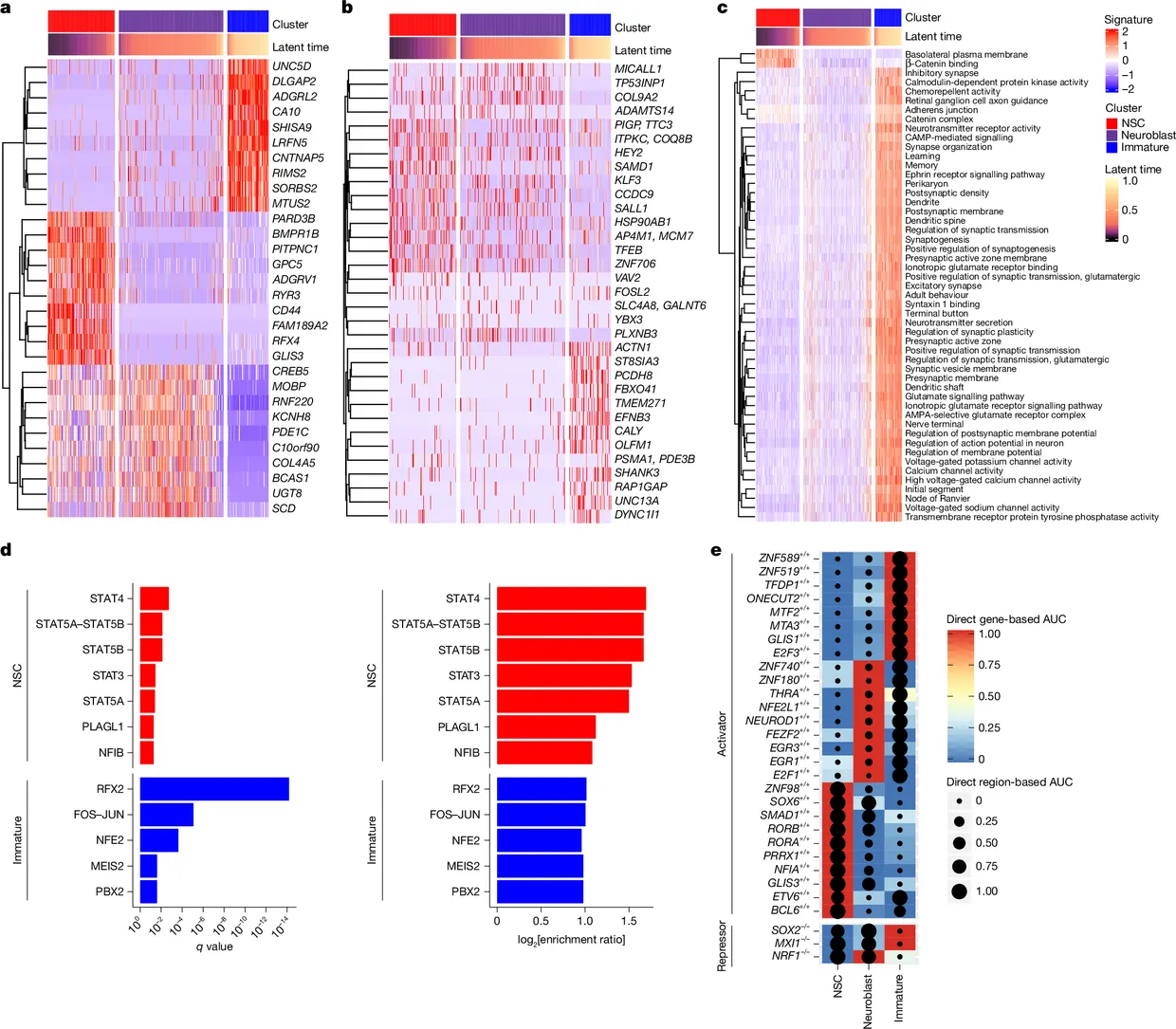
Unsupervised clustering revealed 12 cell types. Immature neurons appeared at the outer margins of the mature granule neuron cluster, while neuroblasts partially overlapped with mature oligodendrocytes in the two-dimensional projection. Comparison of these two clusters gave 4,166 differentially expressed genes and 169 pathways, all upregulated in neuroblasts; 80 of the pathways were linked to dendrites, axons, postsynaptic density and neurotransmission. Oligodendrocyte-related markers MAG and MOG were also expressed in neuroblasts, at lower levels than in mature oligodendrocytes.
Chromatin changes and cognitive resilience
The authors report that dysregulated neurogenesis was largely associated with changes in chromatin accessibility nature.com
nature.comnature.comOpen source ↗. Analysis of transcription factors and target gene signatures showed early alterations in chromatin accessibility of neurogenic cells in the preclinical group, and these were more pronounced in AD samples.
In SuperAgers the authors found a distinct neurogenesis profile, which they suggest may reflect a "resilience signature". They also state that alterations in the profile of astrocytes and CA1 neurons govern cognitive function in the ageing hippocampus.
The study has a stated limit: it shows association, not cause. How many new neurons arise in the adult human brain and how strongly they affect memory remains unknown. It is also unclear whether new cells improve memory or are simply more common in people whose brains are healthier overall.
The existence of human hippocampal neurogenesis has long been disputed, and the authors attribute the controversy to limits of markers, sample processing, cell annotation and computational analysis nature.com
nature.comnature.comOpen source ↗. In rodents, hippocampal neurogenesis is linked to learning and memory and declines with age.