CATL aims for over 3,000 battery-swap stations in China by year-end to support sodium-ion cells
Chairman Robin Zeng said the swap network will ease range concerns and speed up sodium-ion adoption. About 200 Chinese cities already have CATL swap stations.
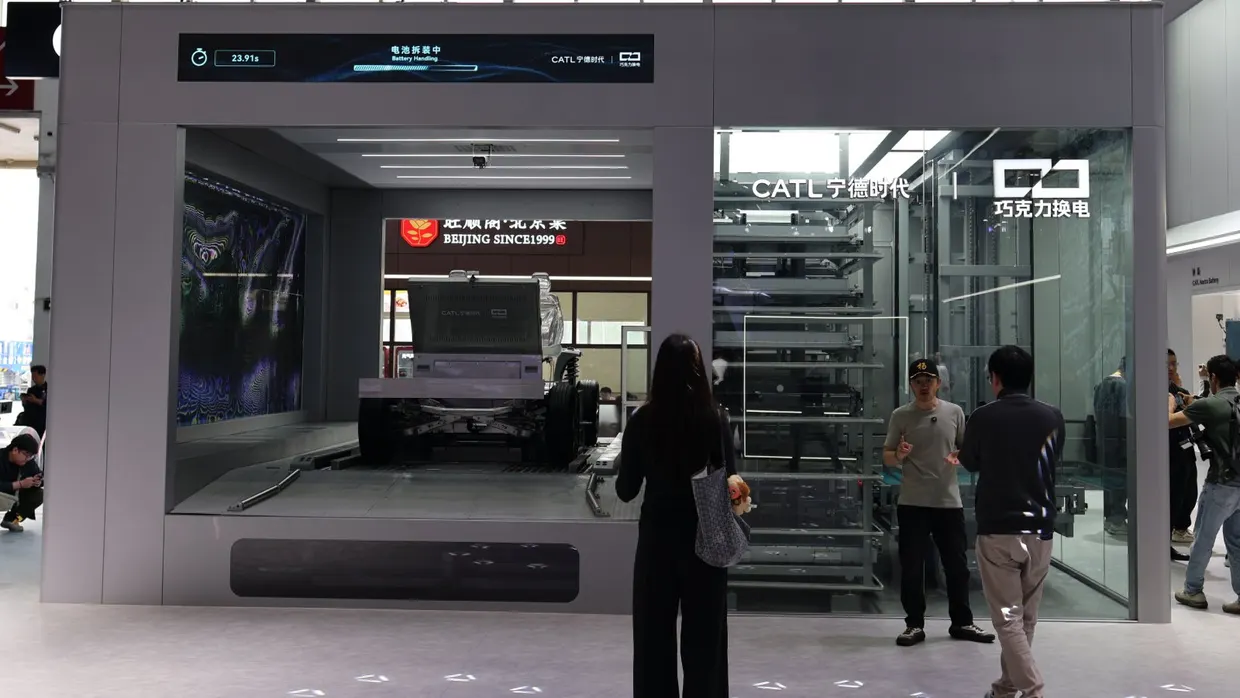
CATL (HKEX: 3750) said its expanding battery-swapping network in China will help accelerate adoption of sodium-ion batteries by easing consumer concerns about driving range, according to cnevpost.com, which cites a Bloomberg report published on Tuesday. Chairman Robin Zeng made the remarks at a Benchmark Mineral Intelligence event in Shanghai. cnevpost.com
cnevpost.comcnevpost.comOpen source ↗
About 200 Chinese cities already have CATL swap stations, Zeng said. The company aims to have more than 3,000 passenger car swap stations across China by the end of the year.
Swap network and driving range
Zeng said sodium-ion batteries offer sufficient range for daily urban travel, while an expanding swap network can ease concerns among drivers who make longer trips on weekends. "We are building battery-swapping stations on our own, leasing batteries to the consumers," he said, adding that more stations are needed on highways and in cities.
Swapping lets a driver replace a depleted pack with a fully charged one within minutes, as an alternative to conventional charging. In December 2025, CATL announced that it had built 1,020 Choco-Swap stations across 45 cities. Its subsidiary Contemporary Amperex Energy Service Technology (CAES) said at the time that it planned to deploy sodium-ion batteries based on Naxtra technology at scale across its swap network starting in 2026. cnevpost.com
cnevpost.comcnevpost.comOpen source ↗
Sodium-ion batteries: figures and limits
CATL launched the Naxtra sodium-ion brand in April 2025. In February, it jointly unveiled a passenger vehicle with the battery together with Changan Automobile. CATL said the cells reach an energy density of up to 175 Wh/kg and provide a driving range of more than 400 kilometers (249 miles).
Cold-weather performance is another selling point. According to information CATL released in February, the battery retains more than 90% of its capacity at minus 40 degrees Celsius (minus 40 degrees Fahrenheit). The technology is also seen as potentially improving safety and reducing costs, but energy density remains a key concern for adoption.
CATL previously said it expects 10,000 to 20,000 electric vehicles to use its sodium-ion batteries this year. The company also treats the technology as a risk management strategy that reduces its exposure to sharp swings in lithium prices. cnevpost.com
cnevpost.comcnevpost.comOpen source ↗