Korean team ties East Sea flying squid collapse to marine heatwaves; models give zero catch by 2040s
Researchers at Pukyong National University linked the collapse of the Japanese flying squid fishery in the East Sea to warming and heatwaves. Their projections show zero catch by the 2040s.
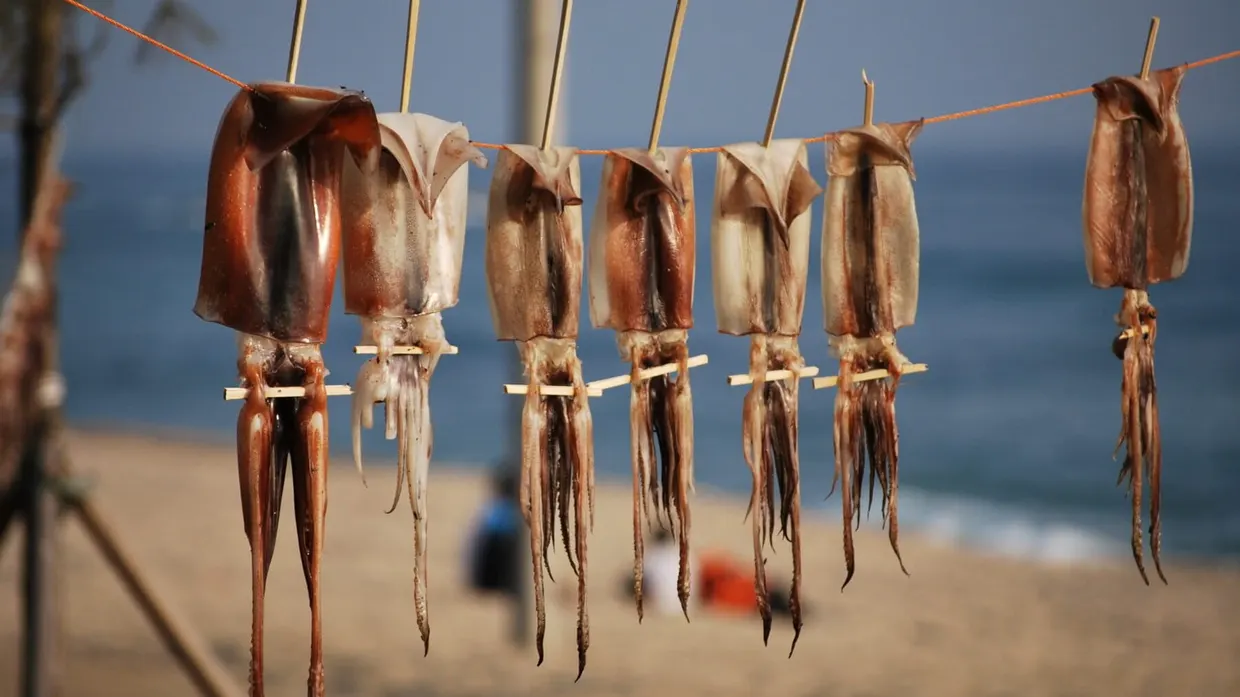
Researchers from Pukyong National University and the National Institute of Fisheries Science in Busan, South Korea, analysed the collapse of the Japanese flying squid (Todarodes pacificus) fishery in the East Sea (Sea of Japan). The study was published in Communications Earth & Environment in October 2026 (idp.nature.com). The authors used observations from 1993 to 2025 and describe the case as an early warning of climate-driven species replacement in warming oceans idp.nature.com
idp.nature.comidp.nature.comOpen source ↗.
According to South Korea's national statistics service, as cited in the ZME Science retelling, the current squid catch is one-sixteenth of the 2002 level. In 2023–2025 the country's main fisheries produced less than 10% of the 1999 peak of about 225,122 tons.
La Niña, heatwaves and three pathways
The authors identify a teleconnection: an intensified early-summer La Niña amplifies marine heatwaves in autumn and winter within the major fishing grounds. Heatwaves are defined as periods of unusually warm water lasting at least five consecutive days. Sequential mediation analysis shows that rising temperatures drive the squid collapse through three connected pathways [1]:
- gradual habitat degradation from long-term warming;
- acute thermal stress from marine heatwaves;
- an ecological trade-off linked to the rapid influx of a warm-adapted predator.
The corresponding author, Kyunghoi Kim, said that long-term warming sets the background pressure and climate variability intensifies unfavourable conditions in particular years.
Predator influx and projections
The predator is the Japanese amberjack (Seriola quinqueradiata). Its domestic catch has risen as the seas warmed and the squid catch fell. Sea surface temperature around the Korean Peninsula has risen by 0.7 °C over the past decade, more than twice the global average, according to the ZME Science retelling.
Climate model projections indicate that unabated warming will increase the risk of the regional squid fishery reaching a zero-catch state by the 2040s across multiple emissions scenarios idp.nature.com
idp.nature.comidp.nature.comOpen source ↗. In the retelling, the models place this between 2043 and 2048, depending on the emissions outcome. The authors conclude that transboundary, climate-adaptive management is urgently needed.