KIT and EEW prepare NECOC 2.0 to turn waste-plant CO₂ into solid carbon, €5 million funded
The project will test the full chain on CO₂ from a real flue gas stream at EEW's Eschbach site; earlier, the steps were shown in a 2020 experimental unit.
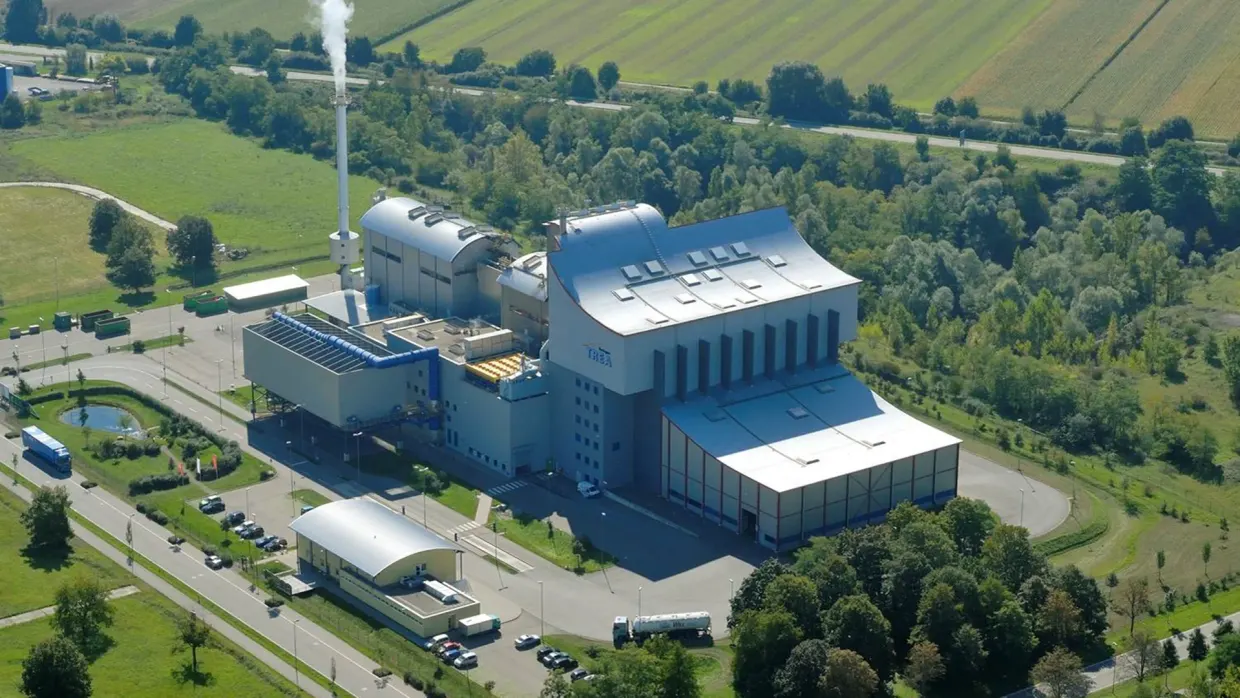
Researchers at the Karlsruhe Institute of Technology (KIT) and partners are preparing to apply the NECOC process, which converts CO₂ from flue gas into solid carbon, at thermal waste treatment plants of the EEW group, according to kit.edu kit.edu
kit.edukit.eduOpen source ↗. The Federal Ministry for Economic Affairs and Energy (BMWE) funds the NECOC 2.0 project with more than five million euros. The EEW site in Eschbach, where capture will be tested, handles nearly 200,000 US tons (175,000 metric tons) of residual waste a year.
Even with continuous process optimization, EEW plants emit both fossil and biogenic CO₂. In NECOC 2.0 the partners will study how to capture CO₂ directly from cleaned flue gas and use it as a material. The findings are meant to serve as a basis for planning a full-scale implementation.
How the NECOC process works
Captured CO₂ first reacts with hydrogen to form methane. The methane then flows through a reactor with liquid tin, where it decomposes into carbon and hydrogen. The hydrogen returns to the methanation step, and the carbon is obtained as a fine powder that can replace fossil carbon in industrial applications, the researchers report.
From lab to pilot plant
The individual steps have been studied at different scales kit.edu
kit.edukit.eduOpen source ↗. In 2020, an integrated facility at KIT's Karlsruhe Liquid Metal Laboratory (KALLA) combined methanation and methane pyrolysis and produced microgranular carbon from CO₂. Since 2026, the transfer projects NECOC-BW and CO₂DCC have been developing application concepts for large cast-iron foundries.
NECOC 2.0 is the next step: the partners want to test the process chain with CO₂ from a real industrial flue gas stream and connect it with capture into a continuous plant, and they are developing a concept for building the whole process. They will also check whether the carbon suits products such as battery electrodes or construction materials.
EEW, the consortium coordinator, tests CO₂ capture in Eschbach. KIT's Institute of Thermal Process Engineering and Institute for Thermal Energy Technology and Safety work on methanation and methane pyrolysis. The Fraunhofer Institute for Ceramic Technologies and Systems IKTS studies electrochemical binding of CO₂ as calcium and magnesium carbonates.