Sediment data from Zaragoza tie post-impact climate swings to orbital cycles, not Deccan volcanism
University of Zaragoza researchers compared marine sediments spanning about 750,000 years around the impact 66 million years ago. Later carbon-cycle events coincide with orbital eccentricity cycles.
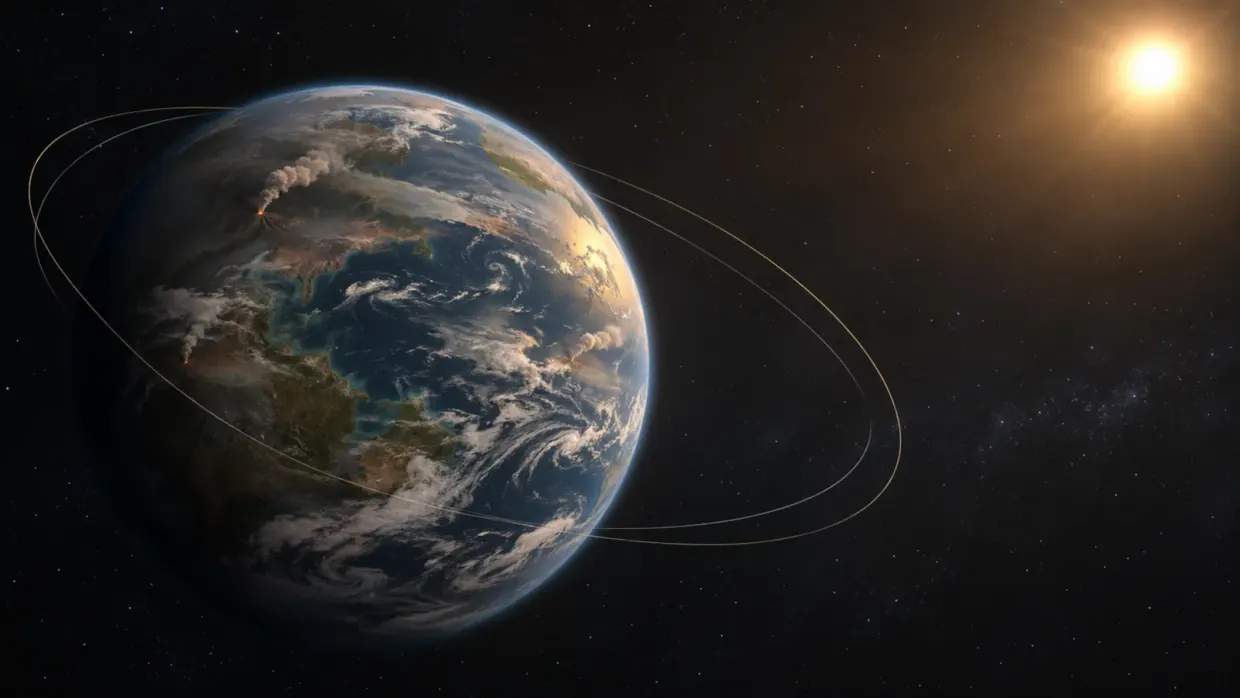
A team at the Universidad de Zaragoza (UNIZAR) led by Vicente Gilabert has compared marine sediments from the Atlantic, the Pacific and the former Tethys Sea to look at what drove Earth's climate after the asteroid impact 66 million years ago, scinexx reports. The study covers about 750,000 years: the last 100,000 years of the Cretaceous and roughly 650,000 years after the impact. scinexx.de
scinexxscinexx.deOpen source ↗
The impact triggered a mass extinction that also killed the non-avian dinosaurs. At the same time, huge volumes of basalt lava poured out in what is now India, forming the Deccan Traps. It has long been disputed whether this volcanism prepared the extinction, amplified climate change, or mainly hampered the recovery of life afterwards.
Isotopes, mercury and plankton
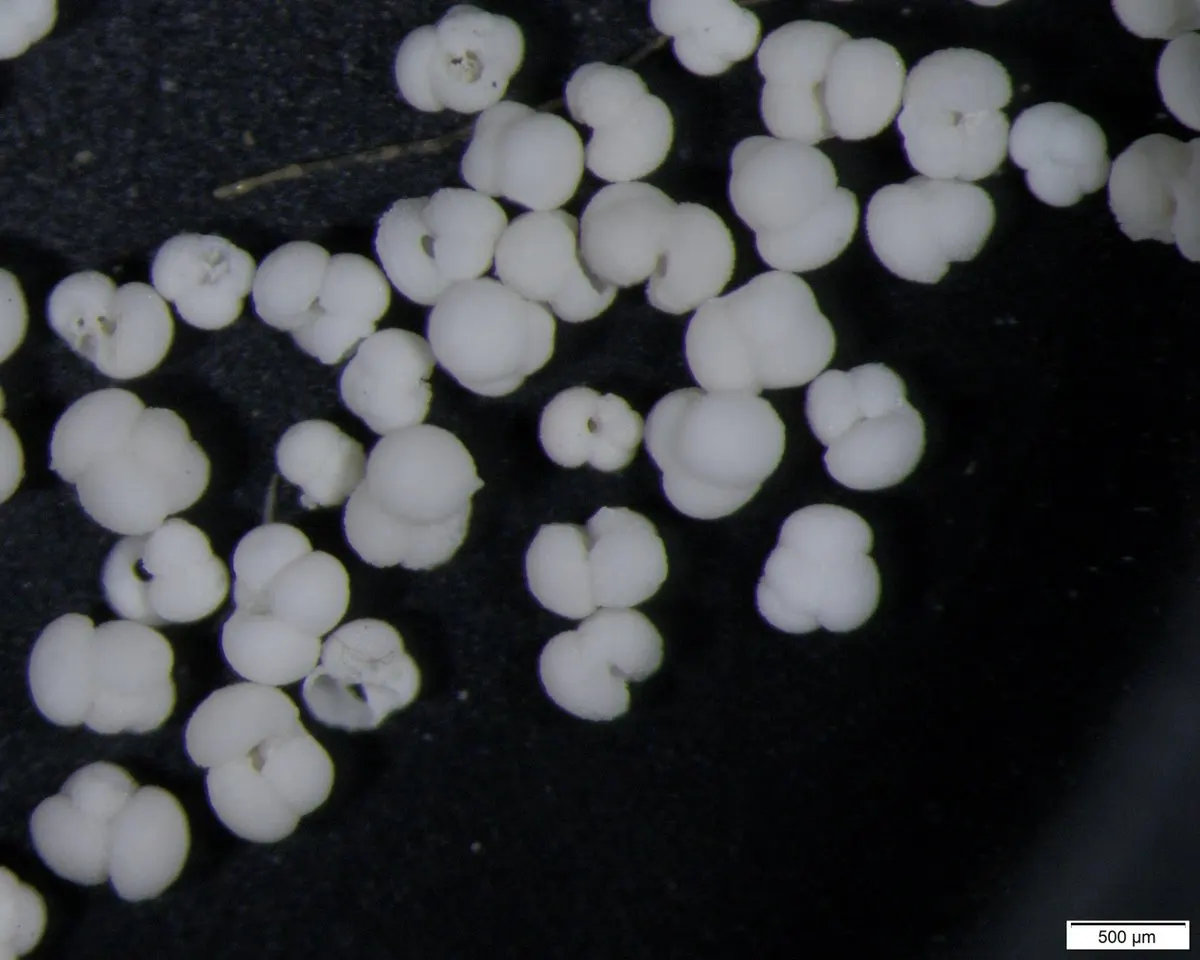
The team measured stable carbon and oxygen isotope ratios and mercury content in the sediments and compared them with fossil plankton. The isotopes indicate changes in the carbon cycle and in marine conditions, while mercury enrichment can signal volcanic eruptions. Planktonic foraminifera, tiny single-celled organisms with calcareous shells, show how communities responded to environmental stress.
In the last roughly 100,000 years before the impact, the deposits point to gradual cooling. Some sites show elevated mercury 30,000 to 15,000 years before the Cretaceous-Paleogene boundary, possibly linked to Deccan eruptions, yet open-ocean foraminifera composition changed little. At the boundary, the chemical signatures shifted abruptly and foraminifera diversity collapsed. In the first roughly 10,000 years afterwards, adaptable species and specimens with unusually shaped shells became more common. scinexx.de
scinexxscinexx.deOpen source ↗
Orbital eccentricity cycles
About 70,000 to 200,000 years after the boundary, particularly resilient plankton forms spread again, partly alongside mercury signals that might indicate Deccan volcanism. According to the authors, this suggests temporary environmental stress but does not prove a direct link between every eruption and the biological response.
Two later carbon-cycle disturbances, Dan-C2 and LC29n, are recorded in the Atlantic and Tethys sections. Their dating does not fit an immediate trigger from the strongest phases of Deccan volcanism. Instead, they coincide with recurring variations in Earth's orbit, especially eccentricity cycles, which change the distribution of solar radiation. For Dan-C2, there is also no uniform signal of marked warming, although the event was earlier interpreted as a strong hot phase.
The findings separate three influences: the immediate catastrophe of the impact, temporary stress from volcanism, and later changes presumably driven by orbital cycles. The attribution rests on timing coincidences and indirect sediment indicators, not on experimental proof of the causes. The study was published in Geobios. scinexx.de
scinexxscinexx.deOpen source ↗