Max Planck Institute: Southern Ocean vented CO2 during Eocene warmth, foraminifera shells show
Nitrogen isotopes in fossil plankton shells show Southern Ocean algae used about 40% less nutrients at the Eocene peak; a model links this to at least half of the CO2 rise.
An international team led by the Max Planck Institute for Chemistry reports that the ocean around Antarctica released CO2 from its deep waters into the atmosphere during the early Eocene, according to mpic.de mpic.de
mpic.dempic.deOpen source ↗. The epoch lasted from about 53 to 49 million years ago and was the warmest stretch since the dinosaurs died out 65 million years ago. Atmospheric CO2 reached roughly 1,600 parts per million (ppm), and temperatures were more than 10 degrees above present. Volcanic sources alone do not appear to explain these values. The work is published in Nature Geoscience.
Fossil shells as a record of ocean carbon storage
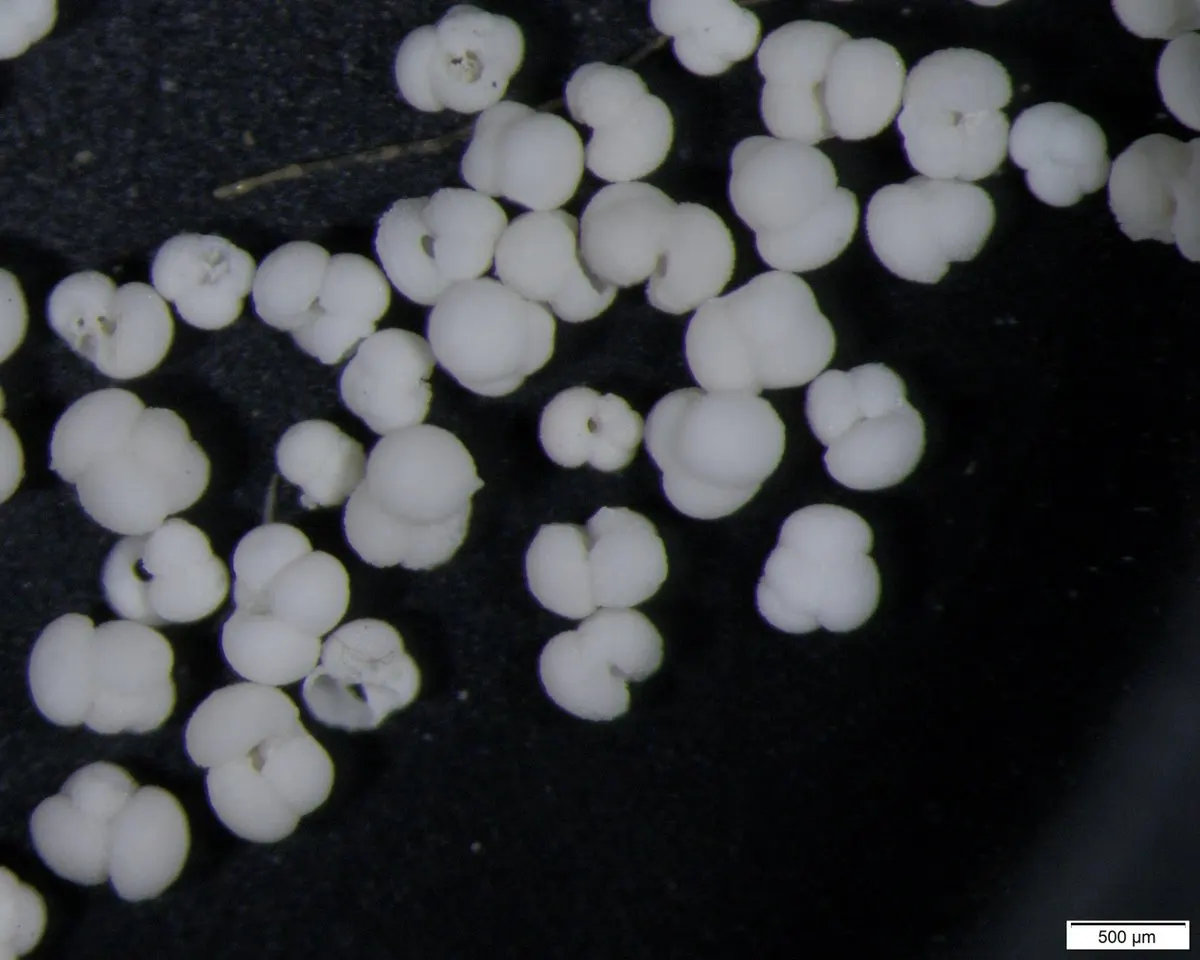
The researchers measured nitrogen isotopes in organic matter preserved for millions of years inside foraminifera shells. The shells came from sediment cores taken at four locations by the Ocean Drilling Program. Foraminifera are tiny single-cell marine organisms whose shells survive in sediment for millions of years.
The isotope signal shows how fully algae used nutrients in surface waters. Unused nutrients at the surface mean a weaker biological pump, the process that carries carbon from the surface into the ocean interior. With a less efficient pump, less carbon stayed in the deep ocean and more CO2 accumulated in the atmosphere. At the peak of Eocene warmth, Southern Ocean algae consumed about 40% less of the available nutrients than before or after.
Model estimate and long persistence of CO2
To estimate the effect on the atmosphere, the team used a numerical ocean-atmosphere model. The 40% reduction alone raises CO2 from 700 to about 900 ppm. Including warming and seawater chemistry feedbacks, the figure rises to about 1,100 ppm. That accounts for at least half of the roughly 800 ppm rise in this period mpic.de
mpic.dempic.deOpen source ↗.
Co-author François Fripiat notes that Eocene seawater had a much lower capacity to buffer CO2 changes than today's ocean, so a weaker pump could have had a larger effect. According to the scientists, the elevated CO2 may have persisted for millions of years because rock weathering, the gradual removal of atmospheric CO2, worked less efficiently. Before major mountain ranges such as the Alps and Himalayas rose 50 to 30 million years ago, relatively flat and deeply weathered continents offered little fresh rock.
The authors also point to a similar Southern Ocean response in the warm interglacials of recent ice ages. Simone Moretti, lead author, says the study shows the Southern Ocean was a major regulator of atmospheric CO2 in a much warmer world.