UCL analysis: apparent dinosaur decline in North America before the asteroid may be a fossil-record gap
Authors of a Current Biology study modelled over 8,000 North American fossils and found detection odds fell while habitat occupancy stayed stable for four dinosaur clades.
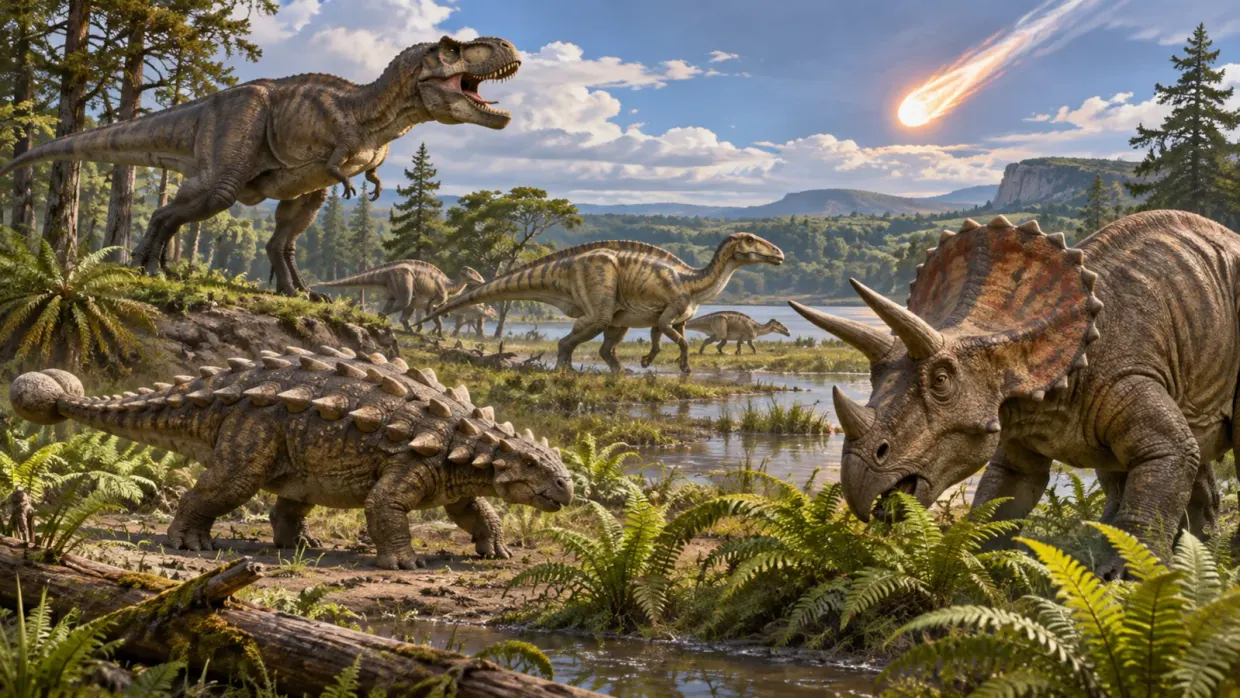
A team at University College London (UCL) reports that the apparent decline of North American dinosaurs before the end-Cretaceous asteroid impact may reflect gaps in the fossil record rather than real losses. The study, published in Current Biology and described by ucl.ac.uk, covers the 18 million years up to the impact, between 84 and 66 million years ago, and uses more than 8,000 fossils ucl.ac.uk
ucl.ac.ukucl.ac.ukOpen source ↗.
Taken at face value, the fossils suggest that the number of dinosaur species peaked about 75 million years ago and then fell over the nine million years before the impact. According to the authors, this trend follows from fossils of that age being less likely to be found, mainly because fewer sites expose accessible rock from the latest Cretaceous.
Occupancy modelling of four clades
The researchers examined Ankylosauridae, Ceratopsidae (including Triceratops), Hadrosauridae and Tyrannosauridae. They applied occupancy modelling, a method from ecology and biodiversity studies that estimates how likely a species is to inhabit an area. North America was divided into a grid, and the team estimated from geology, geography and climate how many cells each group likely occupied at four times in the period.
The proportion of land occupied by the four clades stayed broadly constant, which the authors interpret as a stable habitat area and a low extinction risk. Meanwhile the estimated probability of detection declined across the four intervals. The most influential factor was how much relevant rock was exposed and accessible. Other factors included vegetation cover and how often researchers had searched an area ucl.ac.uk
ucl.ac.ukucl.ac.ukOpen source ↗.
Ceratopsians as an exception
Ceratopsians differed from the other three clades: they were more likely to be detected later in the period and occupied more areas. The authors suggest they favoured green plains away from rivers, a habitat that became the main preserved environment as a large inland sea that split the continent retreated and its feeder rivers dried up.
Lead author Dr Chris Dean said that the quality of the record of the four clades worsens during the final six million years before the impact, so the record cannot be taken at face value. Co-author Dr Alessandro Chiarenza attributed the apparent decline to a reduced sampling window caused by geological change, including tectonics, mountain uplift and sea-level retreat.
The model describes the spatial distribution of four clades in North America, not species counts or population sizes, so it does not cover dinosaurs worldwide.