Electron microscopy resolves three acoustic phonon modes in ferroelectric NbOI2 after depolarization
Ultrafast electron microscopy and diffraction showed two shear modes and one breathing mode in a van der Waals ferroelectric; single-mode regions kept acoustic coherence longer.
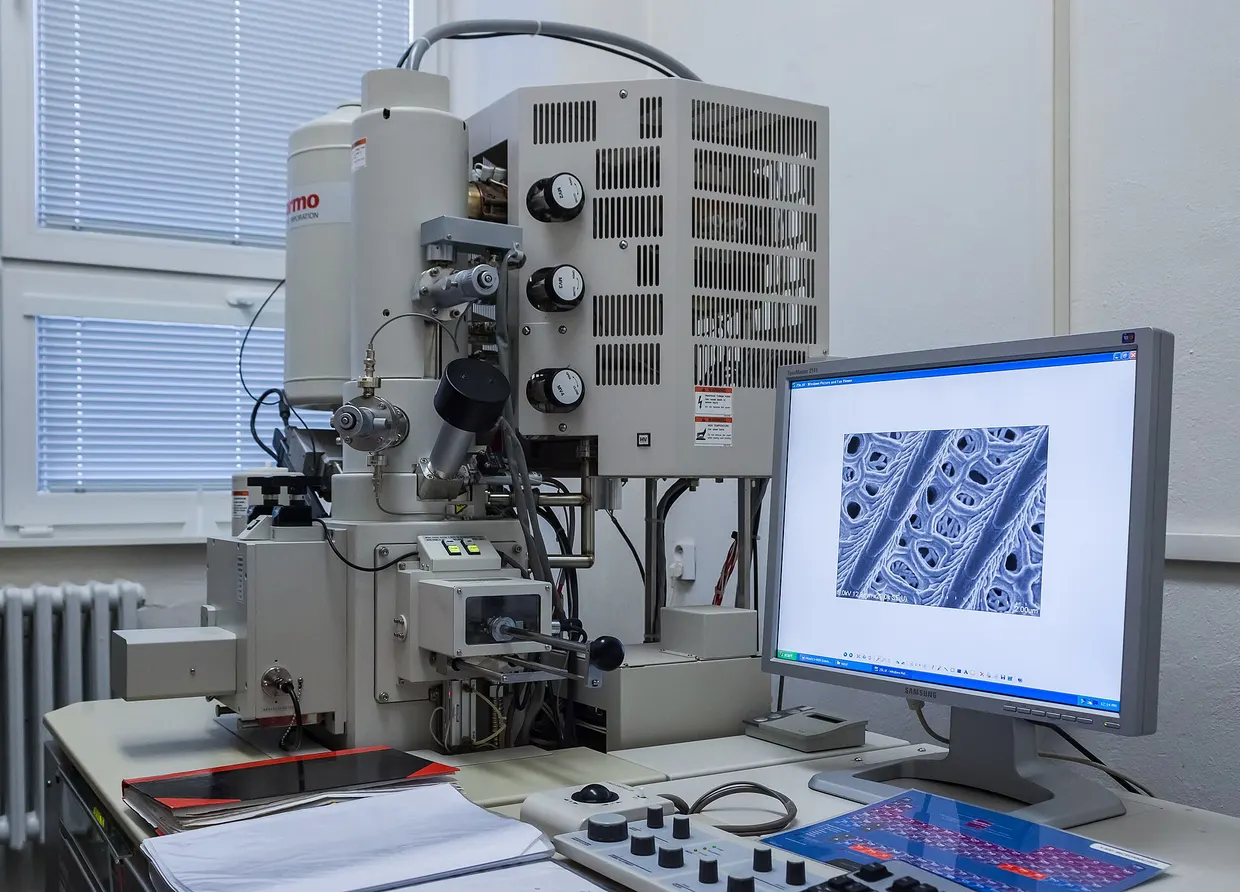
A study in Science Advances reports spatiotemporally resolved lattice motion in NbOI2, a van der Waals ferroelectric, using combined ultrafast electron microscopy and diffraction. The measurements revealed three acoustic phonons: two transverse shear modes and one longitudinal breathing mode science.org
Science Advancesscience.orgOpen source ↗. The work addresses the nanoscale structural response to ultrafast depolarization, which had remained unresolved, obscuring the pathways of acoustic decoherence and energy dissipation.
The transverse mode that shears the layers perpendicular to the in-plane polar axis dominates over the transverse mode that shears them along the polar axis. The authors say this reflects anisotropic polarization-strain coupling.
Real-space mapping showed spatially correlated heterogeneity in mode amplitudes and lifetimes. Regions dominated by a single shear mode had significantly longer acoustic lifetimes than multimode regions. The authors suggest that acoustic phonon–phonon scattering is a major source of decoherence.
According to the authors, the results give a microscopic description of acoustic dynamics driven by ultrafast depolarization and of spatially heterogeneous energy dissipation in van der Waals ferroelectrics.