Two remote GaAs quantum dots achieve photonic entanglement swapping with fidelity 0.71(2) in experiment
Entangled photon pairs from two separate GaAs quantum dots were used for entanglement swapping, a step toward quantum repeater networks with nonprobabilistic sources.
Researchers demonstrated photonic entanglement swapping using entangled photon pairs generated by two separate GaAs quantum dots, according to a study in Science Advances science.org
Science Advancesscience.orgOpen source ↗. Entanglement swapping is a protocol for creating entanglement between previously uncorrelated particles. Its photonic version relies on the interference of photon pairs produced by separate quantum systems.
Until now, swapping with entangled photons from remote systems had been implemented only with probabilistic sources. The authors state that scaling up quantum networks requires nonprobabilistic emitters, without a trade-off between the degree of entanglement and the photon-pair generation rate.
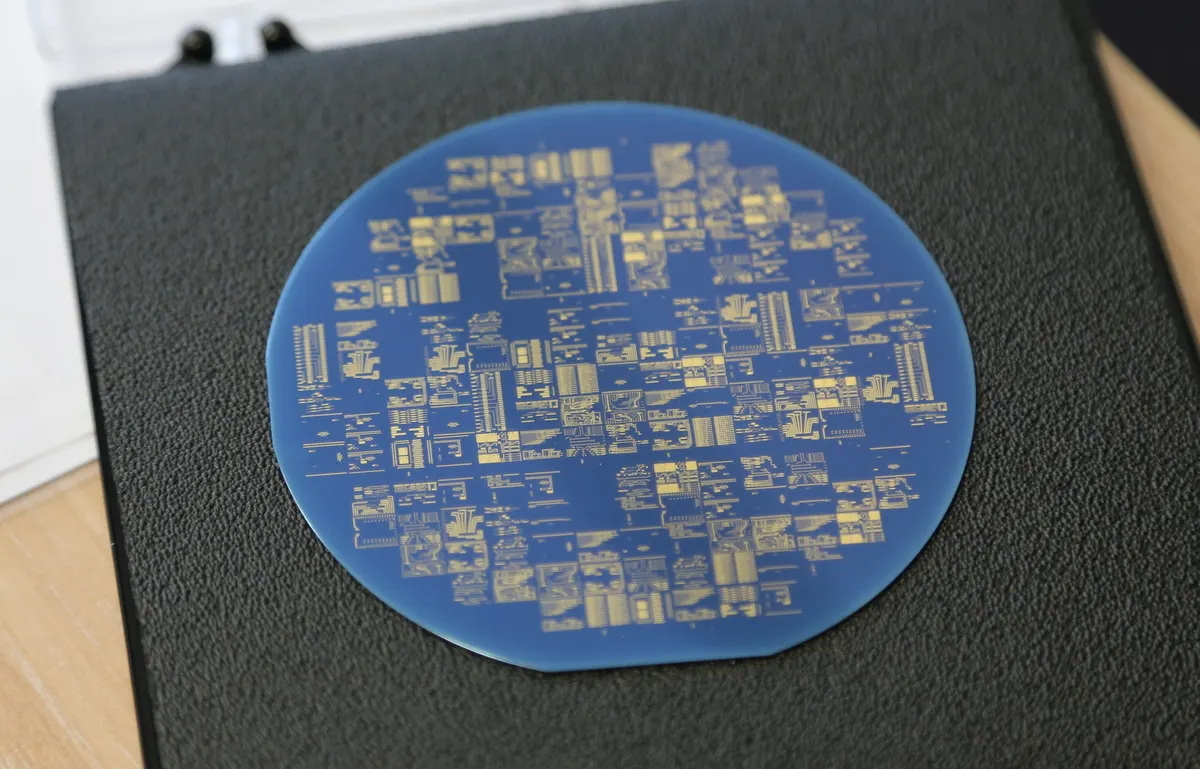
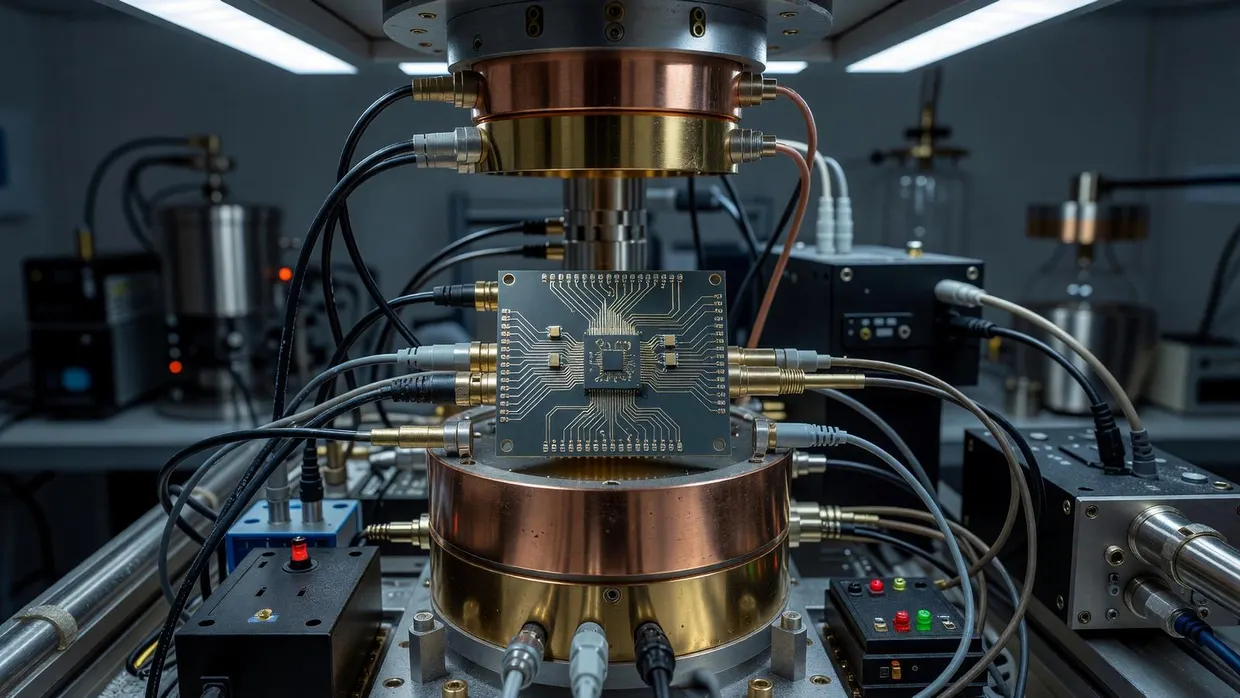
The quantum dots are deterministically embedded in hybrid semiconductor-piezoelectric devices. These devices make the entangled photons from two dissimilar quantum dots nearly identical. The fidelity of the swapping reached 0.71(2), more than 10 standard deviations above the classical limit.
A theoretical model explains the experimental data quantitatively and also suggests how to improve the performance of the protocol. The authors say the work opens the path to using quantum dot entangled-photon sources in quantum repeater networks science.org
Science Advancesscience.orgOpen source ↗.