Lambayeque Valley skeletons: 1.6% of 1,519 people showed injuries from interpersonal conflict
Researchers examined the remains of 1,519 people from the Lambayeque Valley in Peru and found few injuries from interpersonal conflict, although local societies practiced human sacrifice.
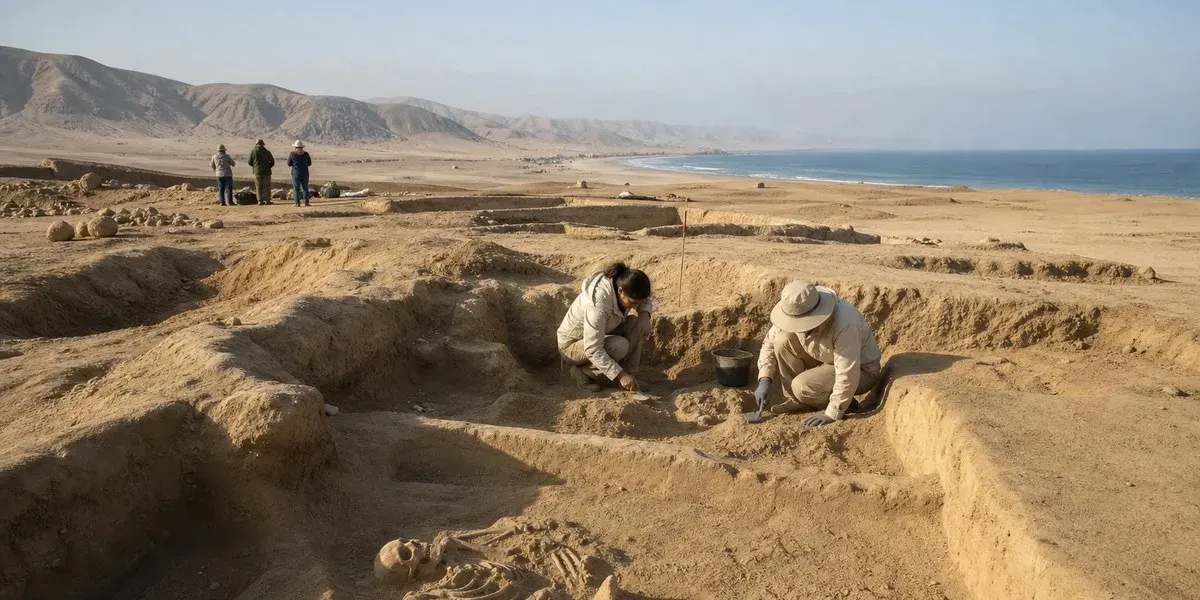
Researchers found a low level of interpersonal violence in human remains from the Lambayeque Valley in northern Peru, although local societies practiced human sacrifice, ua.news reports, citing Live Science. Scientists examined the skeletons of 1,519 people who lived in the region approximately between 1500 BCE and 1800 CE. ua.news
ua.newsua.newsOpen source ↗
Injuries in the skeletons
Twenty-five skeletons, or 1.6% of the sample, showed traumatic injuries consistent with interpersonal conflicts. Another 77 individuals, or 5.1%, had traumatic injuries to bones outside the skull that were deemed consistent with the effects of accidents. The authors found no connection between a person's sex and the level of violence.
The study was published on November 8 in Frontiers in Environmental Archaeology. Its authors are bioarchaeologist Thomas Snyder of New York University and George Mason University anthropology professor Haagen Klaus.
Sacrifice and living conditions
Mass human sacrifices took place in the valley during different periods. According to Klaus, at the Sican site around 1050–1100, about 200 people were killed and ritually buried during a strong El Niño event. Researchers suggest that at least some mass sacrifices may have been an attempt to appease the gods after the consequences of this weather phenomenon, including intense rains and floods in Peru. ua.news
ua.newsua.newsOpen source ↗
Klaus suggested that ritual violence may have helped ease social tensions, but this is not an established cause of the low level of interpersonal violence. The authors also noted that valley residents may have had better access to marine resources and river water for irrigation than people in some highland areas of Peru. In their view, this may have provided more food resources and reduced grounds for conflicts.